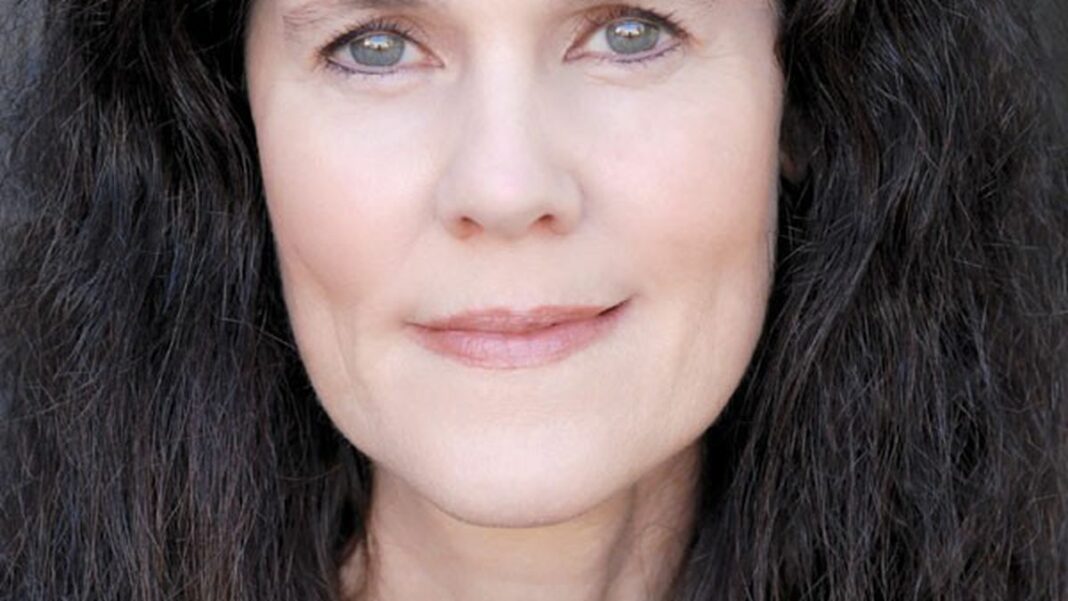
Artificial insemination isn’t new. It’s been around as long as parachutes, bottle corks, and guillotines. A Scottish surgeon inseminated a patient with her husband’s sperm in 1785, resulting in a healthy baby boy. Adrienne McDonnell learned this, and more about the care and handling of live sperm, while researching her novel The Doctor and the Diva, which she discusses at Mrs. Dalloway’s (2904 College Ave., Berkeley) on Thursday, July 29. She also had to educate herself in opera and the common parlance of early-20th-century Americans.
Beginning in Boston in 1903, it’s the tale of a talented singer who, after trying unsuccessfully for years to get pregnant, becomes the patient of an obstetrician whose talents are the talk of the town. But even divas face dilemmas, and brilliant, beautiful, upper-crust Erika must choose between family life and a star-studded international career.
McDonnell will never forget the first time she heard about Erika’s real-life counterpart. “I was nineteen years old, living in Santa Barbara,” she said. “A friend had gone away for the weekend, and she’d loaned me her beachfront apartment. It was around midnight, and I was lying there in the arms of a young man I barely knew. He later became my husband, but at that moment we were just beginning to know one another. He talked about his grandfather, who had recently died. Suddenly he said, ‘When my grandfather was a little boy, his mother deserted him and her husband and moved to Italy to develop her career as an opera singer.'”
Contemplating “a privileged woman in early-20th-century Boston who abandoned her husband and small child for the sake of her art … I couldn’t decide: Did I admire her and want to applaud her courage? Or was it heartbreaking that she’d deserted her little boy?” the author recalled.
Visiting the Boston home of Erika’s real-life counterpart, McDonnell felt “a strange sense of godlike omniscience, because I knew things about her life that she couldn’t foresee — how her husband would one day be forced to divorce her and take custody of their small son; how she would sing in I Puritani from Montepulciano, Italy; how her little boy would write her letters that were never delivered.”
Preserved by her then-husband’s aunt, hundreds of pages of correspondence between family members detailed glittery stages in Florence, dusty camels in Egypt, and steamy jungles in Trinidad in the last century’s first two decades: “I read the family letters with great scrutiny, always on the lookout for material that might be transformed into a scene.”
Erika’s crisis was a product of her time. “I think that, today, the courts and society would have allowed her more flexibility with respect to staying in contact with her child,” McDonnell mused. “In those times … she couldn’t fly back and forth to visit her son for a few days. In that era, if a mother moved across an ocean and settled in another country, that was it — she was gone.” 7:30 p.m., free. MrsDalloways.com