
When Laura Blakeney moved into her house in West Oakland last year, she was thrilled to have a backyard. Her young daughter loved playing in the dirt. And all that space seemed perfect for a vegetable and herb garden. What she didn’t see was the danger lurking in her soil.
To help get the garden started, a neighbor suggested Blakeney contact City Slicker Farms, a West Oakland nonprofit that advocates for urban agriculture and installs backyard gardens in homes throughout the Bay Area. After Blakeney called to request a garden, City Slicker visited her house to take four soil samples — standard protocol for every garden they install. The results were surprising: nearly 500 parts per million of lead, more than twice the level deemed safe by the San Francisco Bay Regional Water Quality Control Board.

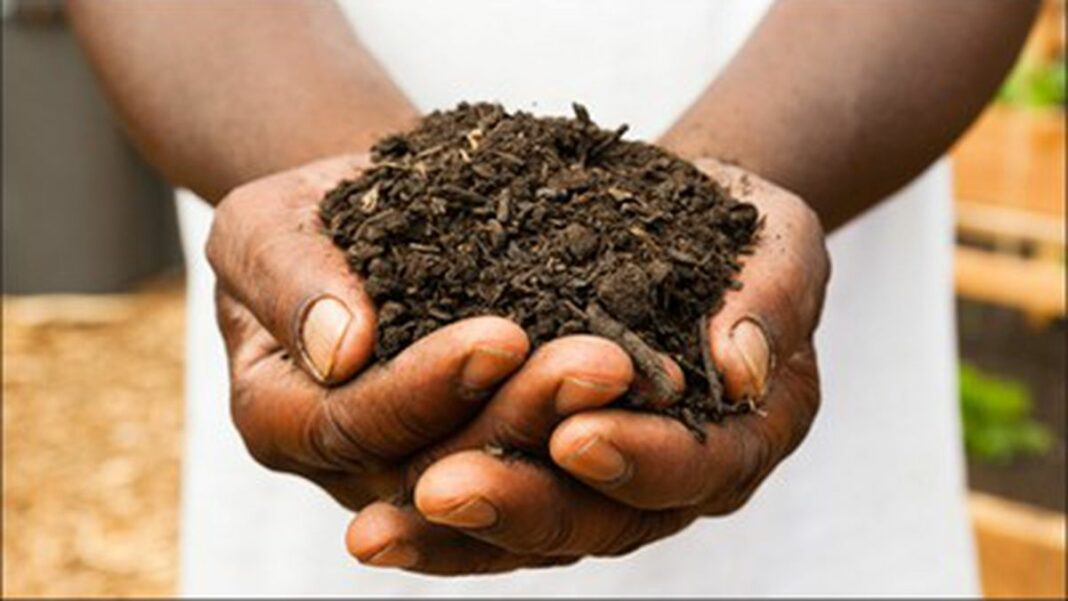
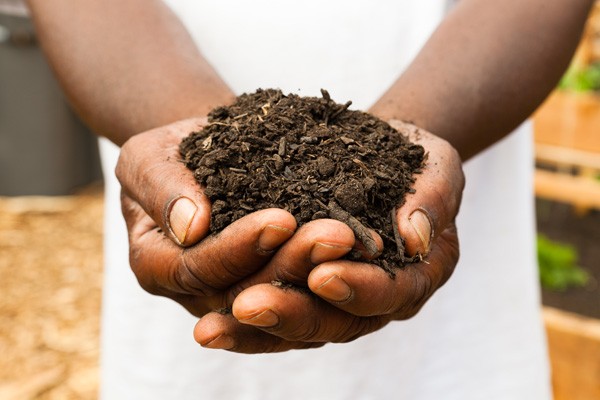
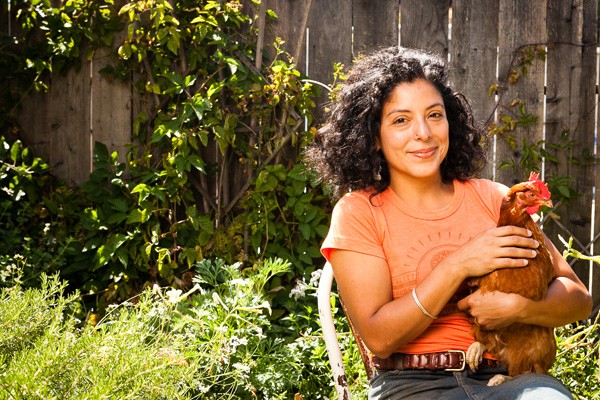
Urban topsoil throughout the East Bay flatlands contains a cocktail of heavy metal pollutants. Credits: Stephen Loewinsohn Barbara Finnin of City Slicker Farms is worried that too many regulations will discourage people from urban farming. Credits: Stephen Loewinsohn Volunteers from City Slicker Farms helped install raised beds in Laura Blakeney’s yard to avoid containminated soil. Credits: Nate Seltenrich Even though her garden abuts a gas station, Esperanza Pallana found she had low levels of lead in her soil. Credits: Stephen Loewinsohn



Built in 1889, the two-story Victorian was covered in layers of lead paint that had flaked off and seeped into the soil. Other environmental factors that likely contributed to the contamination included nearby industry and exhaust from leaded gasoline.
The organization opted to cover all of the exposed dirt in Blakeney’s yard with cardboard and wood chips — a process known as sheet mulching — and build raised beds for the garden. On a recent Thursday afternoon, twenty young volunteers from City Slicker and Urban Adamah, a nonprofit based in Berkeley, arrived at the house with four truckloads of mulch, hundreds of empty cardboard boxes, a few cubic yards of soil and compost, and materials to construct two four-by-eight-foot raised beds on the small concrete patio.
The workers spent an entire day on the project, leaving Blakeney, her roommates, and her daughter with a safe yard, pre-planted garden beds, and a young lemon tree. That’s no small victory in a neighborhood notorious for its lack of fresh and affordable produce. “One little thing turned into all this, and we just wanted some vegetables to cook with,” she said. “It really turned into this wonderful thing.”
Blakeney said she’s glad to have discovered the lead contamination before anyone ate produce grown in the soil, and has scheduled a meeting with Alameda County’s lead abatement program to further address the source of the problem. “If we hadn’t done this, we never would’ve known,” she said. “Who thinks of lead in their dirt?”
As backyard gardening continues to explode in popularity, many new farmers may be ignorant of the fact that urban topsoil, particularly throughout the East Bay flatlands, contains a cocktail of heavy metal pollutants including zinc, nickel, and cadmium that can be consumed by humans and pets through contaminated plants and soil dust. Lead, in particular, is virtually ubiquitous.
At the same time, spurred by citizen demand, municipalities across the country are embracing urban agriculture. In Oakland, efforts are underway to modify the city’s outdated zoning code to be more permissive of urban farming. A planning commission meeting on July 21 that officially initiated the process attracted more than three hundred enthusiastic residents. Chicago, Cleveland, Seattle, and San Francisco are among the many cities that have already enacted similar changes.
While all share the common goal of encouraging sustainable local food production, no two cities have approached the issue of soil contamination in quite the same way. Not only is there no agreement about how to encourage — or even require — urban farmers to handle soil safely, but there’s also a lack of consensus among regional, state, and federal agencies as to what actually qualifies as safe.
Untangling these issues won’t be easy, especially in Oakland. On one hand, the city must protect citizens from the dangers of lead poisoning, and on the other it’s tasked with supporting urban agriculture in areas known to contain contaminated soil. Striking the proper balance will mean the difference between disease, disappointment, and a thriving 21st-century city.
Lead in urban soils is commonly referred to as a legacy pollutant. It is most closely correlated with two sources: lead paint and leaded gasoline. Neither is still in use; lead paint was outlawed in 1978, and leaded gasoline’s six-decade run ended in 1986. But their effects remain, especially in older neighborhoods near historic freeway corridors. Lead contamination in soil can also result from lead plumbing and prior commercial and industrial land uses.
In the East Bay, the epicenter of old homes, freeways, and industry is West Oakland. There, due to a confluence of factors including cheaper rents and land values, more vacant lots, fewer grocery stores, and more low-income residents in need of fresh produce, urban agriculture is thriving in some of the most polluted soil in the East Bay.
But there’s no reason urban gardens shouldn’t grow there. Lead doesn’t move around once it’s in the soil, so levels near the perimeter of a home are often much higher than in the middle of the yard. A single paint chip in a one-cup soil sample can elevate its lead level tenfold.
The same applies to lead from leaded gasoline. According to Environmental Protection Agency lead expert Steve Calanog, elevated levels of lead are present throughout the East Bay along the Interstate 80 corridor, yet deposition may vary from one yard to the next, and even between front and back yards of the same home. The question of where you plant — and where you test — is of utmost importance.
Likewise, quantifying lead contamination is at best complex and at worst Sisyphean. Perhaps no one knows this better than Nathan McClintock, a UC Berkeley Ph.D candidate in geography who is completing a dissertation on urban agriculture that has led him to collect and analyze more than 120 soil samples throughout Oakland.
Even with a standardized testing procedure and a focus on sites that could support urban farming, he encountered a huge range of results. Lead values spanned from as low as 50 parts per million in the hills to as high as 980 in West Oakland. Residential lots in West Oakland averaged about 360 — still below the US Environmental Protection Agency’s action level of 400, but nearly double that of the regional water quality control board and more than twice as high as average values throughout the rest of the city.
The gist of McClintock’s data, if not the exact values, is corroborated by Calanog’s research for the EPA. Calanog is in the midst of administering a program that will provide free lead remediation services to West Oakland’s Prescott neighborhood, one of the city’s oldest and most polluted. His results put West Oakland’s lead levels even higher than do McClintock’s — much higher. Based on one hundred samples taken from sixty yards, Calanog says levels average around 800 parts per million and reach as high as 2,700.
The discrepancy is due to differences in testing protocols and site selection. But there’s evidence that these base lead-content counts may not actually be very helpful. Both McClintock and Calanog suggest that the more important number, which is costly to gather, measures the lead content that is bioavailable. The distinction is essential, since many lead compounds are bound with phosphorous, calcium, or other organic matter in the soil, making them inert and harmless to humans.
The cornucopia of screening levels proposed by various public agencies muddies the water even more. The California Office of Environmental Health puts its hazard assessment level at 80 parts per million for ingested soil, while the California Department of Toxic Substances Control says soil becomes hazardous material when lead surpasses 1,000 parts per million. Between them is a bevy of guidelines and limits for lead exposure in food, water, and soil in a variety of contexts. They tend to provide more confusion than guidance.
But there’s a simple bottom line, said Alameda County Lead Poisoning Prevention Program communications manager Julie Twichell: “No level of lead is safe. You don’t need any lead in your body, and studies have shown that even minor levels of lead can cause harm.” This is particularly true for children, who are most susceptible to lead poisoning through ingestion of lead dust, paint, and soil. Lead is the most common source of heavy metal poisoning in children and can cause irreversible problems in growth and development affecting behavior, hearing, and learning.
In adults, lead poisoning can cause high blood pressure and damage to the brain, nervous system, kidneys, thyroid, and blood. The body mistakes heavy metals like lead, arsenic, and mercury for essential nutrients such as calcium and iron and stores them in tissue, where they bind with cells and are readily absorbed. What’s more, there’s no cure beyond simply removing the source of contamination and allowing the body to clean itself out.
Diagnosing lead poisoning is tricky. Symptoms are unreliable, onset is gradual, and in children developmental problems may not surface until years later. The only way to know for sure is to get tested. US Centers for Disease Control and Prevention defines the condition as lead levels at or beyond 10 micrograms per deciliter of blood, but effects in children have been found at levels as low as 5 micrograms.
In 2009, the last year for which statistics are available, of 16,870 Alameda County children screened for lead, 3.2 percent tested positive for unsafe exposure, according to the Alameda County Lead Poisoning Prevention program. The rate in Oakland was more than double the county average, a worrisome 6.6 percent of all children tested.
When a group of West Oakland neighbors came together a few years ago to plan a community vegetable garden for a vacant lot at the corner of 39th Street and Martin Luther King Jr. Way, they knew they’d be contending with contaminated soil. But they had no idea just how much trouble it would cause.
In early 2009, the group sent away for a soil test that put the plot’s lead level at 219 parts per million — well under the EPA’s limit. But to eliminate any risk of ingestion, they designed a garden that would use landscape fabric and a heavy layer of mulch to cover the contaminated soil. They’d also grow vegetables in clean soil in 22 raised beds, rather than directly in the earth. With $340,000 pledged in support from Oakland’s Redevelopment Agency and City Council, the project seemed ready to go.
Except for one thing. Since the city would be holding title to the newly purchased property and therefore technically liable, it wanted to conduct soil tests of its own. These were far more involved than the low-cost mail-away test ordered by the neighbors. Instead, the city hired a professional firm to perform elaborate soil testing and analysis at a cost of more than $5,000.
The results showed lead levels ranging between 300 and 790 parts per million, all of which exceeded the applied standard of 200 parts per million. The testing agency recommended that the top two feet of soil be removed and disposed of as hazardous waste, at a cost of approximately $170,000. But there wasn’t enough money in the budget, and just like that the Crossroads Community Garden was shot. The site has since been sold to a developer looking to pour a parking lot.
Resident and garden planner Pamela Campbell was disappointed to see three years of work dissolve into thin air on account of lead levels that are representative of what exists just about everywhere else in the area — especially since her group planned to cover the existing soil and grow in clean dirt. “In my opinion, it’s the same thing that you’re dealing with in all of West Oakland,” she said. “It’s total red tape. It wasn’t about food safety.”
Had the city been clear and upfront about its lead-contamination policy, thousands of dollars and hundreds of hours of work could have been saved. Likewise, if it had been willing to accept the widely acknowledged remediation strategy proposed by the neighbors, the lot would now be providing its West Oakland neighborhood with fresh produce instead of sitting fallow.
These are the dilemmas that cities and urban gardeners now face. Yet organizations like City Slicker Farms are working hard to develop safe, practical solutions to soil contamination. Since 2005 the organization has set up 170 backyard gardens, including about 140 in West Oakland, all at no cost to the recipients. The initial step is always a soil test. While few lots exhibit truly dangerous levels, most are elevated and require some form of remediation — typically, covering the soil with mulch and growing vegetables in raised beds.
“So many backyards have lead paint in it, because lead paint was prevalent everywhere,” said executive director Barbara Finnin. “So we’re figuring out instead of digging out all the soil, how can we do that safely here?” In a two-foot-tall raised bed over an impenetrable root barrier, the risk of plant contamination is virtually eliminated, she said. Mulch as thick as six inches elsewhere in the yard helps protect children and animals from direct soil contact.
It’s a simple solution supported by urban farming celebrity Novella Carpenter, who runs Ghost Town Farms on a vacant lot in West Oakland. In her backyard, which is adjacent to a gas station, she tested and found high levels of lead. So she topped the soil with landscape fabric and mulch to protect her animals, which can bio-accumulate lead just like humans and pass them along through their meat, milk, and eggs. Yet she won’t grow any produce there. The majority of her front-yard beds are built directly atop a concrete patio that’s covered with a few inches of dirt. “It’s actually a nice thing to build on concrete,” she said — the danger of contamination is always nil.
Still, raised beds aren’t always practical, and they can be cost-prohibitive for some backyard and community gardeners to build and fill with clean soil. When the native topsoil tests at an elevated but acceptable level, the nuances become a bit more difficult to navigate.
As with lead safety levels and assessment methods, the science on plant uptake of lead from soil can be frustratingly vague. There’s no easy answer: Based on different environmental and soil conditions, different plants uptake lead at vastly different rates.
In an attempt to shed some light on the subject, Ph.D student McClintock conducted a series of tests on leafy greens growing in different environments. Chard growing in West Oakland soil with 2,500 parts per million of lead showed levels as high as 30 ppm in its leaves, while collard greens in the same soil averaged only 5 ppm. Other tests found that chard growing in beds with 320 parts lead per million took up 3 ppm, and that collards in 215 ppm soil took up almost nothing. And a test in clayey North Oakland soil with lead levels of 700 ppm revealed lead in mustard greens ranging from 1 to 5 ppm. These figures may appear low, but consumption is dangerous in aggregate — particularly for children and when combined with accidental ingestion of contaminated dust during or after gardening.
While there’s no clear rule for determining lead uptake, as a general guideline the further you are from the roots, the less lead will be present. A root crop poses the highest risk, a short leafy green is apt to absorb a moderate amount of lead, and a piece of fruit growing from the branch of a tree (or tomato plant) is unlikely to uptake much lead at all. Peeling or scrubbing produce can help reduce the risk. For the curious, plant-tissue testing is available to the public.
With the right precautions and the right soil, it can be completely safe to grow vegetables directly in urban East Bay dirt. When Esperanza Pallana decided she wanted to garden in her yard near Lake Merritt, which abuts a gas station, she started with a soil test. The result was a surprisingly low 96 ppm, small by any standard. So she opted to grow directly in the ground, and says she’s now more concerned with particulate matter from nearby freeways.
As a food educator and consultant for many urban gardening projects, and a member of the East Bay Urban Agriculture Alliance, Pallana also advocates for various forms of bioremediation — the easiest and most popular of which is mixing compost with native soil. Not only does this improve soil conditions for growing vegetables, but it also dilutes lead content while binding it in the soil and making it less available to plants and humans. Yet this takes time and energy, and is no magic bullet for urban gardeners eager to plant their first row of lettuce.
The complexity of the issue poses a challenge for the City of Oakland. As it revises its laws around urban agricultural this summer and fall, it bears a responsibility to address soil contamination — even if the push is toward less, not more intrusion in the lives of urban farmers.
Oakland’s existing zoning regulations around urban agriculture were established in 1965, a time when farming was less welcome in the urban environment. Until two months ago, growing produce for sale at a private residence was not permitted.
Certain activities and zoning classes still require a costly conditional use permit. But the pending revisions, hastened by the uproar surrounding the citing of Novella Carpenter’s Ghost Town Farms for operating without a permit earlier this year, should both clarify the regulations and loosen the reigns.
Erik Angstadt, deputy director of planning and zoning, said that the city is looking to allow as much urban agriculture activity as possible, reducing the need for permits, oversight, and special conditions — as well as related fees. While this may cause urban farmers to rejoice, it also limits the city’s ability to mandate or otherwise oversee soil testing and remediation. “For the small-scale stuff, we’re trying to get away from any sort of permit,” Angstadt said. “The good side is that you’re permitting people to do it, but the bad side is that you’re losing your ability to control it.”
A series of public meetings continuing through October, plus input from various city committees and the Oakland City Council, will fine-tune the planning department’s recommendations. But it’s uncertain at this point how much, if it all, the issue of soil contamination will be addressed beyond a basic educational message directed at the backyard gardener.
The planning department is likely to recommend permits and may propose some regulatory controls for soil testing with large-scale commercial uses, Angstadt said. A community garden on a city-owned lot may still need a conditional use permit, and while soil testing and remediation is not currently required in such cases, it’s possible that will change.
Yet in the rare instance where vegetables are grown on a small residential or non-commercial lot in soil that is toxic and then sold to the public, the city is likely to be powerless. Without a permit, there’s no mechanism for enforcement.
Lead is one of the most common contaminants in the country, particularly in urban areas, and other cities are grappling with the same issues as Oakland. Heather Wooten, a member of the Oakland Food Policy Council and an urban planner who has consulted with cities from coast to coast on urban agriculture policies and zoning, said each jurisdiction has to decide how to deal with soil pollution.”Cities don’t want to incur liability from allowing people to grow, eat, and sell food and possibly getting contamination,” she said. Yet their solutions vary widely.
Chicago’s plan mandates the use of raised beds for all gardens on city-owned land. Baltimore’s is even more strict, requiring community gardeners on both public and private land to file soil testing results and remediation plans. Seattle recommends but doesn’t require soil testing, while San Francisco’s policy, passed in April, allows anything grown on less than an acre, with no controls for soil contamination whatsoever.
Berkeley is hot on Oakland’s heels and may begin addressing urban agriculture as soon as next month. Last October, the Berkeley City Council directed the planning commission to develop a policy allowing home-based businesses to sell garden produce in Berkeley’s residential neighborhoods. The issue will go before the planning commission at a public meeting in September, said staffer Jordan Harrison. The issue of soil contamination has played into discussions to date, but no solutions are forthcoming.
Ultimately, Wooten recommends a flexible approach. “The policy needs to acknowledge that this is an issue, and cue people to pay attention to it,” rather than guiding them down a single path, she said. In addition to playing an active role in education, cities could cover the cost of soil testing for anyone who requests it. Further, they could require testing only on public sites and prioritize public land for community farms.
All this discussion of city governments mandating soil tests leaves City Slicker Farms’ Barbara Finnin a bit uneasy. She’d rather not discourage anyone from embracing urban farming, and fears that excessive regulations would do just that. “I don’t want to have a huge scare thing where nobody is growing food,” she said. “When it gets into mandating things, that gets into fees and all these kinds of things” — costs that her organization’s clients in West Oakland probably can’t afford.
“We really want to be safe, but how do we do it so that we’re not putting up barriers?” In a perfect world, she said, all urban gardeners would follow best practices around testing and remediation without city oversight, ideally supported by a streamlined and accessible facility providing free testing to residents.
Alameda County offers a free garden soil lead test kit and remediation grants in conjunction with a home consultation to owners of pre-1978 residential properties in the cities of Alameda, Berkeley, Emeryville, and Oakland. The University of Massachusetts, meanwhile, provides low-cost soil testing for $10 and up, a service that many East Bay urban farmers have taken advantage of, including City Slicker Farms and the 39th Street neighbors. It’s likely the nation’s cheapest mail-away test, and according to interim director Tracy Allen processed 18,000 samples last year — nearly double its figure from a decade ago. Every time the economy takes a dip, she said, soil tests take off.
No matter how Oakland and Berkeley approach their new regulations, carting away contaminated soil to a hazardous waste dump doesn’t appear to be a viable option. That’s why the proponents of the Community Crossroads Garden are so miffed that that’s the solution they were offered. Beyond being costly and impractical, it merely moves the problem somewhere else. The same is true when using plants like sunflowers and bamboo to absorb lead and other heavy metals, which must be similarly disposed of. But there’s another large-scale solution that may hold serious promise.
In June, Steve Calanog of the EPA began demonstrating a treatment in West Oakland’s South Prescott neighborhood that uses ground-up fish bones to bind lead in soil and create stable compounds that are harmless to humans. Once mixed with the soil, decomposing bone fragments deposit phosphates that move through the soil and encapsulate tiny particles of lead. A six-inch layer of clean soil is poured over the top, leaving the dirt safe to plant in. An entire yard can be remedied with one treatment, which takes a few weeks to run its course. The EPA’s two-year project here marks the first time that the approach, already proven at military and mine sites over the last fifteen years, is being employed in a residential setting.
The need for a full arsenal of solutions will only grow as demand for urban farmland increases, whether it’s in backyards, abandoned lots, or city parks. While the 39th Street neighbors don’t currently have plans to resurrect their garden, another neighborhood organization is looking to site a smaller garden at one of two local parks, including one just a couple blocks away.
Myriad organizations geared toward food justice and urban farming are based in Oakland alone: Ghost Town Farms, City Slicker Farms, East Bay Urban Agriculture Alliance, Oakland Food Policy Council, Institute of Urban Homesteading, Phat Beets Produce, People’s Grocery, Oakland Based Urban Gardens, and Bay Localize, to name a few.
In Berkeley, groups like the Berkeley Community Gardening Collective and Urban Adamah are preaching the same gospel. Yet there’s only so much land to go around, and most of it requires some level of remediation — or avoidance.
In the end, the soil contamination issue comes down to that: Fix it with compost, fish bones, or other bioremediation methods, or leave it well enough alone by mulching and planting vegetables in a raised bed. In the middle of a city, gardeners still have to deal with the daily deposition of heavy metals through particulate matter in the air — so washing before eating remains imperative.
No matter what urban farmers have to do to get it, they’re better off enjoying their own fruits and vegetables than those bought at a grocery store, said Rudy Blume, founder of the Oakland-based Institute of Urban Homesteading and co-author of the book Urban Homesteading. In fact, she said, she can hardly believe that people are so worried about lead contamination when, elsewhere, farmers are spraying their crops with pesticides and herbicides. “I just feel like the food that I grow in my yard is going to be so much healthier than conventional agriculture,” she said.
And she has a point. But you know what they say about an ounce of prevention.
Want to Safely Start a Garden?
1. Test your soil.
2. Based on the results, perform appropriate remediation. (Options: amend native soil with compost, plant in raised bed with root barrier, and/or mulch yard to reduce risk of exposure.)
3. If desired, test your produce.
4. Ensure that kids and pets do not play in or ingest leaded soil.
5. Wash your hands after handling leaded soil and avoid inhaling dust.
6. Always wash or peel produce before eating.
Who Can Help?
Alameda County Lead Poisoning Prevention Program: www.ACLPPP.org
Alameda County Master Gardeners: ACMG.ucdavis.edu
UC Davis Analytical Lab: AnLab.ucdavis.edu
UMass Soil and Plant Tissue Testing Laboratory: UMass.edu/soiltest
Bay Localize: BayLocalize.org
Berkeley Community Gardening Collaborative: EcologyCenter.org/bcgc
City Slicker Farms: CitySlickerFarms.org
East Bay Urban Agriculture Alliance: DogIslandFarm.com
Institute of Urban Homesteading: IUHOakland.com
Oakland Based Urban Gardens: OBUGs.org
Oakland Food Policy Council: OaklandFood.org
Clarification: The original version of this story stated that Alameda County offers free soil testing to residents, however, the county provides garden soil lead test kits only to owners of pre-1978 residential properties in the cities of Alameda, Berkeley, Emeryville, and Oakland. This version has been updated to reflect the change.