Every weekend they make the pilgrimage: Hundreds of primarily teenage punks, all dropping in to pay their respects to 924 Gilman Street, an all-ages, cooperatively run club that morphed from a simple warehouse to the undisputed mecca of Bay Area punk rock. It’s a place where anything goes, apart from a few simple rules: No drugs or alcohol. No stage diving. No violence. No racist, sexist, or homophobic crap. And no major-label acts.
The do-it-yourself club has spawned countless imitators and still draws touring bands from all over the globe. But its legendary status arose mainly from who used to play there during the late-’80s-to-mid-’90s East Bay punk renaissance — and probably will never play there again.

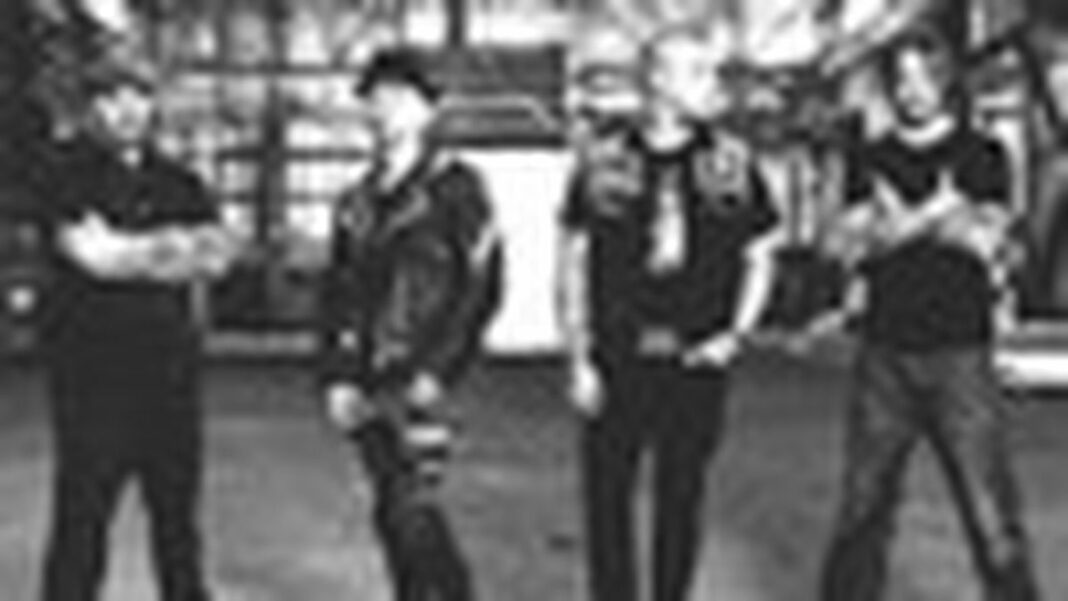
Still life in punk nonchalance: (left to right) Matt Freeman, Tim Armstrong, Lars Frederiksen, and Brett Reed of Rancid. Destroyed by fame: Armstrong (aka Lint) and Jesse Michaels of Op Ivy at an early Gilman gig. Credits: Murray Bowles No sellouts here: Rancid in its mid-’90s heyday. Credits: Lori Eanes
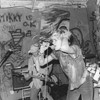

Gilman’s spawn included several vastly influential punk bands, most notably Crimpshrine, Operation Ivy, Green Day, AFI, and Rancid. Of these bands, only the last three still exist, and all have outgrown their scrappy roots. Green Day and AFI eventually held their breath and jumped into the shark pool of corporate music with great success. Rancid was another story. All four members — singer/guitarists Tim Armstrong and Lars Frederiksen, bassist Matt Freeman, and drummer Brett Reed — were born, raised, and trained at 924 Gilman Street, both musically and ideologically. The band crafted its entire identity around the club’s DIY, indie-for-life ethos — ranting about the mainstream and promising fans on many an occasion that it would never commit the mortal punk sin of “selling out.”
Right about now, some angry fifteen-year-old somewhere is undoubtedly ripping the Rancid patch off his studded black leather jacket.
Yes, Rancid has signed to a major. The band’s sixth full-length album, Indestructible, bears the Warner Bros. logo — or rather, it doesn’t, which may indicate something about the band’s insecurities. True, it could be a simple, if unprecedented, oversight. But some industry watchers suspect the logo’s absence was a deliberate move to help the band save face among its more anticorporate fans. Regardless, neither Warner Bros. nor the bandmembers themselves are willing to explain it.
Rancid is slated to play the Bay Area Thursday night as part of its monthlong tour to support Indestructible. But the band won’t be playing Gilman Street, but rather the Warfield in San Francisco. Though the distance between the clubs is only about twelve miles, for Rancid it measures the span of a career — from down-and-out street punks to major-label rock stars.
Gilman kids may use the dreaded phrase “selling out” to describe an indie band’s jump to the mainstream, but evoking it in Rancid’s case is pretty disingenuous. The term is essentially bogus, a black-and-white generalization that newly minted punks cling to without acknowledging the nuance, complexity, and reality of trying to form and maintain a successful band, and make a reasonable living, playing the music you love. Rancid’s contract with Warner Bros. shouldn’t really surprise or offend anyone. What is suspect, however, is the band’s apparent refusal to stand up for its own decision. Instead, it seems inclined to avoid it, play it down, even cover it up. Sellouts? Not really. Hypocrites? Now you’re talkin’.
“Don’t ask me about Rancid,” sighs Hilary Okun, a member of Epitaph Records’ PR staff, before she’s even asked. Because everyone asks. In fact, Okun says that employees at the Los Angeles-based label, home to Rancid’s first five full-length releases, had earlier been instructed not to discuss the band and its new record.
“It’s kind of something we just don’t talk about,” she says. “It’s a big, sad gulp in our throats.”
Formed in 1980 by Bad Religion guitarist Brett Gurewitz, Epitaph remains one of the most successful labels in punk history, largely because of two specific bands: Orange County pranksters the Offspring, whose 1994 album Smash reached meteoric heights eclipsed only by Green Day, and Rancid. The glory has undoubtedly cost the label some cred. Though technically an independent, Epitaph boasts the sales, distribution, and influence of a major. At the very least, the pipeline is open — the Offspring left Epitaph two years after Smash and joined Columbia’s roster. Gurewitz’ own Bad Religion left Epitaph for a brief stint on Atlantic before returning. After plugging into the “neo-garage” movement with the Hives’ Veni Vidi Vicious, Epitaph signed the Swedish rockers to a distribution deal with Sire Records, a Warner Bros. subsidiary that gave the Hives greater visibility and promotion than Epitaph could provide or afford. Just this summer, Epitaph’s most successful new band, the Distillers, fled for Warner Bros. as well.
But when rumors about Rancid jumping ship to a major began swirling on the Internet in early June, fans greeted them with extreme skepticism. If Rancid were just one of the thousands of bands begging for a deal at the gates of a record label in New York or Los Angeles, the signing wouldn’t matter. But Rancid’s legacy is much bigger than that, and its status as an “independent” act far more important.
Rancid formed in September 1991, releasing its first seven-inch on Berkeley indie label Lookout!, and unveiling its self-titled debut — the first of five full-length records spanning more than a decade — on Epitaph. Following the pop-punk boom that exploded with the unimaginable multiplatinum success of Green Day and the Offspring, Rancid also caught a tidal wave of success with 1994’s Let’s Go and the following year’s …And Out Come the Wolves. MTV made hit video singles out of the songs “Salvation,” “Time Bomb,” and “Ruby Soho.” Meanwhile, vastly influential LA radio station KROQ dropped those tunes into daily rotation, compelling hundreds of stations nationwide to follow suit. All told, Let’s Go and Wolves sold more than a million and a half copies — not bad for a young band on a rebellious indie label.
Thus, Rancid reportedly entertained several multimillion-dollar recording contracts with majors in the mid-’90s, including Maverick (Madonna’s label) and Epic. Along with the offers came scores of rumors as well: Rancid allegedly convinced an Epic A&R man to shave his head into a dyed-blue Mohawk, and Madonna reportedly sweetened the pot with naked pictures of herself. But regardless of what the labels specifically offered, Rancid ultimately turned down everything and stuck with Epitaph.
Rancid’s success on Epitaph suggests the band certainly wasn’t hurting for cash, but jumping to a major then probably would’ve greatly enhanced the band’s popularity and bottom line. The band, however, publicly reveled in its refusal to do that. In a 2001 Spin article celebrating the 25th anniversary of punk rock, singer/guitarist Lars Frederiksen spelled it out: “The one good thing about Rancid is that we never signed to a major label. We stayed indie our whole career … we’ve shown that you don’t need some fucking big major label who you’ll end up taking it in the ass from, eventually, to make music.”
Now, evidently, it’s time to take it up the ass. And nearly a decade after the will-Rancid-go-major debate first surfaced, fans and foes alike are still battling it out.
“For a lot of people, it’s a big deal,” says Aubin, whose Web site PunkNews.org — a five-year-old independent outpost for rumors, press releases, interviews, and show reviews — first officially reported Rancid’s major-label signing. “We reported the news because we knew it would be something people cared about, and the wealth of comments that that story generated within such a short amount of time showed that a lot of people really did take it seriously.”
Aubin (who declined to state his last name) independently verified the rumor through the band’s management, and posted the news on June 14. Within two days, nearly one thousand comments about the signing had been posted to the site’s message board.
“Signings are usually the biggest and most controversial stories we report on,” Aubin explains. “It’s usually not what someone does, or even if a band switches genres completely, it wouldn’t bother people as much, but major labels, for some bands, seem to be a big deal.”
This ideology and fear of major labels isn’t unique to Rancid or its fans, but it does point back to the lessons learned at the Bay Area’s punk rock mothership.
On New Year’s Eve in 1986, the Gilman Street Warehouse Project threw open its doors, beginning an all-ages co-op experiment that continues to this day. The 3,000-square-foot warehouse at the corner of Eighth and Gilman streets was run by a committee of volunteers, promoters, and contributors to local punk zine MAXIMUMROCKNROLL, considered the authentic voice of underground punk. Everyone involved helped bring the warehouse back up to city standards, including soundproofing and plumbing. No one got paid. Gilman didn’t advertise. Weekly meetings were, and continue to be, run as democratically as possible: “We vote on literally everything, from how much toilet paper to buy to which bands should play here,” head coordinator David Hall Reuter told the Express in July.
While Friday nights generally featured a mix of bands, poets, or performance artists, and Saturdays were reserved solely for punk, Gilman’s overarching theory was that if audiences never knew exactly what to expect, the club’s atmosphere would remain fresh and spontaneous. Though touring acts rolled through, many bands were homegrown, and none came from a major label — a rule that still exists today. As a nonprofit community space, Gilman’s attendees doubled as club members, obeying the rules and paying a two-dollar annual fee to help keep the club afloat.
Soup was the first band to play at the Gilman Street Warehouse Project. Rancid’s Tim Armstrong stood in the crowd that night.
“It’s not just entertainment,” explains Mike Thorn, currently a coordinating editor of MAXIMUMROCKNROLL. “You can take an active role and you can help determine what’s going on in your community, with the Bay Area punk community, through your involvement through Gilman.”
As Gilman’s indie punk rock ethos slowly crept around the East Bay in the mid-’80s, two young kids from Albany — Tim Armstrong and Matt Freeman — began playing together in the band Basic Radio. When that fizzled out, the pair formed the punk-ska quintet Operation Ivy.
By the late ’80s, Crimpshrine and Operation Ivy had provided Bay Area punk’s musical blueprint, the latter’s energetic style destined to be simulated by a thousand So-Cal pop-punk bands throughout the ’90s. Based on ska — particularly the hurried yet staggered beats of English band the Specials — as well as street punk like the early Clash, Op Ivy wore its influences on its sleeves, most notably by incorporating the Specials’ rude boy emblem into its own logo. But the band maintained a raw, unpolished edge, uniquely young and altogether its own. Frontman Jesse Michaels wrote socially conscious lyrics that were more Zen Buddhist than nihilist: As he screamed on “Knowledge,” the band’s manifesto, “Wide open road to the future now/It’s looking fucking narrow/All I know is that I don’t know/All I know is that I don’t know nothing.“ Armstrong — who then went by the nickname Lint –worked up a tight rhythm section with bassist Freeman and drummer Dave Mello, best appreciated on the group’s instrumental ska-boogie “Bankshot.” The music was jagged but accessible, and quickly drew sell-out crowds. Without Op Ivy ever leaving the Bay Area, word of its high-energy shows shot across the country, commanding a huge influence coast to coast. Future Green Day frontman Billie Joe Armstrong, to cite perhaps the most famous example, was an upfront admirer of the band.
Lawrence Livermore, founder of Lookout!, once ventured to say that Op Ivy was the most important band to come out of Gilman: “How important was Operation Ivy to Lookout! Records and the whole East Bay scene? I kind of doubt we’d be here without them.”
When Livermore founded Lookout! in the late ’80s, Operation Ivy was one of the first bands he worked with. The label released the band’s first seven-inch, Hectic, in 1988. But the band dissolved the following year. Internal fighting or rock ‘n’ roll excess didn’t kill Op Ivy; instead, the band was uncomfortable with its quickly mushrooming popularity. Part of punk’s philosophy (though some might call it a trapping) is its distaste for “rock stars,” loosely defined as bloated musicians out of touch with their own community. Punk’s proletarian message of “none before another” was inherent in Gilman’s founding, and Op Ivy lived it, breaking up to avoid becoming what it despised. The band’s only full-length, Energy, came out posthumously in 1989 and has sold more than 600,000 copies, joining Green Day’s back catalogue in keeping Lookout financially afloat.
Post-breakup, Tim Armstrong fell into a heavily publicized bout of depression. Dyslexia, poor grades, and low self-esteem left him with no sense of direction without his music. Alcoholism and heroin addiction took control of him, and he wound up living on the streets. Freeman, unwilling to watch his friend kill himself, took in Armstrong and got him sober enough to stay in a halfway house. Eventually Tim cleaned up, aided by the formation of the band Rancid.
After cutting an early Lookout! release in 1991, Rancid jumped to Epitaph, cut its debut disc in ’93, and began an ascension to national prominence. But the band never forgot the scene that spawned it. Eight years after Armstrong attended Gilman for the first time, he immortalized the club on …And Out Come the Wolves. The track “Journey to the End of the East Bay” begins with a trademark Matt Freeman bass lead: a very linear, John Entwistle-like rhythm progression that, as a melody, provides the backbone of the song in a way you can trace back to his days with Op Ivy. As the melody begins to repeat itself, distorted guitars spew feedback before grinding out a simple three-chord progression. With Brett Reed’s solid drumming behind him, Armstrong delivers the lyrics in a gruff mumble often compared to the Clash’s Joe Strummer: “Reconciled to the belief/Consumed in sacred ground to me/There wasn’t always a place to go/But there was always an urgent need to belong/All these bands and/All these people/All these friends and/We were equals …”
Armstrong goes on to eulogize Op Ivy specifically: “Started in ’87/Ended in ’89/Got a garage or an amp we’ll play anytime/It was just the four of us/Yeah man the core of us/Too much attention unavoidably destroyed us/Four kids on tour, 3000 miles in a four-door car not knowin’ what was goin’ on …”
Rancid has clearly learned to deal with the attention that “unavoidably destroyed” Op Ivy, but as for Indestructible, no one seems to know what’s goin’ on.
On June 16, Billboard published a small news item that verified what PunkNews.org had reported two days earlier. “Veteran punk outfit Rancid will jump to Warner Bros. Records for its sixth studio album, and first since their self-titled 2000 release,” the item read; an unnamed source at Epitaph verified it.
Since that scant admission, Rancid has enjoyed perhaps the quietest major label deal in history, climaxing with a strange omission indeed. When Indestructible hit the shelves in August, it arrived without a Warner Bros. logo stamped on the album cover or the disc itself — in fact no mention of Warner Bros. anywhere. Not even an address. Despite repeated inquiries to the label’s staff, no one has provided an explanation, except to verify that the partnership exists: “Rancid are on Warner Bros.,” says label PR head Luke Burkland. “You wanted to know our relationship — our relationship is great.”
So why no logo? “From my experience with majors, actually, I wouldn’t be entirely surprised to learn that they just plum forget,” speculates Dan Sinker, editor of Punk Planet, a bimonthly punk zine based out of Chicago. “It’s amazing how inept these giant companies can be.”
The label likely agreed to do it to help Rancid save face, counters Mike Thorn of MAXIMUMROCKNROLL. He sees it as an issue of perceived hypocrisy: “They made a really big deal out of the fact that they turned down all this money because they were going to stay true to being on an independent label, like Epitaph,” he says. “The reason why I think they might be less than eager to discuss it or admit it or whatever … I think they’re afraid that them signing to Warner Bros. might have an affect on their credibility.”
Rancid’s near-media silence supports Thorn’s theory. After weeks of repeated interview requests to Epitaph, Warner Bros., or someone from the band’s PR firm, Nasty Little Man, Rancid declined to speak with the Express. Fans are left to piece together the band’s take through various magazine articles released in Indestructible‘s wake.
First came an interview Frederiksen gave to Billboard on July 2. “Yes, we are considering additional support that Warner Bros. might be able to provide, but whatever happens, we’re sticking with [Epitaph founder] Brett Gurewitz,” he said. “All I care about and all I have is my music, my bandmates, and my band. We are going to do whatever we need to do to survive.”
The theme of allegiance also ran through Rancid’s cover story in the July issue of Alternative Press. “We’re with Gurewitz for life,” Frederiksen told the magazine.
Gurewitz himself told AP the same thing. “If there were one adjective to describe Rancid, it’s loyal,” the punk icon declared. “I’ll always be grateful for how loyal they’ve been to me. But that’s just how they are as people. They’re that way with one another, and with anyone they choose to work with. And that’s something very rare in this business.” Warner Bros. is never mentioned in the AP piece. Indestructible, which hadn’t yet been released, was explicitly described as an Epitaph project. The story also lauded the band for sticking to its indie guns “despite countless big-bucks offers.”
Finally, there’s the Rancid piece in the November issue of Revolver, which features Armstrong on the cover alongside frontmen for other punk bands that played this summer’s Warped Tour; Rancid had been a marquee act for the famous punk festival, often earning the biggest crowds of the day.
Armstrong — who still runs Hellcat Records, an Epitaph subsidiary that actually released Rancid’s self-titled 2000 album, which leaves him in the peculiar position of having stolen his own band from himself — talked tough in the accompanying interview: “Everybody talks about our business, and they don’t have any idea … Brett’s worked with Warner a bunch of times already — Brett did a deal with the Hives, did a deal with the Distillers … Brett Gurewitz is on board, 100 percent.”
Epitaph’s take on the signing doesn’t support that. Gurewitz has avoided talking to the media about Rancid — through an assistant, he declined an interview for this story. Furthermore, a source within Epitaph — which, strangely enough, just released the vinyl version of Indestructible — paints the Warner Bros. jump as a surprise to everyone, Brett included: “I mean, Brett Gurewitz produced the record — put his blood and soul into producing it — and we thought it was going to be an Epitaph release. But then everything kind of changed once Brody and Tim went their separate ways and a whole bunch of new songs were written and the record was put on hold. That’s when the changes came about.”
Yes, Brody Armstrong — the latest in a long string of personal injuries and losses to the Rancid camp. As husband and wife, Tim and Brody were once considered the punk equivalent of the Tim McGraw and Faith Hill union. Brody has transformed herself into the media’s new punk rock it-girl with her band, the Distillers — themselves an Epitaph act that jumped to Warner Bros. for this year’s Coral Fang. But Tim and Brody’s five-year marriage ended in February. Evidently, Brody’s decision to leave him arrived via phone from her native Australia while Rancid was recording Indestructible. Tim has made reference to the phone call and estrangement in nearly every published interview, discussing how supportive Gurewitz was during the divorce by allowing the band to take time off from recording.
As Brody publicly moved on — locking tongues in a Rolling Stone photo spread with new boyfriend Josh Homme of Queens of the Stone Age — Armstrong took advantage of the time off to pen several songs directly addressing the split, forming a memorable component of Indestructible‘s lyrical tone. But the divorce is merely the latest in a string of personal losses. Freeman’s grandmother passed away two years ago; that same year, Frederiksen lost his brother Robert, who is eulogized on Indestructible‘s final track, “Otherside.”
In other instances, the pain is purely physical. Last year, in support of the Rancid/NOFX split recording for BYO Records, the bands played a three-night stint at Slim’s in San Francisco. During the first show, Frederiksen collided with a stage-crasher. Normally that’s the kind of thing he could brush off, but it came two months after he’d undergone painful back surgery, and the injury forced him back in recuperation, halting Rancid’s part in the Slim’s shows.
So believe Armstrong when he declares, on Indestructible‘s first single “Fall Back Down,” that “I had a bad year/A lot to go through.”
Perhaps lost in the furor is Indestructible itself, which flaunts Rancid’s continued vitality and survival despite recent events, parading the band’s in-your-face attitude to those who would doubt its ability to keep putting out aggressive, influential music.
“Initially this album was going to be more political,” Armstrong told Guitar World. “Then the Brody thing happened.”
If that’s true, then for the sake of art, it’s good that she left. Armstrong’s strength as a lyricist has always centered around matters of the heart, be it loss, longing, or nostalgia like “Journey to the End of the East Bay.” Indestructible‘s overt “political songs” — “Out of Control,” “Arrested in Shanghai,” “Born Frustrated,” and “Ivory Coast” — are a mess of relayed information rather than a conveyed sense of frustration or dissatisfaction. But the lyrics allegedly written in Armstrong’s blood and tears — “Start Now,” “Back Up Against the Wall,” “Stand Your Ground,” and “Tropical London,” the most obvious response to his marital estrangement — are classic heart-on-his-sleeve Armstrong songs.
Musically, Indestructible is most like ’95’s million-selling … And Out Come the Wolves, revealing a band comfortable switching between straight-ahead street punk and easier, laid-back punk-ska. Freeman’s bass fills are as intricate as ever, while Frederiksen and Armstrong are at ease holding down the rhythm with their guitars. When Armstrong solos, it’s either a classic diesel-injected Chuck Berry riff or a twangy reggae lead lifted from his collection of ska records.
Rancid is as tight as ever, and under producer Gurewitz’ supervision, the subtle nuances of Indestructible make this one of the band’s best records.
So it’d be a shame if Indestructible‘s excellence is overshadowed by the mistake of attempting to hide the label. Rancid’s attempt to subvert the Warner Bros. deal has seriously cut down on Indestructible‘s promotion: The band’s desire to keep a low profile to avoid criticism has ironically canceled out any high-profile benefits a major label could offer.
In any event, any suggestion that Rancid was a hyper-indie outfit up to this point is pushing it. Epitaph isn’t exactly run out of someone’s garage, and the band itself jumped into the mainstream when the ’90s punk boom blew up, with mainstream radio play, a Saturday Night Live appearance, and countless magazine spreads. The band’s latest endeavors feel like a natural progression. The MTV2-rotated “Fall Back Down” video features Armstrong and Frederiksen hanging out with Kelly Osbourne and the Good Charlotte twins — hardly classmates of the Gilman school of punk rock. Armstrong also enjoyed massive success with last year’s side project the Transplants, whose piano-driven radio hit “Diamonds and Guns” currently provides the background for a shampoo TV commercial. Rancid has hardly remained underground. As such, it’s worth noting that the Bay Area punk underground signed off on Rancid years ago.
“Do they have any importance or do they matter at all to the Bay Area punk scene?” MAXIMUMROCKNROLL‘s Thorn asks. “No. They abandoned the punk scene a long time ago. They don’t support the underground. They’re not involved. They don’t go to punk shows. They don’t go to Gilman. They don’t go to warehouse shows. They went off to the land of trying to be on MTV. They kissed ass and sucked up to the mainstream media.”
When it comes to indie or mainstream, you truly can’t have it both ways, says Martin Sorrondeguy, frontman for the vastly influential Spanish-speaking hardcore band Los Crudos and head of the Santa Ana indie label Lengua Armada. “You can’t come from the outside as a big band and penetrate this whole DIY world,” he says. “When you leave, you’re done, you’ve closed the door. There’s this thing about trust. You break a lot of that, so people aren’t open to it.”
Sorrondeguy doesn’t use contracts when he works with bands because, he says, his relationships are based on trust, which along with transparency is the key to Gilman-style punk’s path of independence. That independence, Thorn insists, is lost to Rancid forever.
“The opportunity was handed to them to be on MTV and do all this sort of stuff, and they kind of got caught up in the mainstream music industry,” Thorn explains. “They took it. They’ve been gone for a while, from having any real significance in the Bay Area underground music scene.
“In all honesty, it bums me out to see this progression. From being in Operation Ivy and being a band that was very, very uneasy about the aspects of getting famous, which was the reason why they broke up because they couldn’t deal with their popularity, to a band that would totally go for broke and absolutely embraces every aspect of rock star-ism.”
Dan Sinker raises another good question: why now? As Punk Planet editor, the major/independent question still matters to him: Like 924 Gilman, the publication ascribes to a “no major” policy, refusing to interview or review major-label bands.
At Rancid’s mid-’90s peak, a major label deal might’ve pushed the band even higher, but a strong push from Warner Bros. — which doesn’t seem to be happening yet, given Indestructible‘s relatively slight promotion — could hardly guarantee additional success now. “To be honest, I don’t think it’s as important now as it would have been when Rancid almost signed after Let’s Go came out,” Sinker says. “I don’t really think anyone expects Rancid to blow up the way that they would have during their heyday. Now I see a major signing a band like Rancid not to turn out a big hit, but as a name to add to their ‘legacy’ roster of acts that younger bands look up to. It’s an investment for the label in their future because it sweetens the pot to sign some young and eager punk band that wants to be on the same label as Rancid. They don’t expect the return to come from Rancid, but from the bands that will look at the label differently because Rancid is on it.”
As for the Gilman punk ideal, that’ll live on without Rancid, Thorn says: “In reality, shows are still going to happen at Gilman. People are still going to do shows in warehouses. Bands are still going to book their own tours.”
Maybe this jump to a major doesn’t matter, but that’s only because to the scene that birthed the band in the first place, Rancid hasn’t mattered for a long time. In sacrificing its Gilman roots, Rancid may have gotten wider exposure, but whether the band truly thinks it made a good deal is anyone’s guess.
‘Noooooooo!’
Rancid fans duke it out online.
We all know where the true punk rockers live: on the Internet. News of Rancid’s Warner Bros. deal absolutely lit up PunkNews.org, inspiring nearly a thousand posts in angry — and elated, and confused, and profane, and disoriented — reply. So what do the kids really think? Here are a few typical reactions.
let the bashing begin … (o:
doesn’t the bible mention this as one of the signs of the end times?
What are they gonna yell on stage now that they can’t say “Fuck the major labels!!”
This just in … There will be NO Warner Brothers imprint (logo) on the record .. .only the Hellcat logo! You know what this means? PUNKERS BEND OVER; THE MAN is trying to trick you. Not only have they left their home (Epitaph) that claimed they would be partners “for life” but RANCID are too pussy to have the WB logo on their record! Geeze guys comeon, if you are going to get a divorce, take off the fucking ring. C-Ya in the board meeting!
I always thought that Rancid, being one of the biggest punk rock bands ever, must have been asked to join majors many times throughout their career. I also thought the reason they weren’t on one already was because it didn’t fit into their morals. Maybe it’s about time that I stop being so fucking naive.
FUCK that. This band has been saying fuck major labels for too long. I refuse to believe this. I don’t care about bands signing to major labels, but when you stand against them the way Rancid always did, fuck that. This better not be true, or I’m saying something I never thought I’d say as long as I lived: Fuck Rancid.
do you really think this will change Rancids sound?? i dont get what the big deal is….
i think you guys forgot about 8 years ago when they were all over radio and mtv as much as the smashing pumpkins. this band has never been really independent.
I don’t understand why everyone is arguing whether or not Rancid sold out by going major … when they should realize that maybe this could help the band, in the case that they suck so bad now that maybe a major will help them become better. actually, no, that would be too hard.
YOU EMOTIONAL, “WORRY ABOUT EVERYTHING” PUSSIES SHOULD GET A LIFE!!! WHO GIVES A FLYING FUCK WHAT LABEL A BAND IS ON, IT’S ALL ABOUT THE MUSIC. WARNER, VICTORY, COLUMBIA, KUNG FU, EPITAPH WHO GIVES A RATS ASS. IF THEY WANT MORE MONEY AND PUBLICITY, WHO CARES WHO THEY SIGN WITH.
since all the “smart” punks dont want to say it, i guess i will. RANCID HAS SOLD OUT!!!! THEY ARE FUCKING SELL OUTS!!!! THEY HAVE GIVEN UP ALL THIER PUNK ETHICS, ALL THIER BELIEFS, JUST FOR MORE MONEY!!!! THEYVE PULLED DOWN THEIR PANTS AND ASKED WARNER TO SHOVE THE CORPORATE BOOT RIGHT UP THIER ASSHOLES!!!! DONT BOTHER DEFENDING IT!!!! RANCID HAS SOLD OUT!!!! AND YES, IT DOES MATTER!!!!
Madonna must have sent a whole portfolio of nekkid pictures this time.
I think this site should add a “Rancid (1993-2003)” right next to Joe Strummer’s tribute on the top of the page.
hey guys. this is tim armstrong. i feel i need to clarify things for you all. first of all the reason we signed with a major is because i need to buy a big fast cool awesome sweet killer car and i need the money. regards tim armstrong. ps i am gay.
NOOOOOOOOOOOOOOOOOOOOOO!!!!!!!!!!!!!!!THAT’S IMPOSSIBLE!!!!!!
Ok people, this is about as stupid as I have ever seen some of you. So maybe they jumped labels, maybe they didn’t. Who gives a fuck. As was mentioned above, this doesn’t mean that their music is going to change. I’ve never seen so many people whine and bitch about a fucking band. If you think this is so incredibly imoral by “Punk” standards, start your own fuckin band. I have a feeling that the majority of you that are bitching have never even picked up a guitar, sat behind a kit, or wrote lyrics for one fucking song. So get a life you whiney suburbanite i-wish-i-wasn’t-so-rich fucks!!!