
Global warming is changing far more than just the climate. It’s altering the way environmentalists view development. For years, city dwellers who consider themselves to be eco-conscious have used environmental laws and arcane zoning rules to block new home construction, especially apartments and condominiums. In the inner East Bay, liberals have justified their actions by railing against gentrification and portraying developers as profiteers. But the lack of urban growth in Berkeley and in parts of Oakland during the past few decades also has contributed to suburban sprawl and long commutes. And all those freeways choked with cars are now the single biggest cause of greenhouse gas emissions in the region.
Environmentalists who think globally say suburban sprawl and the destruction of rural farmland must stop. Indeed, the threat of the coming global warming crisis makes the growth of urban areas an imperative. And some activists who have fought developers for years are now embracing them and calling for so-called “smart growth” or “infill development” — dense urban housing near mass transit. And they note that downtown Berkeley and Oakland, along with the major transportation corridors between the two cities, are nearly perfect for transit-oriented development.

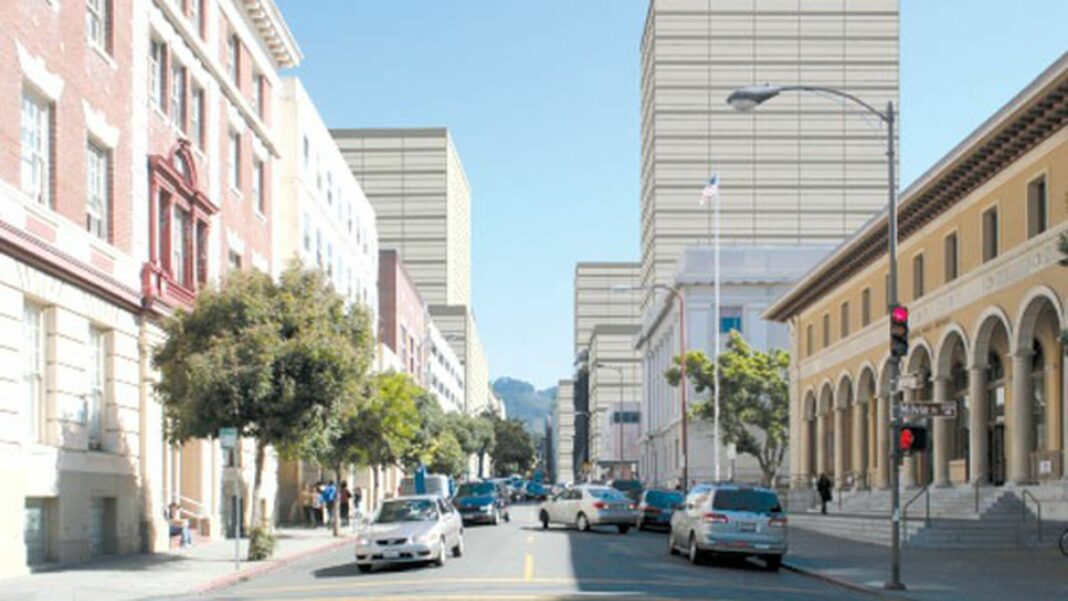
Berkeley’s proposed downtown plan envisions adding four new 180-foot-tall buildings. Credits: City of Berkeley 
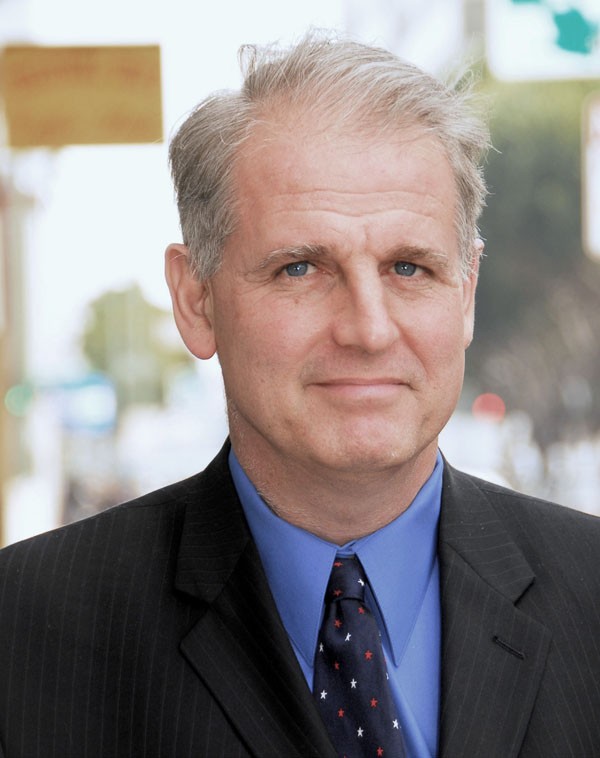
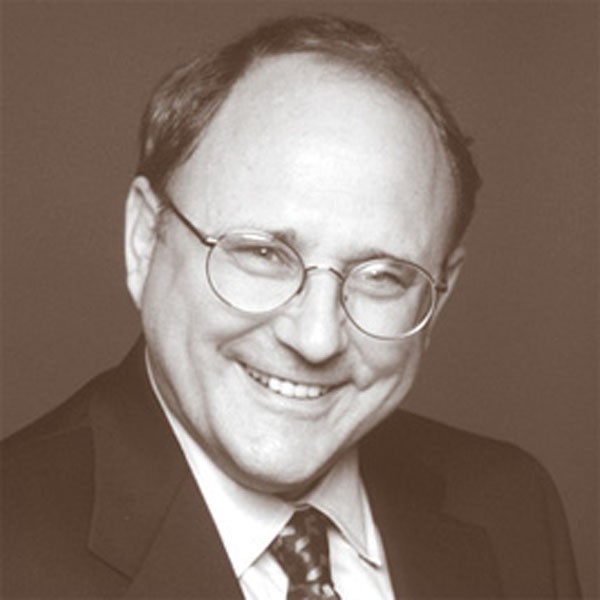
Kriss Worthington. Credits: Nick Sebastian/Worldwide Communications Berkeley Mayor Tom Bates. Credits: Urban Advantage Greenbelt Alliance advocates a much denser San Pablo Avenue than is currently the case. Greenbelt Alliance advocates a much denser San Pablo Avenue than is currently the case. Mike Pyatok.



In fact, Greenbelt Alliance, an environmental group that has been fighting suburban sprawl for decades, recently pinpointed the inner East Bay as one of the region’s top potential growth areas. In a report released last month, “Grow Smart Bay Area,” the alliance estimated that the inner East Bay, west of the hills, could accommodate at least 106,000 new housing units by 2035. The group based its estimate on data from the Association of Bay Area Governments and UC Berkeley’s Institute of Urban and Regional Development. “The truth is we just can’t afford suburban sprawl anymore,” explained Greenbelt Alliance’s Elizabeth Stampe. “It just puts more cars on the roads, and adds to greenhouse gases.”
At a time when new home construction has ground to a halt because of the housing collapse, the debate over urban growth may seem odd. But the market will eventually recover, and when it does, the pent-up demand for housing in the Bay Area likely will be substantial. According to a nearly finished study by the Metropolitan Transportation Commission, consumer desire for transit-oriented development appears to be stronger than ever. “Even now, there is a lot more demand than there is supply,” said MTC planner Valerie Knepper, who is leading the study.
But for the inner East Bay to grow the way it should, it will have to overcome the region’s well-developed not-in-my-backyard (NIMBY) sensibilities. In Berkeley and North Oakland, in particular, liberals who view themselves as environmentalists have been blocking dense housing developments for decades. They have complained about traffic, overcrowding, and the potential destruction of neighborhood character. But among those who are paying attention to the causes of global warming, there is a growing realization that no-growth activists have to step back and look at the bigger picture. Climate change has forced a paradigm shift in the environmental movement. If you live in an urban area, you can’t call yourself an “environmentalist” and continue to act like a NIMBY by blocking new housing.
In Berkeley, where NIMBY sentiment is especially strong, a group of developers and activists who advocate for smart growth sometimes refer to themselves as YIMBYs (Yes, In My Backyard). “Our goal is to shift the idea of what it means to be an environmentalist when living in a city, away from the protection of land to the more efficient use of land,” explained Erin Rhoades, the volunteer executive director of Livable Berkeley. For several years, her group has been battling a small but very vocal coalition of city residents who simultaneously view themselves as green while staunchly opposing urban housing development.
During the past year, the war between Berkeley’s NIMBYs and YIMBYs has grown especially intense as the city council has moved toward rezoning its downtown to accommodate more dense development. The council is scheduled to take up the so-called Downtown Area Plan on July 7, and again on July 14. So far, Berkeley’s smart-growth forces appear to be winning the argument, as the council seems ready to approve a plan that calls for much more dense construction and taller buildings than the anti-development faction wants.
The Oakland City Council, meanwhile, is scheduled to debate its new downtown plan on July 7, too. But there are far fewer NIMBYs in Oakland when it comes to downtown issues. In fact, there is widespread agreement that the city’s core needs to grow significantly. Yet in an ironic and unfortunate twist, Oakland’s overwhelming desire to attract new development may prompt the council to approve a plan that could leave the downtown fallow for years to come.
Ultimately, the factors affecting whether either city succeeds or fails — and whether it helps curb greenhouse gases — are in the details.
Berkeley has been a national leader in the fight against global warming. Last fall, the city launched its innovative, municipally financed solar-power program. And in early June, the city council adopted an aggressive Climate Action Plan that seeks to greatly lower Berkeley’s greenhouse gas emissions. And yet the current fight over a proposal that would help curtail suburban sprawl by allowing dense development in downtown has been fierce.
Mayor Tom Bates, who backs the density plan and who received widespread recognition for his decision earlier this year to get rid of his car, says a small, vigilant, and loud group of anti-growth activists have attempted to hijack the process. But he thinks a majority of the council will ultimately adopt the dense development proposal. “The council has come to understand that a group of people — it’s hard to quantify how many, but we think it’s about 30 percent of the population — don’t want anything to grow; they don’t want anything to happen,” the mayor said. “We just have to keep in mind that there’s another 70 percent who aren’t that vocal.”
Much of the heated debate over the plan has been about tall buildings. After eighteen months of meetings, a city-sponsored committee recommended that the council allow four 100-foot-tall buildings, and four that are 120 feet tall in the downtown area. However, the city’s planning commission, which is more development friendly, came up with its own plan that would allow six 120-foot-tall buildings, and four that are 180 feet tall — as tall as the existing Wells Fargo building, the city’s tallest. Both plans would also allow most new buildings to be built at a maximum height of 85 feet. The council appears to be leaning toward approving the denser plan, which some critics decry as “the Manhattanization of Berkeley.”
In truth, the fight over building heights is misdirected. Tall buildings are unlikely to be built in Berkeley anytime soon because they’re too expensive to construct. The real difference between the two plans is that the less dense one will probably result in no tall buildings, while the other will probably produce four. The reason is that developers prefer buildings that are less than 75 feet tall or greater than 180 feet, but not in between. So any plan that calls for 100-foot- or 120-foot-tall buildings is unrealistic.
Why? In buildings that are less than 75 feet tall, developers can use wood framing, which tends to be relatively inexpensive. But above that height, fire-safety codes require them to build with reinforced concrete or steel, which costs a lot more. As a result, developers can’t make a tall building profitable unless it’s at least 180 feet in height (seventeen stories). Anything shorter than that means that the developer won’t generate enough money from selling condos or renting apartments to pay for the high costs of erecting the building in the first place.
In a study conducted for the city last year, Strategic Economics, a Berkeley-based consultant that advises cities throughout the Bay Area, including Oakland, found that once the housing market rebounds the only feasible buildings for developers in Berkeley will be less than 75 or at least 180 feet tall. The report said it’s possible that developers could make 140-foot-tall buildings pencil out in ten to fifteen years — but not ones that are 100 feet or 120. In other words, if Berkeley were truly serious about allowing tall buildings in downtown, then it would adopt a plan that calls for a few that are 140 feet tall, and several more at 180 feet. “I don’t mean to be pessimistic, but infill development is very challenging,” said Nadine Fogarty, a principal at Strategic Economics.
Nonetheless, the debate about tall buildings ultimately misses the point. Both the less-dense and more-dense plans provide for plenty of housing. But the real threats to downtown development are the restrictions placed upon it. The two main opponents of Berkeley’s dense downtown plan on the council are Kriss Worthington and Jesse Arreguín, who also are considered the most liberal members of the council. In interviews, both said they won’t vote for the plan unless the city increases its affordable housing requirement to 25 percent and forces developers to adhere to strict green building standards. Berkeley currently requires that developers make at least 20 percent of their housing projects affordable, or pay the city an equivalent fee to build affordable units elsewhere, regardless of whether there is a public subsidy involved. It also does not require strict green building standards.
Worthington also said developers that don’t provide sufficient parking should pay a “transportation services fee,” while Arreguín said that developers should help pay for open space and other “public improvements.” When asked whether they were simply putting up barriers to smart growth, both said they believed developers can afford it. Worthington also said that ensuring that more affordable housing is built in Berkeley is his top priority and that developers often find loopholes in the 20 percent rule that allow them to build less than that. “For some people in Berkeley, the height of the building is what they care about,” he said. “For me, it’s the affordability.”
Both councilmen bristled when asked whether they were being NIMBYs. “I think it’s laughable,” Worthington said. “I campaigned for office supporting 1,000 units of housing in my district, and 5,000 in the City of Berkeley. That’s not a very NIMBY thing to say.” Worthington said he is not among the “25 percent who think that Berkeley is dense enough and that we don’t need more growth.” “There isn’t anybody on this council who is saying we don’t need more density in downtown,” he said.
While Worthington and Arreguín may indeed support dense development, the requirements they’re advocating would probably kill most of it, according to the Strategic Economics report. The study concluded that even in a robust housing market, the 20 percent affordable housing requirements and a green building standard would make 75-foot-tall and 180-foot-tall buildings barely feasible for developers. By contrast, the study indicated that the city could spur downtown development by reducing the affordable housing requirement to 10 percent and by not adopting the green building standard at all.
Ali Kashani, a longtime Berkeley developer and co-founder of Livable Berkeley, the YIMBY group, said he believes that advocates of the affordable housing requirement and the strict green building standard know that those proposals will sell well in liberal Berkeley. After all, who could be against affordable housing and eco-friendly buildings? But Kashani said he believes that the advocates of those requirements are exploiting them to block downtown development. “They know nobody will build,” he said.
Rhoades of Livable Berkeley said the lack of new housing development over the past few decades has made Berkeley almost entirely unaffordable. But if the city were to add lots of new housing, she argued, it would create an abundance of supply, thereby lowering prices. In addition, more housing developments will result in more money to build affordable units or more cash the city can use to subsidize affordable housing elsewhere. Plus more housing will allow more workers to live in Berkeley, thereby slowing suburban sprawl.
Stampe of Greenbelt Alliance also cautioned against getting hung up on green building standards. The location of housing can have a far greater effect on greenhouse gas emissions, she explained. By definition, housing in cities already is much greener because people have shorter commutes. She explained that you can build an eco-friendly home in the suburbs, but if you spend a lot of time in your car, it’s worse for the environment. “If you’re driving from your so-called ‘green’ home every day, it turns out not to be very green,” she noted.
Meanwhile in downtown Oakland, the biggest impediment to growth over the years hasn’t been NIMBYism but crime. The widespread perception that downtown is dangerous has stymied development. But in recent years, Oakland’s Uptown area, just north of downtown, has launched a comeback, particularly since the renovation of the historic Fox Theater. And city leaders hope to capitalize on it.
At its July 7 meeting, the Oakland City Council likely will approve a plan to allow an unlimited number of tall buildings throughout much of downtown. The proposal follows months of debate that — as in Berkeley — centered on high-rises. Most developers have advocated for as many skyscrapers as possible in the downtown core. At an Oakland City Council committee meeting last week, developer Kathy Kuhner summed up the sentiment when she waxed romantic about the “tall slender buildings” of Vancouver and Hong Kong.
Local preservationists, led by the Oakland Heritage Alliance, also want more high-rises in the city’s core. But they are concerned that an explosion of growth could ultimately lead to the destruction of historic structures to make room for more skyscrapers. Meanwhile, people concerned about preserving the beauty of Lake Merritt worry that tall buildings along the lakefront could “wall off the lake” and block views of iconic downtown buildings such as the Tribune Tower and City Hall.
The council appears ready to approve a sort of compromise that would allow skyscrapers throughout much of downtown, while keeping buildings along Lakeside Drive, near the Scottish Rite Temple, no taller than 170 feet. The council also seems likely to adopt plans to further study view corridors and ways to protect historic structures.
But the city’s proposal could end up backfiring. Mike Pyatok, an accomplished Oakland architect who designs buildings for developers throughout the West, is making a convincing argument that the city’s plan, if approved, will leave the downtown too expensive to develop, thereby stifling its growth potential and spurring more suburban sprawl. “They think they’re making the city an open book for development, but they’re doing the opposite,” Pyatok said of city leaders. “They’re closing the book.”
Pyatok explained that rezoning most of the downtown for tall buildings will artificially raise property values, thereby inhibiting development. Erecting tall buildings is already a costly endeavor, so developers need to acquire land as cheaply as possible to make it work. But if the downtown is rezoned for tall buildings, property owners are going to demand more money for their land, Pyatok explained, noting that property values usually increase when land is rezoned for high rises.
“They may not understand that the interests of property owners are the exact opposite of developers,” Pyatok said of council members. “Property owners want to get the most they can for their property, while developers need to get the cheapest price. So, to just block out the whole downtown for high rises is going to make property owners think they’re sitting on a gold mine. And all those areas in the downtown are going to sit empty.”
Other cities, particularly Seattle, have recognized this problem and thus limited tall buildings to small sections of the city while only allowing buildings of up to 75 feet tall elsewhere, Pyatok said. The 75-foot height limit keeps property values low, making land more attractive for developers. And while 75-foot-tall buildings are cheaper to erect because they can be constructed with wood framing, Pyatok noted that Oakland limits wood framing to buildings 65 feet and shorter. He said the city should change that standard to match Seattle’s.
Oakland could achieve plenty of density with 75-foot-tall housing developments, Pyatok argued. Assuming that such buildings can house about 150 people per square acre of buildable space, that works out to about 96,000 residents per square mile. As a reference, Manhattan is home to about 65,000 people per square mile. “It’s just a misunderstanding to think that you have to have high-rises to get high density,” said Pyatok, who also has been studying the potential growth of Upper Broadway with a group of graduate students. “I really think that a 75-foot height limit throughout a great deal of downtown could create a lot of density.”
Oakland, he believes, should limit skyscrapers to Broadway, near the 12th Street and 19th Street BART stations. Or, he said, the city should take a hard look at what San Francisco and other cities have done. San Francisco limits both building density and height, but allows property owners to buy and sell development rights to construct skyscrapers. So if you’re a property owner and you do not intend to build a high-rise, then you can sell the space above your building to another developer, who then can add it to his or her property and build taller. As a result, San Francisco has been able to protect historic buildings while controlling land values and spurring growth.
Limiting most new buildings to 75 feet high also would generate more workforce housing by helping keep property values and building costs low. By contrast, high-rise condos are primarily for the wealthy because developers need to charge high prices to cover their increased costs. “High-rises only work for high-end housing,” noted Pyatok, who sent a letter to top city officials, outlining his concerns.
So is the city council going to ignore the lessons learned by other cities? It appears so. Earlier this year, the city planning commission chose not to request an in-depth study of San Francisco’s model for buying and selling development rights. And in an interview, Eric Angstadt, the city’s deputy director of economic development who has led the downtown plan process, refused to comment on whether his office had examined Seattle’s experience with limiting building heights to 75 feet.
In other words, Oakland’s intense desire to finally develop its downtown appears likely to hurt its chances of ever attaining it — and thus helping fight global warming.
As Berkeley and Oakland debate the futures of their respective downtowns, both cities have yet to seriously examine the opportunities for dense development along the major transit corridors between them. Greenbelt Alliance report identified San Pablo and Telegraph avenues as potential growth areas, along with Upper Broadway, sometimes known as Auto Row. Of the three, the group thinks San Pablo can house the largest number of people and have the biggest impact on sprawl. “It’s a huge opportunity,” said Stampe of the alliance. “It really makes a lot of sense.”
San Pablo is ripe for both rezoning and redevelopment. Greenbelt Alliance envisions a much denser urban strip with taller buildings replacing the strip malls and single-story businesses with parking, not to mention the empty storefronts and vacant lots. San Pablo, in short, is a prime example of how not to do smart-growth construction. “It feels like a highway,” Stampe noted. Adding more apartments and condos also would help many of the businesses along the avenue. And the recent growth on San Pablo in Emeryville further points to the street’s unrealized capacity.
But in terms of attracting large numbers of residents, no street in the East Bay may have more potential than Telegraph Avenue between the UC campus and downtown Oakland. Telegraph is already more desirable than San Pablo, as evidenced by the recent explosion in popularity of the Temescal area in North Oakland. But developing Telegraph in Berkeley promises to be contentious if the area’s strong opposition to Bus Rapid Transit along the avenue is any indication. Telegraph’s growth also could be curbed by NIMBYism, which is particularly strong on the avenue.
In the intense mid-decade battle over a condo project at Telegraph and 51st Street, a group of anti-dense-development activists who called themselves Standing Together for Accountable Neighborhood Development sought to block the project and demanded height limits of 48 feet in the Upper Telegraph neighborhood. They were opposed by a pro-dense-development group, known as Urbanists for a Livable Temescal Rockridge Area, which backed the 68-unit project and advocated for taller buildings, up to 75 feet in the area. Ultimately, the city approved the condo project, but it has yet to break ground because of the housing crisis.
Upper Broadway in North Oakland also may prove to be controversial. Oakland City Council President Jane Brunner, who represents North Oakland, said that residents who live east of Broadway and enjoy views of San Francisco will likely oppose 55-foot- to 75-foot-tall buildings. Brunner believes that smart-growth advocates, whom she calls “urbanists,” need to learn how to “work with people who have lived in neighborhoods for years.”
That may be true, but the people who have lived for years along the East Bay’s major transit corridors and consider themselves to be liberal environmentalists also need to finally start thinking globally and acting locally. The coming global warming crisis demands that they do more than just eat organic, install solar panels, or buy a Prius.
They also need to realize that dense development will make their neighborhoods and their cities better — not worse. More people means more shops, cafes, and restaurants — and more tax revenues. And when you think about it, who doesn’t want to be able to walk to the local store for a bag of groceries or grab a cup of coffee at the corner cafe — and save help save the planet at the same time?