In early 2008, the national spotlight focused on Berkeley as the city council proclaimed recruiters for the US Marines “unwelcome intruders.” As antiwar liberals clashed with offended conservatives, the protests and counter-demonstrations splashed across the evening news. But all the attention was badly misdirected. Just a few blocks away, virtually unmolested by protesters or TV cameras, was John Yoo, a UC Berkeley law professor whose secret government work was more objectionable than anything Marine recruiters or Berkeley’s city council could possibly have concocted.
Yoo, a tenured professor at Boalt Hall since 1999, is the author of the infamous “Torture Memos” — a set of repudiated legal opinions that led to prisoner abuses in US prisons at Abu Ghraib, Guantanamo Bay, and elsewhere. Yoo wrote the memos for the Bush administration’s Department of Justice while on leave of absence from UC Berkeley from 2001 to 2003. A staunch conservative, he also is believed to have laid the legal foundation for the nation’s warrantless wiretapping program.

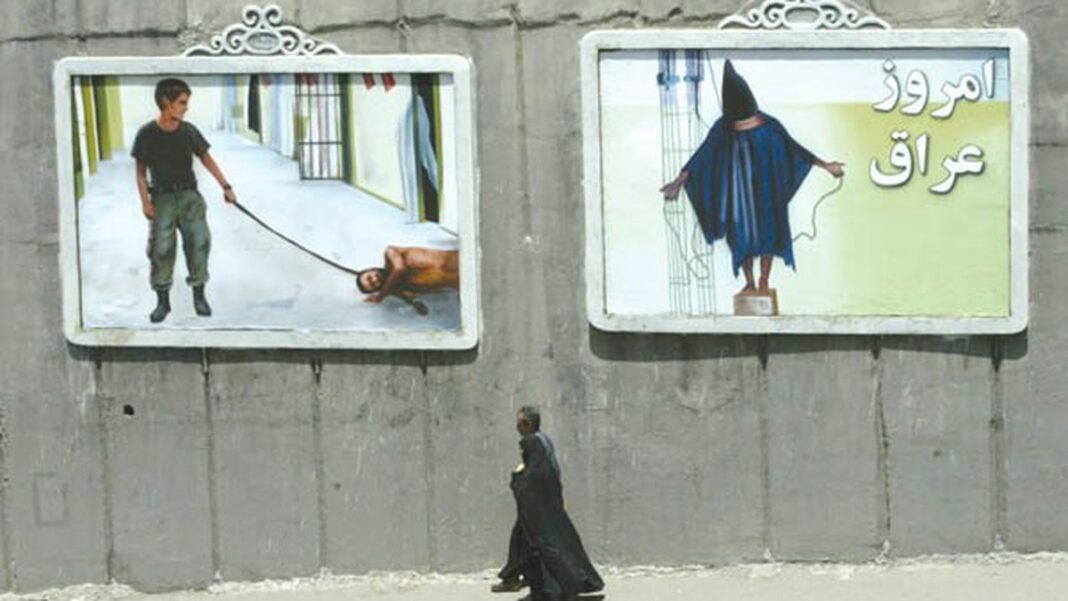
Yoo’s memos not only unleashed actions once considered torture, but they also changed the global perception of our country. Credits: AFP/Photo by Behrouz Mehri 
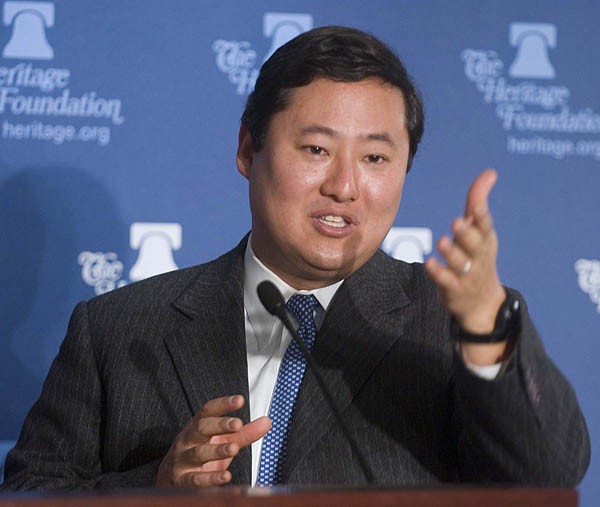
Boalt Law Professor John Yoo Credits: Scott J. Ferrell Yoo’s Colleague Jack Goldsmith was a good friend until he repudiated the memos. Boalt Law School Dean Christopher Edley Jr. says Yoo is protected by tenure and “academic freedom.”


Yoo is now back at Boalt quietly teaching constitutional law, mostly overlooked by both the Bay Area media and anti-Bush activists. But in legal circles, both liberal and conservative scholars have sharply criticized the torture memos while engaging in online debates about whether he should be charged with war crimes, fired from Berkeley, or simply left alone.
One of his critics is Jack Goldsmith, a fellow conservative and former close friend. Goldsmith, who is now a Harvard University Law School professor, succeeded Yoo in the Justice Department and ultimately rescinded the torture memos — a move he described as being unprecedented. In a book released last fall, Goldsmith said he had no choice but to repudiate Yoo’s work because it was so “extreme” and “one-sided.” He said the memos amounted to an “advance pardon” or “get-out-of-jail-free card” for any interrogator who tortured prisoners in violation of US and international laws.
The Bush administration made one of Yoo’s torture memos public on March 31, prompting some critics to immediately dub it the “Abu Ghraib Memo.” Among other things, the memo extended the harsh and humiliating techniques employed by the CIA to military interrogators in Iraq and Afghanistan. The revelation of the 81-page memo sparked an editorial in The New York Times that questioned Yoo’s continued employment at Berkeley, and spurred a call by two human rights organizations for Yoo to be fired.
In response, Boalt’s dean, Christopher Edley Jr., issued a statement saying that while he too was “troubled” by the torture memos, Yoo was protected by tenure rules and academic freedom. Edley essentially said that the forty-year-old law professor could not be fired unless he was convicted of war crimes.
There is a chance, although remote, that such a thing could happen. Following World War II, Nazi lawyers were tried and convicted of war crimes at Nuremberg for their roles in enabling Hitler to commit atrocities. However, because of a 2006 US law that provided retroactive immunity to government officials, Yoo may never face criminal charges in the United States. Nonetheless, he could be prosecuted in a foreign or international court.
But a closer look at the University of California’s tenure regulations reveals that UC Berkeley need not wait for the intervention of foreigners. For starters, it’s highly questionable whether Yoo’s work for the Bush White House truly constituted an instance of academic freedom. And even if it did, there’s still a case to be made that the former law clerk for Supreme Court Justice Clarence Thomas engaged in misconduct and violated his professional legal ethics. As a result, UC Berkeley can — and should — fire him.
John Choon Yoo was part of a wave of conservative ideologues who swept into the executive branch following the inauguration of George W. Bush in 2001. Yoo is a member of the ultra-right-wing Federalist Society and at the time was already known as one of the “New Sovereigntists,” a group of conservative intellectuals deeply critical of the growing influence of international law on American jurisprudence. He also shared Vice President Dick Cheney’s view of unlimited presidential power in wartime, and possessed special skills that proved invaluable to the White House. He’s brilliant, supremely confident, and as a leading scholar from a prestigious — and liberal — university, he carried the appearance of bipartisan street cred.
After 9/11, Yoo played an integral role within the administration. He became a member of a small group of high-ranking lawyers who called themselves the “War Council.” In his 2007 book, The Terror Presidency, Jack Goldsmith wrote that the group met often “to plot legal strategy in the war on terrorism.” Goldsmith was Yoo’s good friend and fellow new sovereigntist, who took over for him in the Justice Department. Although the War Council had an extremely influential membership, including then White House Counsel Alberto Gonzales and Cheney’s lead attorney David Addington, none possessed Yoo’s special position in the administration.
At the time, Yoo was a top deputy in the Justice Department’s Office of Legal Counsel. Although obscure to anyone outside the Beltway, the OLC is one of the most important divisions of the executive branch. Its job is to interpret law and to be the president’s official legal opinion writer. As a result, its opinions and memos carry the weight of the law, unless the courts later overturn them. Most important, the OLC opinions legally insulate from criminal prosecution anyone who follows them. As a result, the department’s work has a long history of being unbiased, thoroughly researched, and based on sound legal footing, according to Goldsmith, who became head of the office in 2003.
But with Yoo’s pen, that all changed. The office suddenly became a rubber stamp for whatever Bush and Cheney wanted. Yoo, according to Goldsmith, “wrote opinion after opinion approving every aspect of the administration’s aggressive antiterrorism efforts.” Government officials, Goldsmith explained, were deathly worried about a future administration, especially a Democratic one, investigating them for criminal acts. So they wanted — and needed — legal opinions that would inoculate them. They viewed Yoo as “a godsend,” Goldsmith said. “The opinions made Yoo enormously valuable to the White House after 9/11 and gave him extraordinary influence within the administration.”
Yoo apparently authored one of his first controversial memos in October 2001, about five weeks after 9/11. Some believe the opinion likely formed the basis of the administration’s warrantless eavesdropping program. First revealed by The New York Times in 2005, the program allowed government officials, without getting a warrant, to secretly listen to phone conversations of Americans whom they believed had contacts with terrorists. The October 2001 memo, which since has been rescinded but most of which still remains classified, stated boldly that the Fourth Amendment’s broad prohibition against search and seizure without a warrant “had no application to domestic military operations” in the war on terror. The existence of the memo was revealed in a footnote in Yoo’s second torture memo.
As for the first torture memo, Yoo wrote it in 2002 after the capture of Abu Zubaydah, a man the Bush administration touted as the first high-level al-Qaeda operative to be arrested after 9/11. In an interview with Esquire magazine published last month on its web site, Yoo acknowledged being under “time pressure” to finish the memo because of Zubaydah’s arrest. FBI agents had been questioning Zubaydah using traditional law-enforcement interrogation techniques, but CIA officials were reportedly growing impatient and believed that they needed to use much harsher methods to make Zubaydah crack. After working feverishly for weeks, the Berkeley law professor finished the opinion in August 2002. One of the memo’s main provisions was that it altered the traditional definition of torture to make it easier for interrogators to use aggressive tactics that previously had been illegal.
Under Yoo’s new definition, it wasn’t torture unless the interrogator was inflicting pain “associated with a sufficiently serious physical condition or injury, such as death, organ failure, or serious impairment to body functions.” Yoo told Esquire that he decided to use this highly technical wording because he believed the traditional definition was too “blurry.” “I didn’t want the opinion to be vague so that the people who actually have to carry these things out don’t have a clear line, because I think that would be very damaging,” he said.
But the memo went much farther than moving the bar on torture. Even if the interrogators committed torture under Yoo’s new definition, Goldsmith noted that the memo told them “they could still avoid criminal liability by invoking a necessity defense (on the theory that torture may be necessary to prevent a catastrophic harm) or self defense (on the theory that the interrogators were acting to save the country or themselves).” To top it off, Yoo’s memo, according to Goldsmith, concluded that existing domestic and international laws against torture, from the Uniform Code of Military Justice to the Geneva Conventions, violate the president’s wartime commander-in-chief powers and thus are unconstitutional. In short, Yoo said torture was legally defensible in court, which in effect, meant that it was.
Goldsmith said CIA officers called the memo the “Golden Shield.”
In his 2006 book, The One Percent Doctrine, investigative reporter Ron Suskind described Zubaydah’s interrogation by the CIA. “According to CIA sources, he was waterboarded, a technique in which a captive’s face is covered with a towel as water is poured atop, creating the sensation of drowning,” Suskind wrote. “He was beaten … He was repeatedly threatened, and made certain of his impending death. His medication was withheld. He was bombarded with deafening, continuing noise and harsh lights.”
Waterboarding dates to the Spanish Inquisition and has long been considered torture. Indeed, American tribunals prosecuted and convicted Japanese soldiers for waterboarding after World War II. The Bush administration has acknowledged waterboarding Zubaydah, but has maintained that it wasn’t torture — apparently in reference to Yoo’s new definition.
The president also has contended that under “enhanced interrogation techniques,” Zubaydah gave up important intelligence, including helping indentify Khalid Sheikh Mohammed, the self-professed chief planner of the 9/11 attacks. But according to Suskind and reporter David Johnston of The New York Times, the White House’s claims about Zubaydah were wildly overblown. It turns out, he was nothing more than a glorified al Qaeda travel agent with severe mental problems who provided almost no vital information. Suskind reported that US officials actually captured Mohammed thanks to a cooperative source who guided CIA agents to his safe house. The US government then paid that tipster a $25 million reward and safely relocated him and his extended family in the United States.
Suskind also wrote that even though Zubaydah suffers from “multiple personalities,” his interrogators took his “confessions” as gospel. Under duress, Zubaydah told make-believe stories of al Qaeda targeting shopping malls, banks, supermarkets, nuclear power plants, water systems, and apartment buildings, Suskind reported. Government agents then scrambled in response. “Thousands of uniformed men and women raced in a panic to each flavor of target,” Suskind wrote. “The United States would torture a mentally disturbed man and then leap, screaming, at every word he uttered.”
If Yoo’s first torture memo was a golden shield for the CIA, the second one provided similar cover for the Pentagon. According to a 2006 story in The New Yorker by investigative reporter Jane Mayer, harsh interrogation methods had migrated in the fall of 2002 from the CIA to the Defense Department-run prison at Guantanamo Bay, Cuba. However, military lawyers there strongly objected, believing the new techniques were illegal and amounted to torture. To settle the disagreement, top Pentagon officials asked Yoo for a memo of their own. He complied in March 2003.
Yoo has publically maintained that this second memo was never meant for Abu Ghraib, the notorious US prison in Iraq. But reporting by Mayer and legal blogger Martin Lederman, a Georgetown University law professor and former Office of Legal Counsel attorney in the both the Clinton and Bush administrations, reveals that this is precisely what happened. The Pentagon sent the very same officer who ran Guantanamo Bay in late 2002 and early 2003 to Iraq a few months later.
That commander, Major General Geoffrey Miller, had been briefed on Yoo’s memo and given orders to “GTMoize” interrogation techniques there, Lederman noted on the legal blog Balkinization. Sure enough, the worst Iraqi prisoner abuse took place at Abu Ghraib from the spring of 2003 to December of that year when Goldsmith rescinded the second memo and told Pentagon officials they should no longer rely on it. Yoo’s second memo, Lederman wrote, “is, in effect, the blueprint that led to Abu Ghraib.”
Ironically, Goldsmith would have never had the authority to withdraw the torture memos had it not been for Yoo. In early 2003, the White House nominated Yoo’s boss, Jay Bybee, then the head of the Office of Legal Counsel, to be a federal appellate judge in the Ninth Circuit, based in San Francisco. The White House reasoned that Bybee, another extremely conservative lawyer who had co-signed Yoo’s first torture memo but is not believed to have contributed significantly to it, would be a perfect fit to counterbalance the traditionally liberal appellate court.
Once Bybee got his judgeship, the White House wanted Yoo to take over the office, according to Goldsmith. But Attorney General John Ashcroft refused. Goldsmith said Ashcroft resented Yoo because of his tight relationship with the White House, especially with Gonzales and Addington. So with Yoo out of the running, the Berkeley law professor recommended for the job his good friend and fellow staunch conservative Goldsmith.
About six weeks after taking over the office, Goldsmith reviewed the torture memos and was astonished at what Yoo had done. The opinions reflected “bad judgment,” were “poorly reasoned,” and were completed with an “unusual lack of care,” he wrote in his book. In what appears to have been an unprecedented move, he then concluded he would have to rescind the memos. He said that he knew of no other instance in which an Office of Legal Counsel legal opinion had been rescinded by a succeeding lawyer within the same administration. To make his decision stick, he decided to quit his job on the day he rescinded the memos, thus forcing the White House to approve their withdrawal or risk turning his resignation into a huge news story.
By then, however, the Yoo memos had already taken their toll. Not only was Abu Ghraib an international embarrassment that harmed the United States’ reputation around the world, it risked the lives of captured US soldiers for years to come. But that was only the beginning. Yoo’s memos also likely led to the deaths of prisoners. Since he completed the first torture memo in August 2002, nearly one hundred detainees have died while in US custody, according to a 2006 report by the liberal watchdog group Human Rights First. The group also reported that its research found that during that time at least eight people “were tortured to death.”
When the Abu Ghraib scandal broke in the spring of 2004, with its sickening photos of men piled naked atop each other or forced to wear Ku Klux Klan-style hoods, John Yoo was safely back at Berkeley, enjoying life in the East Bay. He had returned with little fanfare; at the time, his torture memos were still secret. However, more than four years later, much is now known about Yoo’s pivotal role in enabling torture and mistreating prisoners. Yet somehow he continues to escape condemnation on the supposedly liberal campus.
There has been no faculty or student uprising, no sense of outrage. In fact, the opposite is the case. Law students actually appear to admire him. According to a blogger on the campus web site, Nuts & Boalts, Yoo’s students this semester even gave him a round of applause during his last day of class.
Yoo’s campus supporters not only defend his right to academic freedom, but they say he’s a good professor, who prepares his students for the bar exam while leaving his radical political beliefs and one-sided legal opinions at the classroom door. “His class was scrupulously faithful to current doctrines on the foreign affairs and war powers, separation of powers, judicial review, treaties, executive appointments, executive privilege, and such,” wrote one poster on Nuts & Boalts. “And about 10x more organized and detailed than certain other classes.”
But is being a good teacher all that we should expect from a professor at one of the top academic institutions in the world? What about ethical behavior — taking personal responsibility for one’s actions, and not being complicit in the performance of degrading acts, torture, or even murder? What about the university? How can it stand behind a man who enabled the CIA and the military to torture people for months or even years at a time?
Those are precisely the questions posed in recent weeks by the National Lawyers Guild and the American Freedom Campaign, two human rights groups that believe Yoo should not be allowed to remain at Boalt in light of the overwhelming evidence against him. “John Yoo’s complicity in establishing the policy that led to the torture of prisoners constitutes a war crime under the US War Crimes Act,” explained National Lawyers Guild President Marjorie Cohn in a statement. “John Yoo should be dismissed from Boalt Hall and tried as a war criminal.”
In response to those organizations and to an editorial last month in The New York Times that characterized Yoo’s continued employment at Berkeley as “inexplicable,” Boalt Law School Dean Christopher Edley Jr. posted a statement on the school’s web site entitled “The Torture Memos and Academic Freedom.” Edley argued that even though Yoo’s work for the Bush White House may have been repugnant, the professor still “enjoys not only security of employment and academic freedom, but also First Amendment and Due Process rights.”
Edley also argued that, as a lawyer dispensing a legal opinion, Yoo was not as responsible as those who actually implemented the torture program. “As critical as I am of his analyses, no argument about what he did or didn’t facilitate, or about his special obligations as an attorney, makes his conduct morally equivalent to that of his nominal clients, Secretary [Donald] Rumsfeld, et al., or comparable to the conduct of interrogators distant in time, rank, and place,” Edley wrote. “Yes, it does matter that Yoo was an adviser, but President Bush and his national security appointees were the deciders.”
Finally, Edley argued that short of a criminal conviction, his hands were tied by campus regulations. “Assuming one believes as I do that Professor Yoo offered bad ideas and even worse advice during his government service, that judgment alone does not warrant dismissal or even a potentially chilling inquiry,” the dean wrote. He then pointed to a UC policy regarding tenured professors that defines a fireable offense as “a commission of a criminal act which has led to conviction in a court of law and which clearly demonstrates unfitness to continue as a member of the faculty.”
But will Yoo ever be indicted or convicted of war crimes? In a US court, it’s possible, but many legal scholars believe it unlikely. It’s true that an American tribunal at Nuremberg, Germany in the late 1940s prosecuted and convicted high-ranking Nazi lawyers. But according to some legal scholars, the lawyers convicted in that case — United States v. Alstoetter, which served as the basis of the classic film Judgment at Nuremberg — differ from Yoo in that they also implemented the programs that led to the atrocities.
In addition, Yoo may be protected by a war crimes immunity law passed by Congress in 2006. Known as the Military Commissions Act, it provided retroactive immunity from September 11, 2001 through December 31, 2005 for violations of the 1996 War Crimes Act — one of the statutes that Yoo determined was unconstitutional and thus could be ignored by interrogators. (Both Barack Obama and Hillary Clinton voted against the torture immunity law, while John McCain, a former prisoner of war who has repeatedly said he opposes torture, voted for it.)
However, some legal scholars argue that the war crimes immunity law may not apply to Yoo. “The Military Commissions Act clearly protects the interrogators, but not necessarily the top administration officials who sanctioned the techniques,” Scott Horton, a Columbia University Law School lecturer and frequent writer on torture and war crimes, said in an interview. But even if Horton is right, it seems unlikely that an Obama or Clinton Justice Department would attempt to prosecute Yoo, because of the political fallout and accusations of “divisiveness” that it would surely generate.
Still, Horton and other legal scholars argue that Yoo may be in danger of facing charges at the International Criminal Court in the Hague or from a court in another country. In 1998, a Spanish court indicted ex-Chilean dictator Augusto Pinochet for war crimes committed under his leadership in the mid-1970s. In addition, last year an Italian court charged 26 Americans, most of them CIA agents, with kidnapping a Muslim cleric from Milan and taking him to an Egyptian prison where he was tortured. As Horton put it in a recent post on the legal blog, Balkinization, “Professor Yoo will want to think twice about boarding a jet for one of those stays on Lake Como [Italy] of which he is so fond.”
But what if no court ever indicts Yoo? Does that mean he’s destined to mold the minds of tomorrow’s top lawyers while continuing to stain Boalt and UC Berkeley’s reputation for the next quarter century or more? Not necessarily. Despite Edley’s contention that he has no options, it turns out there are plenty of ways to get rid of Yoo.
The principle of academic freedom was enshrined in a pre-World War II agreement between college professors and universities. It’s predicated on the idea that professors cannot be censored, disciplined, or fired for exercising their free speech rights in their classrooms, their scholarly work, or as citizens. But the 1940 Statement of Principles on Academic Freedom and Tenure is not a blanket protection of all speech. It also says professors “should at all times be accurate, should exercise appropriate restraint, and should show respect for the opinions of others.”
Goldsmith’s book provides compelling evidence that Yoo’s torture memos were not accurate, restrained, or respectful of other opinions, which is why his fellow conservative rescinded them. Indeed, Goldsmith asserted that some of Yoo’s more extreme conclusions “had no foundation in prior OLC opinions, or in judicial decisions, or in any other source of law.”
In other words, Yoo appears to have simply blown past opposing views and contrary legal opinions as he made up new law. “I think John thought he was writing what ought to be the law, that he was writing into the law what he thought it should be,” Georgetown Law Professor Lederman said in an interview, indicating that what Yoo did was highly unusual, if not unprecedented. Lederman served in the Office of Legal Counsel with Yoo but said he was not aware of the torture memos until they became public. It should be noted that Lederman told the Express he does not believe Yoo should be fired by Boalt, but did not rule out some sort of discipline short of that.
Even if the torture memos don’t violate the Statement of Principles on Academic Freedom and Tenure, there’s a case to be made that they’re not protected by the very principle the agreement was based on — the First Amendment. The US Supreme Court has long held that free speech is not an absolute. In the seminal 1969 case, Brandenburg v. Ohio, the court summed up its prior rulings that the constitution does not protect speech that is “directed to inciting or producing imminent lawless action and is likely to incite or produce such action.”
It’s pretty clear that Yoo’s torture memos produced imminent lawless action. Yoo knew the CIA and the White House wanted to use harsh interrogation methods on Zubaydah that would have violated the Geneva Conventions and the US War Crimes Act. So he gave them a legal opinion that allowed them to do just that — and more — without fear of ever being brought up on charges by a US court. As Goldsmith explained: “If the OLC interprets a law to allow a proposed action, the Justice Department won’t prosecute those who rely on the OLC ruling.”
In that sense, there’s a good argument to be made that Yoo’s work traveled beyond mere speech into the realm of action, which the First Amendment typically does not protect at all. Think of the difference between saying you wish someone were dead and actually killing that person. After all, Yoo was not some professor presenting a paper at a scholarly symposium. His memos were official government work that enabled people to be tortured — and quite possibly killed. As a member of the War Council, Yoo did more that just churn out bad opinions; he helped to plot Bush administration legal strategy in the war on terror.
Even if that were held to be an exercise of Yoo’s First Amendment rights, despite the strong evidence otherwise, Boalt could still show him the door. For one thing, Edley was wrong: Under the University of California’s Faculty Code of Conduct, tenured professors can be fired for more than a criminal conviction. They also can be disciplined or terminated for “violation of canons of intellectual honesty, such as research misconduct.”
Although firings of tenured professors for research misconduct are rare, there is one recent example from a major university with similar regulations to UC Berkeley. Last year, the University of Colorado’s Board of Regents fired Ward Churchill, a controversial ethnic studies professor. Churchill, a radical leftist, had made national headlines for an outrageous essay written after 9/11 in which he called the victims of the terrorist attacks, “little Eichmanns,” comparing them to the notorious Nazi Adolf Eichmann, the architect of the Holocaust. Churchill also suggested that they deserved to be killed.
Once the essay became public in 2005, it sparked an angry backlash and demands that he be fired, especially from conservative radio and cable TV pundits, some of whom now scoff at the idea that Yoo should suffer the same fate. The University of Colorado ultimately decided that Churchill’s essay was protected by academic freedom. But during its investigation discovered that Churchill had committed research misconduct in some of his other scholarly work. A university panel charged him with “plagiarism, misuse of others’ work,” and “falsification and fabrication of authority.” In essence, he ripped off other people’s ideas and made stuff up.
Now, there’s no allegation that Yoo plagiarized anyone; indeed, his work was uniquely his. But there is evidence that he did far more than mischaracterize the separation of powers doctrine during war time. He made stuff up. In the first torture memo, for example, Yoo made the startling and unsubstantiated assertion that “any effort by Congress to regulate the interrogation of battlefield detainees would violate the Constitution’s sole vesting of the Commander-in-chief authority of the president.”
Goldsmith pointed out that Yoo did not and could not cite any prior Office of Legal Counsel opinion, statute, or legal precedent to back up this sweeping statement. The memo also wrongly implied, Goldsmith said, that “many other federal laws that limit interrogation — anti-assault laws, the 1996 War Crimes Act, and the Uniform Code of Military Justice — are also unconstitutional, a conclusion that would have surprised the many prior presidents who signed or ratified those laws, or complied with them during wartime.”
It’s apparent that Yoo was expressing his own ideas — if no doubt also those of Cheney, Addington, and Gonzales — into law from his post in the Justice Department. That contravened Congress’ sole right to legislate under the constitution, and violated what Goldsmith referred to as an Office of Legal Counsel tradition of providing “an accurate and honest appraisal of applicable law, even if that advice will constrain the administration’s pursuit of desired policies.” In short, Yoo appears to be guilty of both research misconduct and violating the canons of intellectual honesty. Moreover, his actions were arguably far worse than Churchill, whose work, while inexcusable, never led to anyone’s death.
Lawyers are bound by standards that go beyond any tenure rule. As an attorney licensed to practice law, Yoo also is required to follow the ethical standards of the American Bar Association. In a 2006 scholarly paper, “Torturing the Law,” Columbia University Law Professor Jose E. Alvarez, a former State Department attorney in the Reagan administration, noted that the bar association’s Model Rules of Professional Conduct “require lawyers to give candid, independent, and professional, not sycophantic, advice,” prior to their clients taking action.
The rules of conduct also state that “a lawyer should not be deterred from giving candid advice by the prospect that the advice will be unpalatable.” But Yoo’s and other Office of Legal Counsel memos, Alvarez wrote, “tortured the rules of professional conduct insofar as they told the clients only what the lawyer believed the client wanted to hear. They did not enable the client to make an intelligent and informed decision on the basis of real, not fanciful, law.”
Similarly, Yoo appears to have violated the Office of Legal Counsel’s long-standing ethical practices, which according to Goldsmith, include providing “detached, apolitical legal advice as if the OLC were an independent court inside the executive branch.” In his book, Goldsmith also quoted William Barr, a former head of the office, and later, attorney general for the first President Bush: “Being a good legal advisor requires I reach sound legal conclusions, even if sometimes they are not the conclusions that some may deem to be politically preferable.” In other words, Yoo had an ethical and historical duty to inform the CIA and the Pentagon of all the legal pros and cons of torture, not just give them a “blank check,” as Goldsmith put it.
Jack Balkin, a constitutional law professor at Yale Law School (Yoo and Goldsmith’s alma mater), also believes both Yoo and his Justice Department boss, Bybee, made serious ethical miscues. “My own conclusion is that Yoo and Bybee did violate their professional obligations to the president as constitutional actor, and to the country as a whole,” Balkin wrote on his legal blog, Balkinization. “The reason is a combination of their outrageous theory of presidential dictatorship and their all-too-eager assistance in what appears to be a conspiracy to commit war crimes.”
There also are some indications that Yoo might be guilty of more than breaking bar association and Justice Department rules. According to reports in The New York Times and the Los Angeles Times, there’s evidence that the CIA had started torturing Zubaydah before Yoo finished his August 2002 memo. If true, and if Yoo knew about it and then wrote the memo to protect the law-breaking CIA interrogators, he may have participated in a cover-up, if not a criminal conspiracy.
For the past four years, the Justice Department’s Office of Professional Responsibility has been investigating the torture memos and other opinions that Goldsmith rescinded to determine whether they violated Office of Legal Counsel standards. However, some critics are skeptical because the investigators report directly to Attorney General Mike Mukasey and work for the same Justice Department that employed Yoo. Some Congressional Democrats have asked that the office of the Inspector General, which reports to Congress, also be allowed to investigate, but the administration has refused.
Considering this administration’s record of suppressing and delaying investigations, it’s unclear whether the inquiry into Yoo’s work will be completed before the next president takes office in January. Even if it is, it seems unlikely that during an election year it will result in a professional rebuke of Yoo, let alone a recommendation that he be disbarred.
Still, that doesn’t mean that UC Berkeley has to sit on its hands. The university, through tenure rules, certainly has the ability to investigate whether Yoo committed research misconduct or violated the canons of intellectual honesty. And Boalt itself should examine whether the professor breached legal ethical standards. Based on the evidence, both investigations are justified.
Granted, the ten-campus University of California rarely fires tenured professors. According to the president’s office, it has only happened five times in the past twenty years. And only one of those occurred at Berkeley. In 1991, the university fired Michel Strickmann, an associate professor of Asian languages. According to a report from that year in The New York Times, Strickmann was dismissed for allegedly sexually harassing several students, though he was never convicted of any crime. Similarly, in 2002, John P. Dwyer, then the dean of Boalt Hall, resigned in disgrace amid allegations that he sexually harassed a former law student.
Those examples make it clear that if UC Berkeley fails to investigate and fire Yoo, it will send an unmistakable — and perverse — message. If you’re a professor, and you cross the line with a coed, it will cost you your job. On the other hand, you can violate moral, ethical, and legal standards. You can hurt the reputation of your university and your country. You can bring shame upon the nation and harm its standing in the world. You can put our soldiers at risk unnecessarily. You can enable people to be humiliated, tortured, and possibly even killed. And, aparently, you can do it all in the name of “academic freedom.”