

The board of directors of the East Bay Municipal Utility District voted last week to move forward with a slightly smaller version of a new dam on the Mokelumne River in the Sierra Foothills. But several environmental groups indicated that they are planning to sue the agency to force it to abandon the dam proposal. In addition, some opponents were so angered by the board’s 4-2 vote that they plan to file legal challenges against the agency that would threaten its existing water rights on the pristine river.
Bill Jennings of the California Sportfishing Protection Alliance, which has defeated East Bay MUD in past legal battles over the Mokelumne River, said his group plans to file an official complaint with state Water Resources Control Board in the next few months. After that, the alliance plans to take East Bay MUD to court to rescind the agency’s water rights on the river. “They’ve fundamentally changed the game,” Jennings said of the board’s vote, “and I don’t think they understand that they’ve opened Pandora’s Box.”

Frank Mellon. 
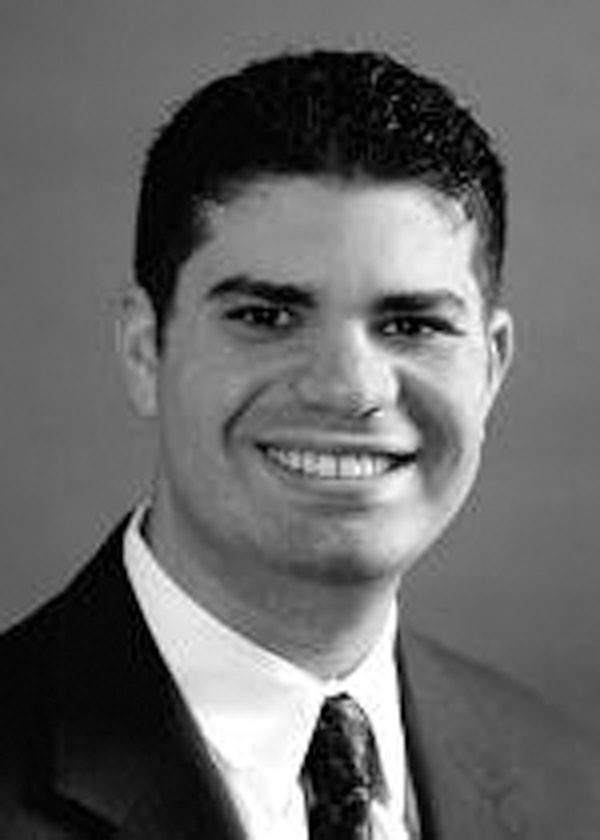
Andy Katz.
Jennings contends that the Mokelumne River is already starved of water, and that a new dam will decimate it. He notes that there are already too many dams on the river, and that it dries up so thoroughly in the summer that it doesn’t connect to the water-starved Sacramento-San Joaquin River Delta. The alliance hopes that its legal challenges will prompt the East Bay Municipal Utility District to give up on its plans for a new, 400-foot-tall dam. “The Mokelumne River just can’t continue to give more,” Jennings said. “It’s a hard-working river that they’ve brought to exhaustion.”
In addition, the Sierra Club, Friends of the River, and the Foothill Conservancy all are seriously considering filing lawsuits against East Bay MUD to challenge the agency’s environmental impact report. Among other things, the groups contend that East Bay MUD failed to adequately examine the potential impacts of the dam and alternatives to it. “We think our case is a good one,” said David Nesmith of the Sierra Club and the Environmental Water Caucus. Nesmith also noted that environmental groups may be required under state law to file lawsuits now in order to protect their ability to legally challenge the dam if East Bay MUD later decides to actually build it. Under California law, the groups have until November 12 to sue.
Opponents are not only upset about the environmental destruction that the new dam would cause, but also about the agency’s steadfast refusal to thoroughly examine charging East Bay water guzzlers more for wasting water. In addition, they’re upset that East Bay MUD will not consider a partnership with the Contra Costa Water District to expand Los Vaqueros Reservoir in eastern Contra Costa County. “They didn’t look at reasonable, prudent alternatives,” Nesmith said.
During last week’s meeting, board member John Coleman, the biggest supporter of the Mokelumne River dam project, repeatedly derided the Los Vaqueros proposal. Coleman, who represents a section of Contra Costa County that is home to many of the biggest water guzzlers in the East Bay, complained that the Contra Costa Water District would require East Bay MUD to pay for the entire Los Vaqueros expansion if they agreed to go in on it together.
But Coleman and other dam supporters inside East Bay MUD failed to note that building a new dam on the Mokelumne would likely cost the agency several hundred million dollars — potentially more than an expansion of Los Vaqueros. Agency officials also did not mention that a Los Vaqueros expansion would cause far less environmental damage because it’s an off-stream reservoir and thus would not destroy an existing river. In fact, that’s why many environmentalists prefer expanding it to building a new dam on the Mokelumne.
Throughout the contentious meeting, which lasted nearly seven hours, officials stressed that they were just keeping their options open and might ultimately scale down the dam further or not build it at all. In the end, a majority of the seven-member board voted to go forward with a dam that would be only fourteen feet shorter than what the agency had previously proposed. It would destroy up to 1.4 miles — instead of 1.9 miles — of a scenic stretch of the river that is popular for fishing and kayaking and is an important habitat for local plants and wildlife. Board members Coleman, Katy Foulkes, William Patterson, and Lesa McIntosh voted for the dam proposal, while Doug Linney and Andy Katz voted against it.
Environmentalists and dam opponents, meanwhile, were also frustrated by the board’s deliberations before its final vote. That’s because at one point during the meeting, four members of the board were ready to support a plan that would have made any dam project much less likely.
The proposal came from Frank Mellon, who represents the Castro Valley area. Mellon suggested that the agency adopt an ambitious, 15 percent water rationing plan, which would have slashed water use to such a degree that the dam possibly would be unneeded. Along with Mellon, Linney, Katz, and McIntosh supported the idea, thereby giving it the four votes required to pass. Linney represents Alameda and parts of Oakland, Katz represents Berkeley and North Oakland, and McIntosh represents Richmond. Linney, Katz, and McIntosh also voted at one point in the meeting to kill the dam proposal outright.
But during the board’s discussion, Mellon and Katz got into a disagreement that eventually torpedoed the 15 percent rationing. Mellon wanted to vote on the proposal and his plan to further reduce the proposed dam’s size, but the details-oriented Katz first wanted to discuss the many other objections he had with East Bay MUD’s plans, including numerous minor complaints that paled in importance to Mellon’s proposals.
At that point, the meeting had passed the five-hour mark, and board members were obviously growing tired. So when it became clear that Katz would not yield and that it would take a long time to go through all of his concerns, Mellon grew frustrated and stormed out. Mellon, who is known to have a short temper, told the rest of the board that he had a prior engagement and couldn’t wait until Katz was done. Sure enough, Katz’ issues took more than an hour to deal with.
But Mellon’s departure meant that there were no longer four votes for 15 percent rationing. So the proposal eventually failed 3-3, with Katz, Linney, and McIntosh voting “yes,” and Coleman; Foulkes, who represents Montclair and Orinda; and Patterson, who represents East Oakland; voting “no.” After the meeting, Nesmith of the Sierra Club approached Katz and was visibly unhappy, telling him that his actions were “not helpful.” “It’s really a shame that it didn’t go through,” Nesmith said later, referring to the rationing plan.
After the meeting, Katz said in hindsight that he would have taken a different approach if he had known what was going to happen. “If Frank had said before the meeting or during the recess that he was going to leave, I would have planned for that,” he said. He added that it was unfortunate that the board’s final long-range water plan, which requires only 10 percent rationing, does not reflect what the board majority wanted. He said he had not yet decided whether to ask the board to revisit the issue.
Mellon’s exit also changed the course of discussions over the size of the dam. Before departing, he proposed a slightly smaller structure — at maximum five-feet shorter — than the one the board eventually approved. But environmentalists, including Katherine Evatt of the Foothill Conservancy, which has been fighting to protect the Mokelumne for twenty years, said after the meeting that Mellon’s proposal didn’t represent much of an improvement, because it would still have ruined up 1.2 miles of the river.
Finally, it should be noted that some of the other news media that have covered this controversy have repeatedly referred to it as a proposal to “raise” the existing Pardee Dam. East Bay MUD officials have sometimes described it the same way. But that characterization is inaccurate. The old Pardee Dam, built in the 1920s, is structurally incapable of being made taller. As a result, East Bay MUD is proposing to build a new, larger dam downstream from the old one that would significantly expand the existing Pardee Reservoir.