
Austin is dead and gone. He died more than a year ago, but Jennifer Rampton and her husband, David Lunas, still haven’t found peace. In their minds, their boy should still be alive, and would be, had his doctor not misdiagnosed what in retrospect seemed like an obvious condition. The recent law school graduates were still students when they first brought their three-year-old beagle mix to Berkeley’s University Veterinarian Hospital a couple years back. The two had a theory about why their supposedly neutered dog was humping a stuffed toy dog to the point of making himself bleed: a retained testicle. It certainly would have explained his odd sexual behavior, they figured.
The vet didn’t seem worried about Austin, named after the bumbling British movie spy. After feeling the dog’s genital area and stomach, court papers say, the vet confidently concluded the pooch didn’t have a testicle hiding in his body. She allegedly assured the couple that Austin was exhibiting “normal dog behavior” and told them not to stress too much.

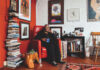
David Lunas, Jennifer Rampton, and their new dog, Hastings. Credits: Chris Duffey Austin Credits: Chris Duffey Credits: Chris Duffey Credits: Matt Chisholm


A year later, pet surgeons diagnosed Austin with testicular cancer after removing a three-pound malignant tumor from his seventeen-pound body. The couple’s hunch about a retained testicle had been right after all. By now, portions of the tumor had become intertwined with the dog’s major organs and couldn’t be removed. To have any chance of survival, Austin would need expensive chemotherapy.
It was too late, it turned out, for chemo to do much good. On the way home from his fifth chemo treatment, the end was obviously near — Austin puked nine times in the car and then refused to eat for three days. Rampton and Lunas were confronted with the most awful choice any loving pet owner with a sick critter must make.
Austin whimpered when vets from another clinic injected him with a euthanizing chemical the following week. Lunas put his hand on the dog’s chest over his heart. He felt Austin’s last heartbeat. Afterward, Lunas recalls with a sigh, he hugged the dog and sobbed.
Alive, Austin was worth about $25 if you go by what Lunas and Rampton paid for the mutt at the local shelter. Dead, he’s worth as much as $50,000, if you go by what his owners are seeking in a malpractice suit against their veterinarian. Not only are they asking the vet and her hospital to cover $20,000 in cancer-related medical expenses but, with a little help from a pioneering animal-law professor, they are also challenging the dated legal contention that pets should be treated as personal property rather than man’s best friend.
Except in truly unusual cases, property owners can’t recover money for emotional distress caused by lost or destroyed property. Courts typically allow pet owners to recover only the market value of their lost or damaged property. And if that “property” happened to be a shelter mutt like Austin, the owner would be lucky to recover a box of animal crackers from the defendant.
But in more and more cases, pet owners such as Lunas and Rampton are asking judges to view their pets as something more akin to loved ones. In Austin’s case, the Hastings graduates are demanding $30,000 in Alameda County Superior Court for the emotional distress they suffered after losing their dog. It’s a long shot, especially for a couple of legal novices, but if they prevail, experts in animal law say it would be the largest-ever judgment of its kind against a California veterinarian. Like so many pet owners — and there are an estimated 71.1 million households in the country with cats or dogs — Jennifer Rampton and David Lunas considered their dog a member of the family, perhaps a bit more so than most: They dressed him up on Halloween as Dracula with a cape and hood. They bought him Christmas presents and gift-wrapped them. He’d even jump in the bathtub while Lunas showered before school.
This is an age where household animals are treated like spoiled children. It’s not unheard of for divorcing couples to have raging custody battles over a pet, and thirteen states, according to one legal journal, allow people to establish trusts for their pets in case the owner should die first. In the American Animal Hospital Association’s most recent annual survey of pet owners, 63 percent responded that they say “I love you” to their animals at least once a day; 83 percent of those polled refer to themselves as their pet’s mom or dad; and 59 percent celebrate their animal’s birthday.
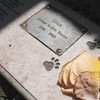
Grief counseling is also widely available for people whose pets have died. And many of the dead receive a proper burial: There are now more than six hundred pet cemeteries in the United States, according to the International Association of Pet Cemeteries. Rampton and Lunas opted for cremation, and they keep Austin’s ashes in an urn at their Alameda home.
But perhaps the single most telling indicator of how much our pets mean to us is how much we spend to keep them healthy. Americans spent $18.25 billion on health care for their dogs and cats in 2001, according to the American Veterinary Medical Association. That’s more than double what they spent a decade earlier. The average dog owner shelled out $179 on veterinary care for his pooch in 2001, the association estimates, while the average cat owner spent $83. That money almost always comes directly out of pocket, since only a tiny fraction of pet owners carry pet health insurance.
Oakland freelance writer Michael Hardesty says he spent more than $6,000 at a local animal hospital over four months to treat his two-year-old kitty, Gina. She had feline immunodeficiency virus, the cat equivalent of the virus that causes AIDS in humans. “I would have paid triple that to keep her alive,” he proclaims. “She was the sweetest, most affectionate cat we have ever known. She was our baby.” His cat died, he says, after losing too much blood during a biopsy in March. Afterward, he bought her a headstone and held a funeral service in his backyard. “Gina,” he eulogized, “you will always live in our hearts.” Hardesty is also thinking of suing his vet, whom he believes ended his cat’s life prematurely; he says he has hired an attorney.
Austin’s owners, meanwhile, loaded up their credit cards to cover his expensive cancer treatments. Rampton says neither she nor her husband had imagined at the beginning that their vet bills would reach $20,000; the tab just kept mounting, slowly. To save money, the couple didn’t buy any Christmas presents the year their dog was diagnosed. Instead, they tied a gold ribbon around his neck because, they reasoned, having Austin alive was their present.
They say they never contemplated putting Austin to sleep, in spite of his rising medical costs, until it became obvious he was too sick to enjoy living. “For us, there wasn’t a question,” says Rampton, 31. “We loved him. I would have sold my car. … There’s nothing we wouldn’t have done to try and give him a chance.” Veterinarians are in an awkward spot when it comes to the emotional bond between people and their pets. They profit from the strong attachment because it makes folks such as Rampton and Lunas willing to spend $20,000 to keep their dogs alive. But if the vets screw up, well, then they’ve got sad and perhaps angry clients on their hands. That, according to Santa Ana-based animal-law attorney Robert Newman, is when vets and their malpractice lawyers hide behind the legal definition of animals as personal property or chattel, to use the legalese. If the law sounds archaic, it is: It’s a throwback to agrarian times when most Americans lived on farms and animals had a clear economic role instead of the primarily emotional one they now do. The outdated legal definition protects vets from the kinds of zillion-dollar malpractice lawsuits that have plagued human medicine.
Newman occasionally gets invited to speak at veterinary conferences on how to avoid liability. When he does, he always brings Ruben, a Chihuahua that cost him $23 to adopt, and holds his pup for all to see, asking: “‘How many of you believe for a moment that if you make a mistake that results in this dog’s death you make me whole by giving me $23?’
“Of course, none of them raise their hands,” the lawyer notes. “And I say to them, ‘Let me suggest to you that you’re a profession that has it both ways. On the one hand, you’re a multibillion-dollar business where, when I come in to see you, you are relying on me having an emotional attachment to my animal so much so that I’m willing to spend whatever it takes to make that animal well. And you say to me in your waiting room, ‘How’s your boy? What’s wrong with your kid? What’s wrong with your baby?’ And yet if you mess up, and I want you to be held accountable, you answer me with, ‘It’s a piece of property.’ And I would suggest to you that if you actually believe that you should hang a plaque in your front office that says, ‘You are hereby notified that we subscribe to the belief that your animal is a piece of property and will be treated as such here,’ we’ll see how long you stay in business. You just won’t.”
Such lawsuits would be valuable, animal legal advocates say, if the courts allowed pet owners to sue for emotional distress. But few judges do — especially when a vet simply screwed up rather than maliciously injured or killed a patient. According to several animal-law experts, the largest emotional distress judgment in California for vet malpractice has been $20,000 in a 2000 Costa Mesa case in which a botched surgery left one woman’s Rottweiler in howling pain with broken teeth and infected paws.
Veterinarians such as Stephen Schuchman of Castro Valley fear that if judges start awarding pet owners money for emotional distress, angry clients will flood the courts with lawsuits and send the cost of pet health care — and vet malpractice insurance premiums — skyrocketing. (The average vet pays about $500 a year for such insurance, while physicians in California pay anywhere from about $8,000 for a psychiatrist to nearly $80,000 for a neurosurgeon.) “I’m just afraid we’re going to see what’s happened in the human profession — where you have very large sums, very large values put on pain and suffering — happen to the veterinary profession,” says Schuchman, who’s been practicing for more than thirty years. “It changes a lot of things. It changes how you practice medicine. It changes if you want to even practice medicine.”
He adds: “If you’re so worried about getting sued … you would do a lot of extra testing. Then you have very, very large bills. Instead of having a $250 bill, you have a $500 bill, you have a $1,000 bill, because we don’t want anybody to say that you neglected something.”
Pricier vet bills caused by big-dollar malpractice lawsuits wouldn’t be good for either the owners or their animals, contends Dick Schumacher, executive director of the California Veterinary Medical Association and a veterinarian himself. A lot of people, he says, would just let their pets stay sick if they couldn’t afford to pay for treatment. “It hurts the very patients it’s supposed to be serving,” he says.
Vets’ legal shield has allowed them to continue practicing a kind of friendly, homespun medicine that most pet owners appreciate. Of 45 professions evaluated in a 1999 Gallup poll, veterinarians rated the third most-trusted. Veterinarian Alan Shriro of the Berkeley Dog and Cat Hospital says he practices animal medicine the same way he did thirty years ago when he first got into the business, and his clients like it. “You know if you’ve been coming here,” he says. “If you call and wanted to talk to one of the doctors, guess what, you get to talk to them. That sure as hell doesn’t happen very frequently at Kaiser or other places in human medicine.”
When Rampton and Lunas began taking Austin to the University Veterinary Hospital, they liked and trusted their primary vet, Kelly Stockton. Rampton liked vets in general — when she was a kid she even wanted to be one so she could work with animals. Like most vets, Stockton also was an animal lover. According to an online bio posted by her former employer, she moved here four years ago from Maryland, where she attended vet school, and took up residence with Winter, her schnauzer; Adgil, her tortoiseshell cat; and Max, her cockatiel. Stockton “always seemed like she cared a lot; she was very concerned, and I thought she was doing a good job,” Rampton recalls. “She was always very confident in her explanations of things, and I’m not a vet.”
Rampton and Lunas say they brought Austin to see Stockton several times after the vet had discounted the possibility of the supposedly neutered dog having a retained testicle. During that time, they say, Austin was losing hair, growing large nipples, and still humping whatever he could. It wasn’t until a year later, the couple says, that Stockton sent them to a specialist to examine a huge mass in the dog’s stomach, which turned out to be the malignant tumor that killed him last April. Stockton, who no longer works for the University Veterinary Hospital, did not return phone calls to her home requesting comment for this article.
Following Austin’s death, Rampton and Lunas weighed taking some kind of action against their vet. They quickly discovered their options were limited: Lawyers generally won’t touch veterinary malpractice cases because there’s no money in them. Even animal-rights groups like the Petaluma-based Animal Legal Defense Fund don’t deal with such cases, preferring instead to focus on bigger causes like animal cruelty. Austin’s owners thought about filing a complaint with the California Veterinary Medical Board, which licenses and disciplines vets, but they didn’t think anything would ever come of it. Like other licensing boards, the CVMB is overwhelmed and underfunded. So far only one vet — and there are more than eleven thousand licensed veterinarians in the state — has had his license revoked since July 1 of last year, according to a board enforcement official.
Rampton and Lunas were determined to do something, even if they had to do it on their own. “You know, it’s just not right,” Rampton explains. “Why just let them get away with it? Why just do nothing?” Conveniently, both were studying at UC Hastings College of the Law, which just so happened to have one of the nation’s leading animal-law experts.
Professor Bruce Wagman is widely considered a pioneer in his field. In the mid-’90s, he began teaching a course in animal law that was among the first of its kind. He later co-wrote the first casebook on the subject. Wagman is also a partner with the San Francisco firm Morgenstein & Jubelirer, where he specializes in employment law and product liability in addition to animal law because, well, the latter doesn’t exactly bring in the big bucks.
The Hastings prof, who has three dogs and four cats himself, takes few vet malpractice cases. The stacked legal odds and the likelihood of winning little to no money make these cases especially unattractive. Animal-law attorneys need to be creative to make a case financially worthwhile. Often, they’ll invoke obscure causes of action that have nothing to do with animals or pets, such as the old common law claim of “trespass to chattel,” which basically means damaging someone else’s personal property (the pet, in this case). “Bailment” is a similarly used legal concept traditionally invoked when someone entrusted with another person’s property destroys or ruins it (such as a dry cleaner who ruins a suit). Some lawyers, meanwhile, have invoked obscure property laws, arguing that a deceased mutt has great sentimental value to its owner, much like an otherwise-worthless family heirloom.
Wagman professes great respect for veterinarians, and sometimes upsets people who come to him by telling them the vet did nothing wrong, so far as he can tell. “A lot of times they’re just pissed at the vet,” he says. Before he takes a malpractice case, he runs the facts by animal doctors he trusts to see if they think the potential client has a legitimate complaint.
When Lunas and Rampton came to him last spring seeking his help, Wagman thought they might have a solid misdiagnosis case. After consulting with his experts, he agreed to help the couple, even assist in settlement talks if necessary, but said he wouldn’t be their attorney in court. He doesn’t work for nothing and the law students frankly couldn’t afford his trial fee. They would have to argue the case to the judge themselves.
Last December, the two attorneys-to-be filed their malpractice complaint against veterinarian Kelly Stockton and the University Veterinary Hospital in Alameda County Superior Court. The young paper-chasers demonstrated something many seasoned lawyers often don’t: restraint. Instead of asking for some outrageous amount of money they knew they’d never get — say, a million bucks — they sought $20,000 for Austin’s medical expenses and another $30,000 for emotional distress. “We wanted to limit it to something that would seem reasonable to a judge,” Lunas explains.
While the two didn’t have Wagman around to argue their case, they did have his body of work to draw from. The couple wound up modeling their arguments after a brief Wagman had written for a recent vet malpractice case in neighboring Contra Costa County.
They could only hope for better luck than their mentor. His case had involved a man whose six-year-old Pekingese, Mario, died after surgery for a cervical disk rupture at Veterinary Surgical Associates in Concord. According to the complaint, the office staff sent the man home with written instructions to take the dog for a walk. But during his walk, the Pekingese’s neck collapsed. The owner called the Concord pet hospital in a panic, only to be yelled at by one of the vets for having walked the dog in his delicate condition. Mario died five days later.
It could have been a case study for Wagman’s book to demonstrate how difficult it is to successfully sue a veterinary clinic for negligence. First, the judge agreed with the vet’s counsel that the plaintiff simply wasn’t entitled to emotional distress compensation for his dog’s untimely death. Then Wagman had to recruit a vet all the way from Phoenix as his expert witness, because no local animal doctors wanted to testify against one of their own. The witness, it turned out, didn’t provide the definitive testimony Wagman needed. The out-of-town vet could only say that if a certain procedure had been done, it “might” have saved the dog’s life. In the end, “might” wasn’t good enough: Wagman lost on all counts, and the court ordered his client to shell out more than $6,500 for the defendant’s legal costs.
But just because you lose a pet-malpractice lawsuit in front of one judge doesn’t guarantee you’ll lose a similar one in front of another. Legal experts note that higher courts in California haven’t definitively ruled on the emotional distress issue. That means superior court judges have all kinds of legal wiggle room, and rulings vary from county to county, even judge to judge.
Using Wagman’s recent briefs as an outline, the husband-and-wife legal team cited quirky exceptions to the general rule prohibiting people from suing for emotional distress from property loss. They referred to a case in which a state appeals court upheld a claim against a jeweler who had lost a woman’s “cherished” family rings. They also unearthed a 55-year-old case where a woman sued a mortician for emotional distress after he failed to preserve her late husband’s body.
But the most emotionally compelling material covered their life with Austin, their deep love for him, and their incredible sadness when he died. They told the court how Austin slept in their bed and would paw at the 37-year-old to wake him when the morning alarm went off — one of the ways in which he was trained to help Lunas with his hearing problem. And how, after Austin’s first surgery to remove his tumor, the couple went to the pet hospital and hand-fed him because he wouldn’t eat for the doctors.
As real and painful as those things may have been, they didn’t necessarily add up to a winning legal argument. As fate would have it, Rampton, who’d only just passed the California Bar exam, would be facing off against Linda Wyner, one of the state’s top veterinary malpractice defense attorneys — and one of the lawyers who’d bested Wagman in the case involving Mario the Pekingese.
For three years, Wyner has been defending vets against animal malpractice claims, and so far she boasts a near-perfect record: In not one of the two dozen or so cases handled by the Walnut Creek-based attorney has a veterinary client been ordered by a judge or jury to pay a dime to the pet owner, although some clients have settled out of court.
Once retained by the University Veterinary Hospital, Wyner did what she always does in these lawsuits: She immediately asked the judge to throw out the emotional distress part of the complaint.
Usually, she says, judges have agreed with her argument. Even jurists like Loren McMaster — a Sacramento judge who has expressed personal reservations about the notion of pets as property — have ultimately sided with her on legal grounds. “California law has failed to acknowledge the change in status of household pets over the years,” McMaster wrote in an opinion last January. “Today many animals are more than pets, they are true companions. … To hold that a person does not suffer severe emotional distress or other noneconomic damage or harm when a negligent act takes the life of his/her companion pet, the law ignores reality.”
Unrealistic, perhaps, but it’s still the law. And as the law stands now, it allows a whole class of medical professionals — veterinarians — to practice in a world with few legal consequences. “Name for me one other profession,” says animal-law expert Robert Newman, “where you can literally hold life in your hands and not be held accountable for it, where you just expect people to shrug and say, ‘Wow, that’s too bad if you mess up and it results in death.’ There isn’t one.”
Newman knows Linda Wyner well. In fact, he is squaring off against her in the Sacramento case. And although the courtroom adversaries express mutual fondness and respect, he might have cringed had he heard the argument she made two months ago in Alameda County Superior Court.
The opening sentence of Wyner’s written brief to Judge James Richman summarized her opening position: “Simply put, emotional distress damages for injury to a companion animal arising out of veterinary care are not available in California.” The only things Austin’s owners were eligible to recover, she argued, were medical costs and, of course, as lost personal property, his fair-market value.
The only way the couple would be entitled to other damages, Wyner allowed, was if there were “intentional and reckless disregard.” But this case, she argued, was at worst alleging garden-variety negligence and for that, pet owners like Rampton and Lunas are simply out of luck. “It’s inconceivable,” she told the bench, “to hold a veterinarian in almost a strict liability situation for failing to save an animal or to diagnose a situation.”
Wyner also put forth an argument that would only make sense to a lawyer: “There’s no duty of a veterinarian to the owners of the animals.” The only duty a vet has under the law, she said, is to the animal. The owner is merely a bystander. A breach of duty by the vet resulting in the pet’s death doesn’t directly hurt the owner other than his property being damaged, she reasoned.
To stretch her logic to its absurd conclusion, only the dead dog itself could sue for its pain and suffering. That was precisely the point that Rampton seized upon when she got a chance to tell the judge her side. “An animal does not have” — the young lawyer paused to correct herself — “a piece of property does not have a right of recovery. It’s the owners who have it, and it’s the owners who have the emotional attachment that is recognized by law.”
Judge Richman seemed sympathetic. After all, he reasoned, it was true that people in the past had been able to recover damages in court when someone lost or destroyed cremated ashes or a wedding ring. Why could they be compensated for a ring but not a dog? “What’s the difference?” the judge asked Wyner.
“Because it is an immutable object,” she answered. “It is not a living entity that can of its own volition change, become destroyed, die. This is a living piece of property.”
Now the judge was perplexed. “If you can … negligently kill a living animal and not be liable, but negligently lose a ring and be liable for emotional distress, the system’s turned on its head, seems to me,” he said.
And with that, the Alameda County judge ruled that a dead dog would have its day in court.
Legal experts on both sides of the issue say it’s only a matter of time until the law is changed to recognize the emotional bond between people and their pets. Already, liberal cities including Berkeley have taken a symbolic step in that direction by revising city codes to describe pet owners as “owner/guardians.” The cities of West Hollywood and Boulder, Colorado, have purged the word “owner” entirely from their local pet statutes.
The major legal dogfight in the coming years, however, won’t be over terminology, but whether a pet owner can sue for emotional distress. In 2000, Tennessee adopted the T-Bo Act (named for a legislator’s beloved dog), which allows pet owners to sue for up to $4,000 in so-called “noneconomic damages.” The law, however, exempts veterinarians as lawsuit targets. It instead covers cases in which, say, a pit-bull owner’s dog mauls a neighbor’s cat, or someone intentionally kills another person’s pet.
Two years ago, Pittsburg Assemblyman Joe Canciamilla carried a bill that would have allowed California pet owners to recover emotional-distress damages in certain instances. The state Veterinary Medical Association opposed early versions of the bill because it didn’t exempt vets, says Dick Schumacher, the association’s executive director. Trial lawyers also ended up opposing the bill — which was ultimately shot down — because it capped the amount of distress damages at $5,000. Another state lawmaker later introduced a bill modeled after Tennessee’s T-Bo Act, but that, too, went nowhere.
It’s hard to make bad guys out of veterinarians. Considering all their medical training, they’re hardly getting rich compared to their counterparts in human medicine. The average vet in private practice made $73,000 in 1999, according to the American Veterinary Medical Association. “Nobody goes into veterinarian medicine for money or power, because anybody who can get into vet school can also get into medical school and get more money and power, so why would you do that?” says Shriro of the Berkeley Dog and Cat Hospital. “Generally speaking, most veterinarians go into veterinary medicine for very simple reasons. Most of us really like animals.”
Still, something seems amiss when a vet, through carelessness or negligence, kills or seriously injures a pet, but is treated more leniently by the law than an auto mechanic who botches a repair job. Until the law changes, however, or until there’s a definitive higher-court ruling, pet owners like Jennifer Rampton and David Lunas have to take their chances on finding a sympathetic trial judge. “My prediction is you’ll see more and more cases like this,” says Richard Cupp, associate dean of the Pepperdine University School of Law in Malibu.
By winning the right to sue for emotional distress damages, Rampton and Lunas have succeeded where many more-experienced animal-law attorneys — including Professor Wagman just a year earlier — have failed. But impressive as their showing has been, it’s too early for them to celebrate. Austin’s owners still must prove their vet actually committed malpractice resulting in the dog’s eventual death. That means finding a vet willing to testify as an expert witness against a colleague. Rampton and Lunas plan to argue that if Stockton had ordered a simple blood test to check Austin’s testosterone levels, their dog would still be alive. Wyner denies that her client did anything wrong, or below the usual standard of care for sick pets. She contends, in fact, that the vet did offer to do a blood test.
Rampton and Lunas, meanwhile, are still mourning Austin. Lunas says he still can’t stand to look at home videos with the dog in them because it upsets him too much. For this pair, the case is more about vindication than money. “There’s really nothing that would compensate,” Rampton says. “If we could have Austin back, you know, we’d give anything for that.”