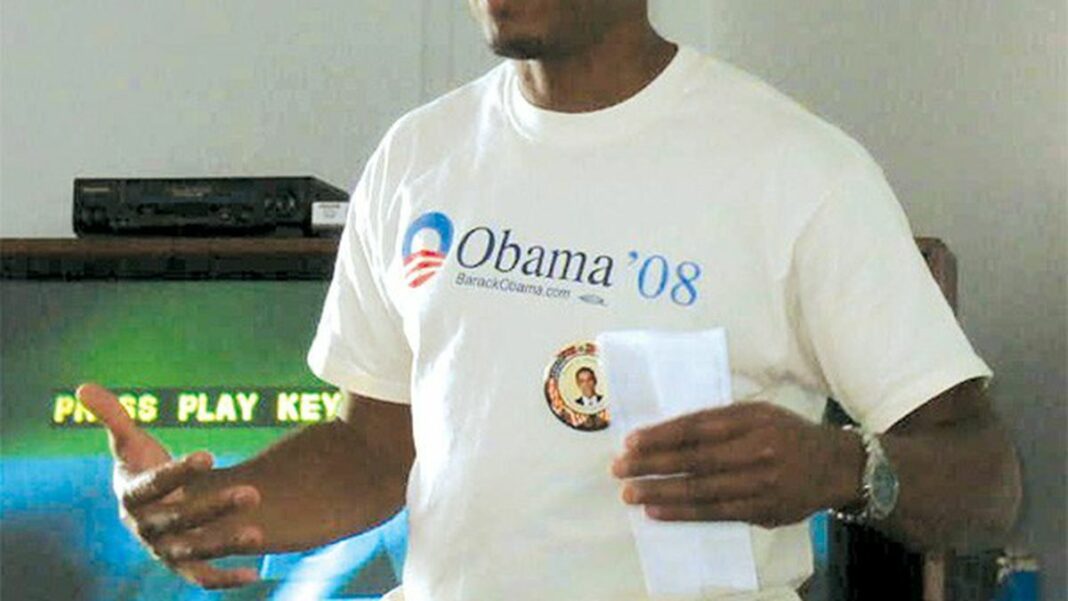
Stanford Williams took it upon himself last August to transform the flatlands of East Oakland into stalwart Barack Obama territory. To call that a daunting task would be gross understatement.
On a recent Wednesday afternoon, the thirty-six-year-old ambled down the driveway of a modest, cream-colored flat belonging to East Oakland resident Hazel Jones. He was making arrangements for that Sunday’s Obama “Fire It Up” party, one of several dozen being held in the East Bay to mark the remaining one hundred days until Super Tuesday.
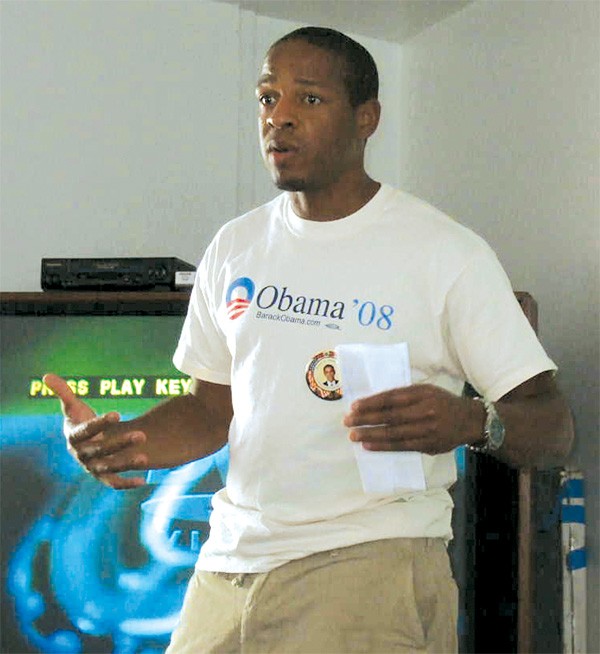
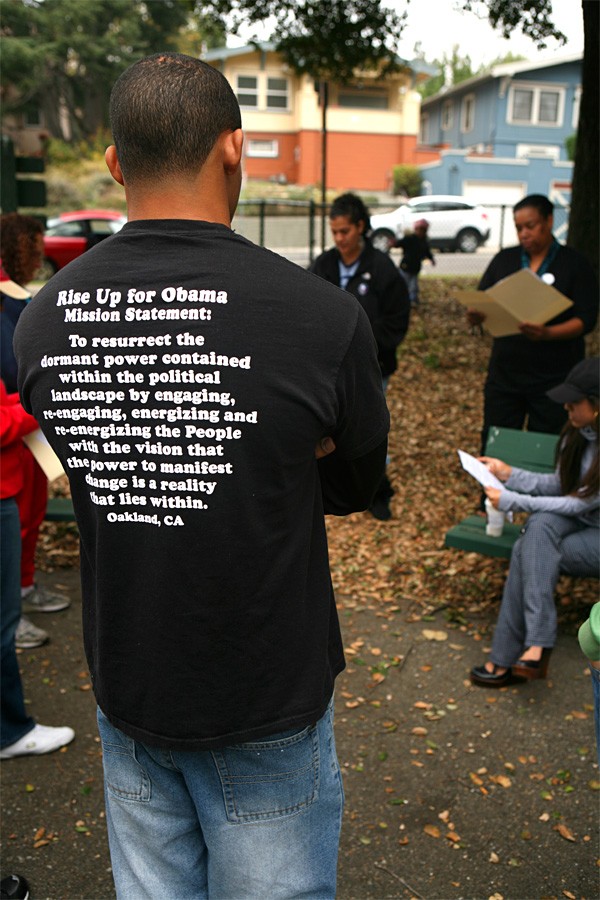
Stanford Williams speaks to the people who attended his party in East Oakland. Credits: Rachel Swan 
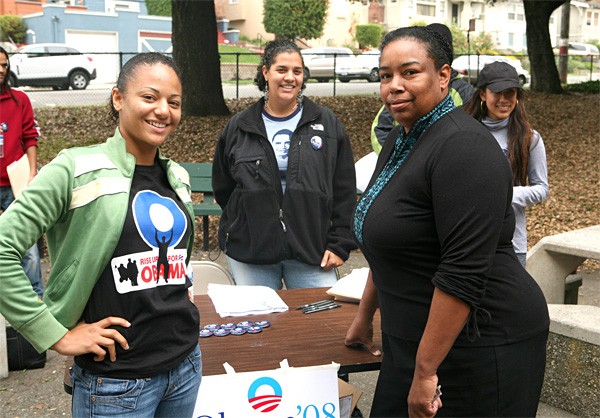
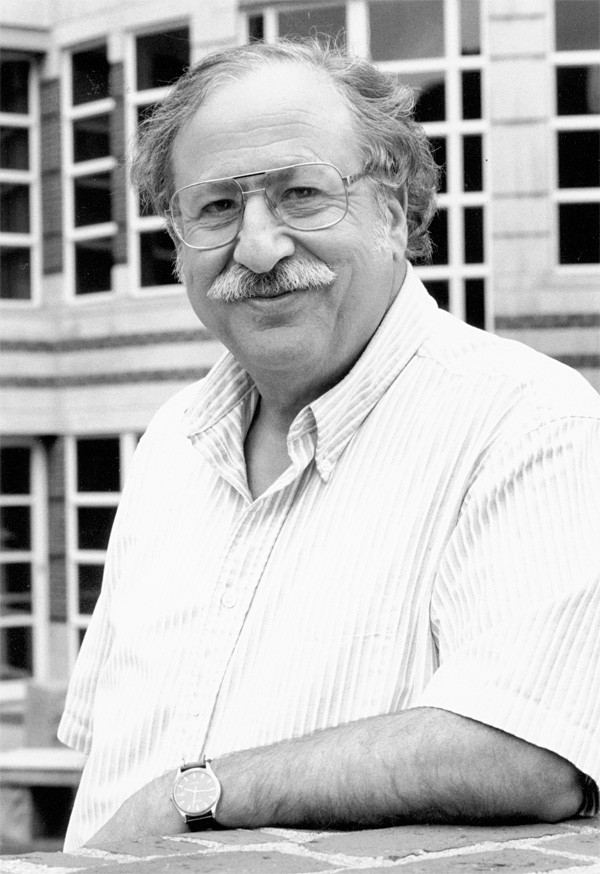
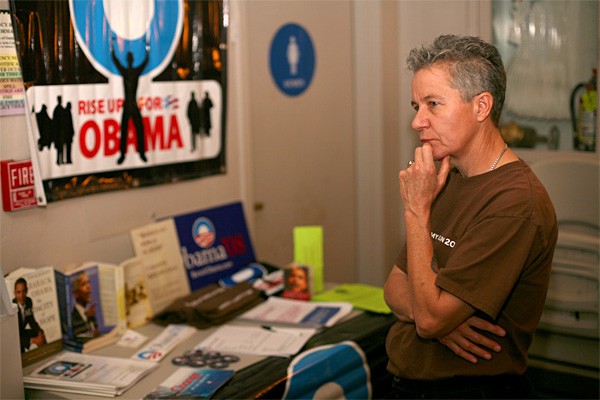
The crowd at Williams’ “Fire It Up” party. Credits: Rachel Swan Team coordinator Margot Reed (right) at a recent campaign event. Credits: Jamie Soja Marshall Ganz The crowd at a recent “Walk For Change.” Credits: Jamie Soja Joey Brite Credits: Jamie Soja
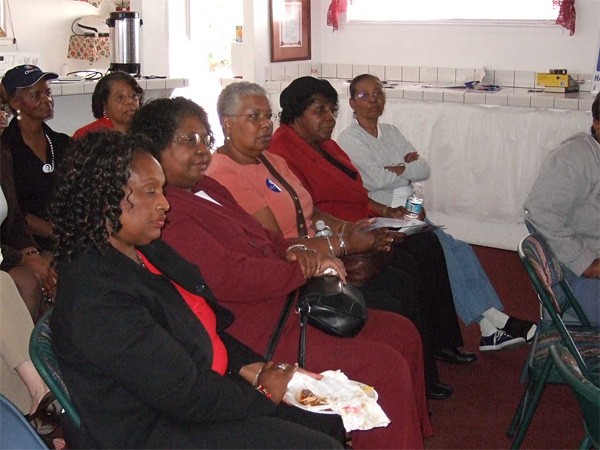
Williams hoped to draw dozens of neighborhood folks to the backyard shindig. He hung a big Obama sign over the driveway with red and blue streamers; set up a couple of voter registration tables; laid out potato chips, veggies, bottled water, buffalo wings, and Obama gear; and played a videotaped campaign speech on the large flat-screen TV in the den.
It was a scorching afternoon and Williams planned to flier the surrounding blocks with the help of another dedicated volunteer. But for the Obama ’08 logo on his T-shirt, he could have been a YMCA counselor; tall, clad in Nike sneakers and jeans, he cut a striking figure. He was abidingly good-natured, and addressed everyone in a measured tenor, his voice diplomatic but excitable.
Walking up Seminary Boulevard, he met a voting-age teenager wearing gold chains, turquoise tennis shoes, and a multicolored hooded jacket. “Hey, is that nigga running for president?” the young man asked, pointing at the picture of Obama on one of the fliers. Williams eagerly tried to foist a stack of the fliers on the teen, who declined, but added, “I’ll vote for him, though.”
By 2 p.m., the air was unbearably hot and muggy, and Williams was beginning to look weary. After all, he said he’d been sleeping only two to four hours a night during his three months of work on the campaign, and he was living off his savings. He’d paid for everything at the party from his own pocket — from the food to the gear to the $25 gas card and $50 Safeway gift certificate that would serve as door prizes. He was putting lots of miles on his car and had to change his cell phone plan just to accommodate the number of campaign-related calls he was making. He’d spent weekends manning a table at the Coliseum BART station and talked to Raiders fans, church ladies, ex-cons, shop owners, and thugs. He’d donated twenty to forty hours a week of his time to the Obama campaign; this week it was more like sixty.
But Williams was nothing if not determined. He had decided to join the campaign after a spirited debate with his father the month before. “They’ll never vote him in for president,” the son recalls his father saying. “I said, ‘Wait a minute, who’s ‘they?'” So in August, Stanford attended one of several sessions of “Camp Obama,” a three-day training session to turn campaign volunteers into organizers. “It was three full days … long, long, long grueling hours,” he recalled. “It was basically like a sales training, a sales camp to go out and get people registered. The rest of it was telling your story. He’s really into personal stories.”
Williams, like many other volunteers, was motivated by Obama’s skill as a storyteller. Obama first showed Americans his gift for storytelling during a 2004 Democratic convention speech for John Kerry, which turned his own family history into a parable of Democratic values. By the time he formally joined the 2008 presidential campaign in February, Obama was telling supporters that his campaign was about their stories too.
“This campaign can’t only be about me,” he said during his announcement speech. “It must be about us — it must be about what we can do together. This campaign must be the occasion, the vehicle, of your hopes, and your dreams. It will take your time, your energy, and your advice — to push us forward when we’re doing right, and to let us know when we’re not. This campaign has to be about reclaiming the meaning of citizenship, restoring our sense of common purpose, and realizing that few obstacles can withstand the power of millions of voices calling for change. By ourselves, this change will not happen. Divided, we are bound to fail.”
This egalitarian vision inspired ordinary citizens like Williams to become full-fledged crusaders for Obama. It motivated Qa’id Aqeel, an Oakland city commissioner and former Dellums campaign worker who was excited to see a “positive brother” in the presidential arena. It attracted Aqeel’s partner, Rosa Cabrera, an organizer for the Service Employees International Union, who started donating all her free time to the campaign once Obama threw his hat into the ring. And it energized Joey Brite, a color consultant who read Obama’s memoir in 2005 and started telling friends that if he ever decided to run for president, she’d do whatever she could to help.
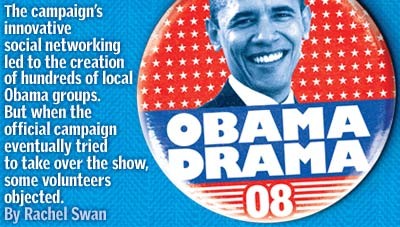
The campaign encouraged its supporters to set up online profiles and form groups that shored up their own identity-affirming politics. Facilitated by MyBarackObama.com, a web site launched by Obama supporter and Facebook co-founder Chris Hughes, by the summer roughly 700 Obama support groups had formed in Northern California alone. There were Serbs 4 Obama, Atheists for Obama, Internet Entrepreneurs for Obama, Displaced Ohioans for Obama. Some turned into a cult of fandom: Sacramento Kings Fans for Obama, Jedi Knights for Obama, Winelovers for Obama — even Hotties for Obama. And they were all free to do their own thing.
Until August, that is, when the campaign’s California field director, Buffy Wicks, decided that the best way to implement Obama’s vision was through a centrally coordinated precinct-level organizing strategy. According to Wicks, 99 percent of these independent campaign groups happily folded themselves into the formal campaign structure. But that last 1 percent included a bunch of people who resented having a campaign structure suddenly foisted upon them after they had been working independently for months.
Barack Obama’s egalitarian rhetoric attracted them all to his campaign. The pragmatic realities of modern campaigning drove them all away.
Granted, the structure of the Obama campaign doesn’t exactly lend itself to easy gratification. Rather than focus on media spin, constituency organizing, or securing endorsements, the Obama campaign has directed most of its energy to building up a community base. The senator certainly didn’t have to do it this way. He’s not short on resources, and doesn’t need volunteers to dig into their own personal coffers. As of October 15, he’s raised $79.2 million, just a hair shy of Hillary Clinton’s $80.4 million take. But the Obama campaign chose to take the low-budget, DIY road anyway, to remain in sync with their candidate’s vision. Obama’s volunteers are phone banking, staffing university campuses, and canvassing door-to-door.
The campaign’s Oakland headquarters are located on the third floor of an office high-rise right off Broadway. But for the sweep of blue stars painted along the walls, and the red and blue tinsel dangling from the ceiling, the digs look pretty spartan. The walls are a leaden off-white, the windows concealed with flimsy blinds. A stash of unused computer monitors lies in one corner. Rows of cafeteria-style tables and folding chairs occupy the main space, where volunteers sit most afternoons on their cell phones, mostly calling Obama supporters who live within a few blocks of the office. Volunteers use their own cell phones, or on identical Motorola cheapies provided by the campaign. And they work on their own laptop computers.
“There’s no promise of money, other than a huge promise that you’ll continue to spend money out of your own pocket to make this work,” explained Margot Reed, team coordinator for Congressional District 9, which includes Oakland and Berkeley. “Now when I go to Oakland headquarters and ask for window signs, they’ll say, ‘Cool, we appreciate you, you’re great, you’ve done a fabulous job — that’ll be six bucks.’ We’re not getting any freebies.”
That’s just the tip of the iceberg. Anyone who decides to throw an Obama house party is saddled not only with finding a locale and buying food, but also with buying all the merchandise — T-shirts, window signs, buttons, and bumper stickers that cost between $1 and $15 a pop. “The California campaign only has a certain budget,” explains Northern California field director Brent Messenger, one of only a few paid staff members. “They gave me a handful of landlines, one for voice mail, one for Internet access, one for I don’t know what — a fax machine?”
At thirty-seven years old, Messenger is string-bean thin, with brown hair and baby blue eyes. The lead singer of San Francisco indie band Every Move a Picture, he could easily be a twenty-two-year-old hipster except that when Messenger talks politics, he sounds like a wonk. He’ll rattle off facts with an ease that reflects his political science degree and thirteen years of campaign organizing, first for Brook Firestone’s state legislature bid in Santa Barbara, and later with MoveOn.org. Born to a conservative family in Pleasanton, he says he and his parents used to get in giant blow-outs over the Iraq war. “I saw Barack, I understood his message. It seemed like there was an alternative to all the partisan bickering.
Before Messenger was hired in September to coordinate field operations in Northern California, he volunteered fifty to sixty hours a week for six months. His fellow coordinator said she lost four pounds her first week on the job. Explained Wicks: “It’s really hard work. You’re doing three hours of phone banking a night and knocking on doors all weekend.”
On a recent Saturday afternoon, Messenger leads one of the headquarter’s twice-weekly volunteer orientations. He gets increasingly animated discussing what he calls “the Obama secret weapon.” He stands before a table of six new volunteers — two sisters, one with her husband in tow, a teacher who just moved from Seattle, a guy who looks to be in his early twenties, and an older woman from the Richmond-El Cerrito area. Messenger draws a circle on the white board.
“Say we need 65,000 Obama votes in CD 9 to win it,” Messenger begins, referring to congressional districts. “We divide the CD into seven chunks, and each chunk is responsible for 9,285 votes.” Every chunk gets a team, and every team takes on an area, and every area gets divided into seven neighborhoods. “We could go one step even further down from that,” Messenger says, explaining that you could carve each neighborhood into seven to ten precincts, so that individuals in charge of that precinct would have a manageable number of voters to account for. “Then you can just get a phone list.”
The idea is the brainchild of Harvard professor and former César Chávez collaborator Marshall Ganz. The concept calls for dividing the state into congressional districts, the districts into areas, the areas into neighborhoods, and the neighborhoods into precincts, each with its own team of eight volunteers whose job is to phone bank, canvass, knock on doors, organize house parties, and above all, recruit more people. Ganz used similar efforts working with the United Farm Workers from 1965 to 1981, and organizing electoral campaigns for Bobby Kennedy in 1968, Nancy Pelosi in 1987, and Michael Dukakis in 1988.
Ganz signed onto Obama’s campaign at the behest of California field director Buffy Wicks, who’d learned about him through a mutual friend while they both worked on the 2004 Howard Dean campaign — Wicks in Iowa, Ganz in New Hampshire. Wicks, who was critical of the program being implemented in Iowa, heard about Ganz’ grassroots labor strategy in New Hampshire and became an instant fan.
After a two-year stint as the political director for Wake-Up Wal-Mart, Wicks joined the Obama campaign in 2006. Wicks called Ganz her first week on the job. “I knew he’d been a big supporter of Barack,” she said. “But I didn’t know him that well. We’ve since developed a close relationship. He’s been instrumental as to transforming enthusiasm into a disciplined campaign structure where everyone’s accountable.”
Wicks doesn’t have a problem with people working outside the formal campaign structure just as long as they completely sever ties with the campaign. For instance, isolated groups shouldn’t depend on the campaign headquarters for phone lists of Obama supporters, or help canvassing a neighborhood. That’s a mostly practical concern, since campaign staffers don’t want to be held accountable for all the little start-up groups that decide to go it alone. “Around the Dean campaign in Iowa there were tons of stories about the gray area between these official Dean campaign and all these volunteer organizations that were doing all these crazy things,” Messenger said.
And the Obama campaign’s already had its share of drama, particularly the July exposure of an unsanctioned San Bernadino group called “Californians for Obama” that raised thousands of dollars under false pretenses. The campaign has tried to preempt such fraudulence by maintaining a strict separation between its field and finance operations. A lot of people just don’t understand the machinations of political fund-raising — that you have to file statements with the government as soon as you raise a dime; that you have to classify yourself as a political action committee rather than a nonprofit. “We’ve tried as hard as we can to say don’t raise money, let the campaign raise money, don’t open your own office,” Messenger said.
Still, it’s hard to prevent enterprising Obama supporters from wanting to create organizations in their own image.
Qa’id Aqeel used to be one of the most ambitious volunteers in the group East Bay for Obama, which was one of the largest and most mainstream local groups to form through MyBarackObama.com. Now he detests the campaign.
Aqeel and his partner, Rosa Cabrera, joined the Obama campaign in March, when Messenger’s Oakland headquarters didn’t yet exist. A small cluster of groups — roughly forty people on average — met once a week in the Rotunda building across from Oakland City Hall. The group held its abortive first fund-raiser in mid-May, at the Emeryville winery Periscope Cellars.
“It didn’t have that feel like you come in to have a good time,” Aqeel recalled. “When you got people coming in with flip-flops and jeans and shorts, it kinda sets off the wrong message. It was probably planned in two weeks. We got some peanuts, some trail mix, and some cheese. You had to pay for the wine and the beer. They said they didn’t make any money. They brought in $900 but only made $400.”
When the group decided to plan another fund-raiser on June 29, Aqeel and Cabrera decided to take matters into their own hands. Together, they organized what was undoubtedly one of the most successful Obama fund-raisers to happen in the East Bay this year. Aqeel secured the popular downtown Oakland venue Geoffrey’s Inner Circle, since he knew owner Geoffrey Pete from working in the Oakland Black Caucus. Pete provided enough food for 300 people — catfish, spaghetti, chicken, and salad, along with a full bar. They hired local performers such as R&B singer Jimmie Reign, a spoken-word poet, piano player, and DJ to provide entertainment. They even had security guards.
At first, Aqeel said, the other committee members were impressed with their efforts. But over the six weeks they spent planning the event, he said, they met resistance from others. Many members refused to sell tickets, and some criticized Aqeel and Cabrera for not getting approval from the East Bay for Obama steering committee — which they described as an amorphous blob with new members every week. “The more resistance we met, the more we pushed it,” said Cabrera. “It was pretty simple.” A former volunteer said that some steering committee members resigned because they sided with Aqeel.
In the end, the fund-raiser earned $5,000, a paltry sum compared to what could have been, says Aqeel. “We easily should have made $20,000 on that event, because we made $2,000 at the door. We could have brought in some serious dough, but because of the egos, it wasn’t what we expected.”
After the disappointing Geoffrey’s fund-raiser, Cabrera and Aqeel defected from East Bay for Obama and formed a splinter group, Rise Up for Obama, characterized by its elaborate mission statement: “To resurrect the dormant power contained within the political landscape by engaging, reengaging, energizing, reenergizing, the people with the vision that the power to manifest change is a reality that lies within.”
Declaring itself a free agent, but still willing to collaborate with the official campaign, Rise Up planned another fund-raiser for September 30. The party would be held at Uptown Body Shop and feature spoken-word poets, door prizes, and music by Destani, “the Harpist from the Hood.”
Then the Obama campaign got wind that Hillary Clinton planned to stump in Oakland on that day. It decided to counter by opening its Oakland headquarters in response. Messenger and Wicks didn’t see a problem with holding multiple Obama events at one time. Campaign finance director Chris Young would attend Aqeel and Cabrera’s Rise Up event, while Wicks and Messenger would oversee things at headquarters. As Wicks noted later in an e-mail to Aqeel: “It is common protocol for finance staff to attend finance events and field staff to attend field events.”
Aqeel and Cabrera still felt that the campaign had stolen their fire, even though Young and some other high-profile Obama supporters showed up at their party. Aqeel said the $3,000 they raised was pitiful compared to what could have been. “We got bamboozled,” he claimed.
A few weeks ago, the couple left Rise Up for Obama. Aqeel was inconsolable.
“People were threatened by the fact that you could question the authority,” Aqeel said. “The volunteers gave up their power, not realizing that we are the people that make this campaign function.” He believes that the leadership of East Bay for Obama tried to obstruct his fund-raiser because of their own prejudices about African-American men. “Being that I’m a dark-skinned brother, and I’m very straightforward, and my voice is deep, some people couldn’t believe that I could make some connections.
“I don’t work for a candidate just because he’s black. If that’s the case then I’d have worked for Alan Keyes or Al Sharpton. Barack is different. He’s the first one to make me proud to say I’m an American when I read his book.”
But Aqeel said that if Obama’s campaign structure says anything about how an Obama administration would function, then he wants no part of it. “I can’t be a part of something that requires me to work hard just to volunteer,” he said. “If his campaign isn’t standing up to his vision, show who he is, then what’s gonna happen if he gets elected?” At this point, Aqeel added, Obama’s lost his vote. “I don’t want it to say ‘I walked away from the campaign but I’m still gonna vote for it because he’s black.’ When I leave, I gotta leave with a message. My vote is gone.”
Reed, the team coordinator for Congressional District 9, thinks the whole idea of a competition within a campaign is ridiculous. “You have to have a thick skin if you’re gonna be dealing with politics at all,” she said. “You cannot get your feelings hurt.” Furthermore, she said, Obama is running out of time before the primary, and now is not the time for individual ego trips.
Reed laughs when she hears some of the statements made by former campaign workers: “You’d think we were having two candidates running for the same position.”
After Cabrera and Aqeel jumped ship, Joey Brite became the de facto point person for Rise Up for Obama. Brite had met Aqeel and Cabrera shortly before the fund-raiser at Geoffrey’s Inner Circle. They’d seen her original T-shirts — colored crewnecks with the logo “Ba-rack My World, 2008” — and wanted to see if she’d sell them at Geoffrey’s.
Before the campaign, Brite had told her friends that she’d do whatever she could to help Obama run for president. But when the time came, the self-described butch lesbian admits she had apprehension about working with straight people. She heard the Rise Up mission statement and asked if it “involved the inclusion of reaching out to gays and lesbians, and poor people.” Aqeel and Cabrera managed to convince her of their group’s integrationist sensibility. The three of them — a queer white woman, straight African-American man, and straight Latina woman — formed an improbable alliance, one that aptly symbolized Obama’s vision of tolerance, Brite said. “It was an attraction again to the ideals of Barack Obama — working with people who I thought I normally wouldn’t align with politically. These are people that I felt like we would have each other’s back.”
Within a few weeks, she too had turned against the official campaign. Brite, who calls Ganz’ organizing model a “multilevel marketing strategy,” believes that the campaign is dominated by a group of malevolent oligarchs who want to advance their own political careers. “I think there are still people in place that have been so off-putting to so many activists in the area, and they’re still in their place and I’m not sure that they should be there anymore,” she said. “My issues have been with Buffy and Brent and their intention and their idea of following or not following the words of Barack Obama — about his ideas of grassroots, about his idea of standing up to authority.”
One thing is for sure, Brite is certainly standing up to authority. She is practically running her own parallel campaign under the Rise Up banner. She lists her cell number as the contact for all campaign events. She manages content for the Rise Up blog, and organizes most of the fund-raisers. She’s planned several events for November and December, including a Thanksgiving dinner at Geoffrey’s Inner Circle. At this point, the connection to Obama’s presidential campaign seems to be purely cosmetic, in the form of T-shirts and window signs. Brite always gathers phone numbers of potential volunteers, but refuses to share them with headquarters.
She even has tried to lure people away from the official campaign. Brite started “wooing” Stanford Williams as soon as he offered up the first inkling of his own dissatisfaction with the campaign structure. A few days before his officially sanctioned “Fire It Up” party, he still hadn’t secured a venue, and was complaining that the people at headquarters had done little to help. Brite asked a friend, Hazel Jones, to donate her house as a last-minute favor. Brite said she’d give it to Stanford on the condition that he set up a Rise Up table at the event.
Yet, on the very day of his East Oakland Obama party, just a couple months after fully committing himself to the campaign, Williams announced he was resigning. “You got a guy who’s running for president and he talks about grassroots, and then you have people who run the campaign who have no respect for their volunteers,” he explained. “Some people said, ‘ultimately, inevitably, this was gonna happen to you, too.'”
When it did, Brite was waiting eagerly in the wings. The following day she posted a synopsis of the party on the Rise Up blog (RiseUpforObama.blogspot.com). It had been a success, Brite reported, attracting more than fifty guests, including city councilmember Desley Brooks. Thirty people signed up to volunteer. In the final sentence of her report, Brite swiftly co-opted Williams: “RISE UP FOR OBAMA: EAST OAKLAND has been born and Mr. Williams will be doing more to ensure the volunteer base in that community increases.” She then listed Williams’ phone number, naming him the new “East Oakland coordinator.”
Williams declined the title. “I think she had the idea, sent me an e-mail, didn’t hear back from me, and put it online. We never discussed it,” Williams said. He didn’t think Brite was being deceitful — it was probably a misunderstanding.
Still, a few days after the “Fire It Up” house party, Williams seemed remarkably sanguine. Having severed all ties with the Obama campaign, he now has time to go out to lunch and kick it with friends. He still supports Obama, and hopes to talk Aqeel off the roof.
Brite, meanwhile, is livid. She claimed the campaign issued an “edict” to prevent rogue elements of the campaign such as Rise Up for Obama from receiving official e-mail. “When the headquarters people talk amongst themselves, and there has been an individual who somebody has decided that they’re too dangerous, too bothersome, or too high-maintenance, many times they just stop receiving e-mails that they used to get,” Brite said. She said that Rise Up for Obama is sending a mole to get as close to the campaign’s “inner circle” as possible.
“They keep pushing this concept of telling your story, telling your story, telling your story,” she continued. “Well here’s my story, headquarters: You didn’t listen! And you lost a great asset.”
In spite of the loss of supporters like Williams and Brite, Margot Reed was pleased with the results of Sunday’s spate of house parties. “The parties this weekend were pretty darn good,” she said. “The feather in the cap was that we had a substantial turnout in Castro Valley. That’s huge.” She cited the “cerebral, motivated” group in Albany as another success story, since Albany skews more conservative — definitely Clinton territory. “They may not be running around in the street with little beanies on their head jumping up and down, but they were listening very intensely … You could have heard a pin drop. And you could see people nodding and shaking their heads.”
As much as Brite and Aqeel might like for the Obama campaign to be about organizing for social change in the inner city, it doesn’t necessarily work that way in the real world. After all, presidential campaigns are organizations that have to grow extremely fast, with a singular goal in mind, and not for nothing is “war room” a campaign metaphor. Obama has fewer than 100 days before the primary, and he’s trying to get more votes than any other Democrat. That doesn’t just mean Oakland, Reed assured, but also Castro Valley, Ashland, Fairview, and Cherryland. The candidate’s rhetoric may skew populist, but he’s not gonna win unless his volunteers put their social agendas aside and get with the program.
“There seemed to be some issues around philosophy in how you can run a campaign,” Reed said. “There are ways you can tweak it, but it has to be okayed all the way up and down the chain. … Unfortunately the differences got more traction than the stuff that was the same.”