
When the Oakland City Council gets back to business this month, the controversy over parking meters will be one of the most contentious issues it faces. The council’s vote in late June to extend meter hours and raise parking prices sparked a strong backlash in Oakland’s retail community. Some retailers say the changes have driven away customers and they’re demanding that councilmembers reverse course. And while it’s possible that some members of the council will do so, they should also take a closer look at what other cities are doing — especially San Francisco and Redwood City.
Those two cities are among several nationwide that are testing the theories of UCLA professor Donald Shoup, who has become a sort of parking guru for his research on market-based pricing. Shoup believes that the price people should pay for parking depends directly on how difficult it is to find a parking place. If there are no spots available, then parking meter prices are too low. And if there’s plenty of parking, then prices are likely too high. “It’s about getting the price right,” he told Full Disclosure in an interview last week. “You don’t want to charge $1 an hour in a business district that is half empty. If you do, then the price is too high.”
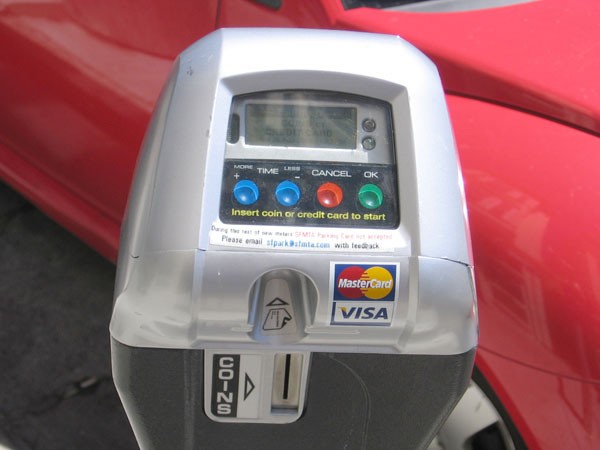
San Francisco and Redwood City are both about to implement Donald Shoup’s parking recommendations. Credits: Robert Gammon 
According to Shoup, you know you have reached the right price when about 85 percent of the parking spaces are full. At that capacity, a business district should thrive, while still leaving enough empty spaces so that new shoppers won’t have to search for a place to park. The professor also believes that cities should reinvest at least a portion of parking proceeds back into the neighborhoods from which they came in the form of sidewalk improvements and other amenities. That way, you get buy-in from local retailers.
Consequently, Shoup believes the Oakland City Council made several errors in its parking program. First, the council shouldn’t be using parking meters as a cash register for its general fund, he said. “You shouldn’t set the price to raise money, but to manage supply,” he explained.
Second, the council is micromanaging when it sets parking meter prices for every district in the city, he said. Instead, the council should delegate those responsibilities to city staffers who then set prices based on how difficult it is to park. As a result, it makes no sense for parking prices to be the same in busy districts, such as Rockridge and Lakeshore, as they are in less crowded ones. In addition, parking meter prices should fluctuate during the day, based on how tough it is to find a place to park. It makes no sense, Shoup said, to charge the same price at 8 a.m. when stores are closed, as at 1 p.m., during the height of the lunchtime rush.
As for people who say they won’t shop in a busy business district unless they can park for free, Shoup says cities and retailers should ignore them. “They will be replaced by people who will pay,” he said. “And if you’re a waiter who wants a bigger tip or a business that wants people to spend more, who would you rather have as a customer — someone who will only come if they can park for free, or someone who is willing to pay?”
San Francisco is about to embark on the most ambitious market-based pricing program in the country based on Shoup’s work. It’s called SF Park, and beginning early next year, the city will set prices at 6,000 parking meters and 12,250 city-owned garage spaces based on how difficult it is to find parking. The city’s Municipal Transportation Agency will monitor parking availability in each of the test areas and then gradually raise or lower prices every four weeks in each district until one out of every ten spaces is open at any given time. “The goal is make it easy for people to find a parking space, so that they don’t double park or circle the block repeatedly, looking for a space,” explained Jay Primus, manager of SF Park. During the two-year test, rates will not only fluctuate by block, but also at different hours of the day.
San Francisco, however, is not following all of Shoup’s recommendations. First, revenues from the program will go neither to the business districts nor the city’s general fund, but to MUNI for public transportation improvements. Second, the city has not yet decided whether to extend meter hours into the evening or to allow for unlimited evening parking for a price. And finally, the city’s test program may not be exactly transferrable to Oakland, because it will cost $24.75 million to implement — 80 percent of which comes from a federal grant.
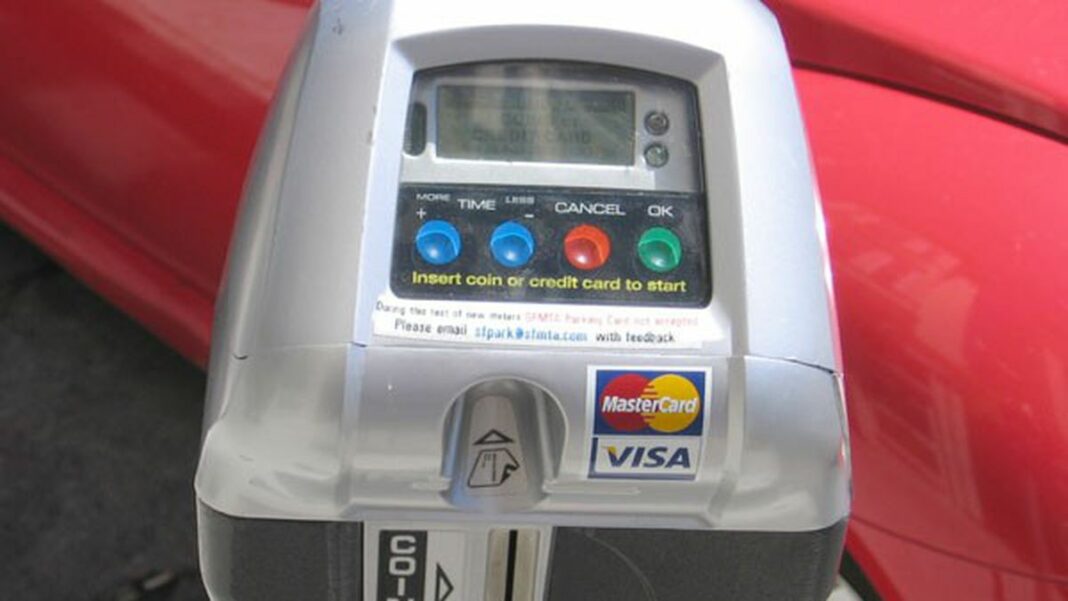
Oakland, however, may be able to do a much cheaper test. A substantial portion of the funding for San Francisco’s program will pay for new parking meters and electronic street sensors that tell when a space is occupied. Oakland can’t afford to buy sensors without scoring a grant of its own, but it has a leg up on San Francisco, because it has already installed multi-space parking kiosks in several business districts. The kiosks are perfect for Shoup’s program because prices can be changed easily and because they allow for credit card payment. Letting people pay with credit cards is essential, because it means they don’t have to stock up on coins or keep track of changing prices.
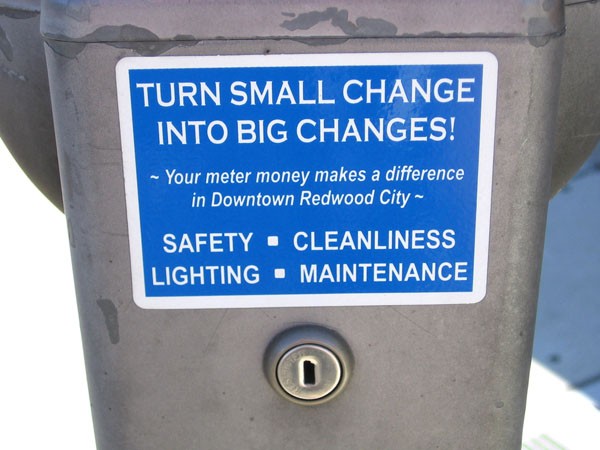
Redwood City, meanwhile, chose to simply implement Shoup’s theories rather than test them. The Peninsula city is using market-based pricing in its downtown, and then directs the revenues back to the downtown in the form of improvements. Redwood City also has multi-space kiosks that take credit cards, and it allows people to park for as long as they want if they pay for it. “As long there is always a space available when people show up, who needs time limits?” said Patrick Siegman, a principal at the consulting firm Nelson/Nygaard, which has advised Redwood City and San Francisco, along with other cities, on their parking programs. Siegman said both San Diego and Ventura also are testing Shoup’s theories.
So will market-based pricing work in Oakland? “I think Oakland definitely needs to explore it,” said Councilwoman Pat Kernighan, who represents the Grand and Lakeshore business districts where the council’s changes have received the most criticism. Kernighan has expressed a desire to roll back the meter hours to 6 p.m. as they were before, although she says city staff told her such a move could cost Oakland $1.3 million in revenues and force the council to slash even more from the city’s already lean budget. Kernighan also noted, however, that Oakland has never conducted a thorough examination of how its parking policies and rates affect retailers, sales tax revenues, and overall economic development in the city.
As for the retailers, the most vocal critical has been Allen Michaan, owner of the Grand Lake Theater. Michaan said he was aware of Shoup and his research, but said he doesn’t think it will work in Oakland because the city is surrounded by other cities with thriving shopping districts. If Oakland were to raise parking prices in any of its business districts, then shoppers could simply head to Alameda, Berkeley, or Emeryville, he said. “It might work in San Francisco, but not all communities are the same,” he said. “For instance, Oakland has a bad reputation for crime. It’s a perception, real or not. But it’s there. And then if you add overpriced parking and you add an overpriced parking ticket, it creates more animosity toward the city.”
Michaan is most angry about the parking ticket increase, the zealousness of parking meter attendants, and the extension of meter hours to 8 p.m. But he also indicated that parking meter prices are too high because he said a city-owned parking lot nearby is now usually empty (Kernighan said the same thing). He said his business is down considerably, and in mid-September, he plans to stop offering weekday matinees Monday through Thursday because they aren’t worth it. The move, he said, will force him to lay off employees or cut their hours.
While it’s tough to watch successful Oakland retailers hurting, Michaan’s experience may be more of an argument for Shoup’s theories than against them. If Oakland adopted market-based pricing and found too many empty parking spaces near the Grand Lake during the daytime, then the city could just lower prices until 85 to 90 percent of spots became full. But as it stands, the city has no way of adjusting properly for Grand Lake without affecting other business districts — possibly unnecessarily — and without hurting its bottom line.