

During her stint as a Navy ocean systems technician, Brenda Ross ripped four tendons off her right kneecap and spent months in painful recovery in hospitals in Iceland and the United States. She was married in a wheelchair wearing a pair of her husband’s sweatpants, and spent the next five years struggling with knee pain and learning to lose her limp. But that injury now seems to Ross like a sunny stroll on the beach compared to her collision with LASIK vision-enhancement surgery.
In 1999, during a procedure to correct her nearsightedness, an eye surgeon cut and lasered too deeply into the 37-year-old’s right eye. Recognizing his error, the doctor stopped the surgery before touching the other eye. “LASIK left a hole in the back of my cornea,” said Ross, a mother of four. “I’ve had injuries in the past, but none of them affected me like this one.”
Credits: Chris Duffey
Credits: Chris Duffey
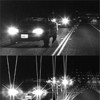
Surgery had turned her world into a blurry, warped collage. “If somebody was standing in front of a light source, whatever was in the background behind them would end up looking like it was on top of them.” Not only was there distortion, but Ross saw a veiny veil over everything, as if she were seeing her own eyelid. To make matters worse, she said, her surgeon was completely unreceptive to her plight. She recalls him saying, “I don’t see what your problem is; people drive with one eye every day.”
Over the next year, the Oregon resident visited five different ophthalmologists searching for answers. It wasn’t until she traveled to the San Ramon office of Arthur Ginsburg, director of Vision Sciences Research Corporation and Visual Forensics Corporation, that she began to understand what had happened to her. At his office, Ross went through hours of exams to measure her impairments. “My surgeon had hidden a lot of the truth,” she said. “When I went down to see Dr. Ginsburg, there were several things he was able to explain to me. He was the most informative person I have spoken to. … He’s just a wonderful, amazing man.”
A meticulous scientist who has devoted much of his career to vision research, the Cambridge-trained doctor of biophysics has invented a test that goes beyond the eye chart and measures “contrast sensitivity” — for example, how well someone can distinguish shades of gray in a dimly lit setting. “With each group of tests he would explain more and more about my vision,” Ross recalled.
When the surgery cut deeper than it should have, fluid in her eye leaked and caused a bulge inside. Ginsburg explained that this had thrown a permanent wrench into her central optical axis. To make matters worse, it was in her dominant eye, which made it impossible for her to ignore the distorted input.
But because her brother had already undergone successful laser vision correction in both eyes, Ross found it tough to convince her family and friends how horrific her own sight had become. “I was becoming so terribly depressed and giving up all hope,” she recently recalled. “When I finally saw Dr. Ginsburg, he put that spark of hope back in, not that I was going to find a cure necessarily, but that this wasn’t all in my head, that I wasn’t making this up. … I felt like ‘Oh my gosh, I’m being validated. For once, somebody understands.'”
Ginsburg gave Ross several computer simulations to take home so her family and friends could experience the world she was seeing. Upon seeing those pictures, their typical response was: “How do you even function?”
When laser vision-correction surgery doesn’t deliver the promised results, the impact can be profound. Ross is one of tens of thousands of patients whose lives have been turned upside down due to improper risk screening, malfunctioning machines, or shabby surgical techniques. Instead of the carefree new lifestyle these patients anticipated, they have received an involuntary lifetime admission ticket to their own personal laser light show. At best, they face glare, halos, starbursts, multiple images, or poor depth perception. At worst, they face chronic pain, corneal transplants — even blindness in rare cases. For those already damaged, the road to rehabilitation is frustrating and slow, and sometimes the only good remedy is an entirely new pair of eyes.
Laser eye surgery is the most popular elective surgery in the United States today. Data provided by the American Academy of Ophthalmology indicates that approximately 2.5 million American patients had undergone LASIK by the end of 2002. According to a recent survey conducted for American Demographics magazine, 30 percent of all Americans would like to have the surgery.
By all accounts, the majority of patients enjoy successful surgery. Data from the 9,000-member American Society of Cataract and Refractive Surgery suggests that LASIK surgeries are successful 97 percent of the time. But transcripts of US Food and Drug Administration proceedings suggest that failure may be much more widespread. In August 2002, discussion by the members of the FDA’s Ophthalmic Devices Panel indicated that 10 percent of clinical study patients have been consistently unsatisfied with their laser-based refractive surgeries. The panel also admitted that one patient in five will have a tougher time seeing in dim lighting — the dimension of vision that Ginsburg’s innovative new test examines.
Depending on which satisfaction estimate one accepts, somewhere between 75,000 and 250,000 people so far have left their eye surgeon’s office with considerably less eyesight than they had when they first walked in.
According to the eye chart, at least, Steve Williams of San Lorenzo is one of LASIK’s success stories.
Williams was nearsighted with 20/600 vision and astigmatism. He hated glasses, and never could tolerate having hard contact lenses in his eyes. “It was like having a Coke bottle in my eye,” he said. “It drove me crazy. I hated them.” But as an avid athlete, he wasn’t happy with the way glasses inhibited his skiing, golfing, and tennis. So he considered laser vision correction. The turning point in his decision was taking off his glasses during a dip in the ocean in Hawaii, then being unable to locate his towel once he got back out. Even though he was apprehensive, he decided to have the surgery last August.
In the midst of surgery, following his first eye treatment, the laser shut down inexplicably. Williams was asked to get off the table while the doctor reset it. Then his second eye was done. Now, Williams can’t help but wonder whether that glitch was behind the poorer surgical results in his left eye, the second one treated. “My right eye is a perfect 20/20, and my left eye is double-vision and fuzzy, though it’s 20/30,” the Internet network manager said.
Two weeks after surgery, the numbness wore off and dryness set in. “I’m pouring in drops every five minutes,” he recalled. He used so many, in fact, that the skin around his eyes became red and tender, as if from a chemical burn. Conventional eyedrops only made his eyes worse, and lubricating eye gels weren’t any use, either.
Williams eventually tried to resume playing tennis. But staring at the ball on a windy court caused dry, painful spots — corneal erosions — to develop on the surface of his eyes. “I would play once and it would take three weeks to recover,” he said. “It feels like you have a stone in your eye.”
He remembers the situation as “hideous.” He worried that he would be one of those LASIK patients for whom dry eyes never improve. “I’m a tough guy, but believe me, it’s very frustrating,” he said. Then last December, Williams discovered a Web-based support and advocacy group for people injured by LASIK, www.SurgicalEyes.org, and read about other patients’ success with an innovative prescription eyedrop. Formulated by dry-eye expert Frank J. Holly and available only at a single Dallas compounding pharmacy, Apothecure, the new drops finally made the difference for Williams. He applies them at least five times a day: first thing in the morning, before he goes to bed, and periodically throughout the rest of the day. He never leaves the house without them. “Dr. Holly’s drops turned me right around,” he said. “I don’t know what I’d do without them. I’d be miserable, to tell you the truth.”
The 47-year-old now finds he needs glasses for reading. He also has reconciled himself to once again using glasses at night and while driving. And he said he has learned to tune out the double-vision that flares up when he looks at green lights with his bad eye. “I’m right-eye dominant, and my right eye came out perfect,” he said. “If I had my dominant eye 20/30 and my nondominant eye 20/20, I’d be a wreck.”
But all in all, Williams considers himself a success, even though he still visits the SurgicalEyes Web site a few times a week. Skiing, golf, and tennis are easier post-LASIK, despite regular eyedrop breaks and the fuzzy double vision in his left eye. “The advantages it gives me for those kind of outweigh the negatives,” he said.
The most common complaint voiced by people who aren’t as happy with their own LASIK surgery is that they were never fully warned of their individual risks. How does a potential LASIK buyer beware? First, it pays to understand the procedure and its risks.
Truly savvy consumers pay a thorough visit to the Web site of the federal Food and Drug Administration at www.fda.gov/cdrh/lasik. It contains a laundry list of LASIK risk factors in plain language, and explicitly notes that the surgery is risky for people with large pupils, thin corneas, dry eyes, a history of eye diseases, or anyone prone to frequent eyesight changes. It also warns would-be patients to skip LASIK if they are pregnant, have autoimmune problems, or engage in contact sports. Finally, the FDA prominently warns that people are “probably NOT a good candidate for refractive surgery” if they are not “a risk-taker.”
A good place to learn more about those risks is SurgicalEyes, where visitors encounter vivid details about what life is like when LASIK and other refractive surgeries fail.
But more typically, consumers rely on word-of-mouth from other patients or advertising from financially motivated information sources. In the Bay Area, such consumers might reasonably expect to find reliable information on the Web site of UC Berkeley’s Refractive Surgery Center (www.CalEyeCare.com). Its frequently asked questions page could, to the uninitiated, seem like a good place to start collecting salient details. Concerning LASIK safety, it reads: “Any kind of surgery carries some potential risk, but with LASER VISION CORRECTION surgery, there is a remarkably low rate of complications. Unlike the older, nonlaser procedure known as RK, the computer- controlled VISX ‘excimer’ laser does not weaken the eye.”
This statement is surprisingly deceptive, coming from a university-backed facility. In fact, LASIK does weaken the eye. First, the surgeon slices a thin flap across the eye’s center with a disposable blade. Then, while the flap is folded away, the doctor reshapes the eye with a laser. (Treating nearsightedness, for example, involves flattening the curve of the cornea.) Afterward, the flap is smoothed back, the eye is bandaged, and the healing begins. But the eye is unquestionably weaker, and that’s why contact sports are off-limits for LASIK patients and why Clarke Newman, a fellow of the American Academy of Optometry, says it’s still a matter of debate whether eyes ever fully heal.
Asked to comment on this apparent deception, Dr. Maziar Haririfar, the optometrist who runs the Refractive Surgery Center, asserted via e-mail that the statement was intended as a comparison only. In other words, LASIK does indeed weaken the eye, but less than radial keratotomy (RK), the type of vision- correction surgery it replaced.
Consumers seeking a more candid and detailed assessment of the risks of LASIK might just as reasonably visit EyeSurgeryEducation.com — a credible- looking Web site provided by the Eye Surgery Education Council. Its link to “LASIK Surgery Screening Guidelines for Patients” seems to provide a scientifically rigorous discussion of who may and may not undergo LASIK. Yet certain risk factors covered by the FDA’s guidelines, such as pupil size, go completely unmentioned here.
While the council’s site downplays the problems associated with LASIK, privately its backers struggle for solutions. Two weeks ago in San Francisco, members of the American Society of Cataract and Refractive Surgeons, the sponsors of the council, spent four days attending symposia, research presentations, and courses devoted to handling a multitude of post-LASIK “complications” and “nightmares.”
The Eye Surgery Education Council launched the ESEC site and guidelines in the spring of 2002, at a time when LASIK sales were lagging. Thus the guidelines would appear to have a dual purpose: to inform consumers but also quell fears and attract new business.
Dr. Doyle Stulting, guidelines coauthor and chairman of the society’s Refractive Surgery Clinical Committee, suggested that nonexperts have no business questioning the guidelines. Besides, he said, the news media is prone to overemphasizing the importance of pupil size. “There are many other parameters that are probably more important in determining who will have a good outcome,” he said. “If we were to mention everything that has to be done in an exam, we would have to write a hundred-page book.” Stulting acknowledged, however, that pupil measurements are always considered at his own office.
Consumers who have considered all the risk factors and still decide to proceed with refractive surgery will want to find a good surgeon. Looking for a doctor certified by a reputable professional organization is one way to make such a choice. Respected medical organizations typically confer these titles to indicate a certain degree of professional mastery.
Take for example Dr. James J. Salz in Los Angeles, who literally wrote the textbook on laser eye surgery. He is a researcher and laser industry consultant, and has been an expert witness for plaintiffs in LASIK malpractice cases. In his own practice, he has a reputation for telling patients they’re not good candidates for the surgery even when other surgeons insist that they are. Salz is certified by the American Board of Ophthalmology, a form of accreditation that is not for slouches.
Another organization, the American Board of Eye Surgeons, has a certification process that requires lengthy clinical reviews. Its process is so rigorous that so far the board has certified only five LASIK surgeons in the entire state of California.
Then consider Dr. Glenn Kawesch, an eye surgeon who practices LASIK in Southern California. Kawesch clearly excels at marketing. His slick multimedia Web site features an impressive array of endorsements from a virtual Who’s Who of celebrity San Diego. The site’s “Meet the Doctor” page proudly displays a logo that reads “CRSQA Certified,” implying endorsement by the Council for Refractive Surgery Quality Assurance.
In fact, contrary to this marketing claim, Kawesch is no longer certified by the council. Citing confidentiality concerns, CRSQA officials would not give a reason for the doctor’s decertification. Court records, however, may provide an inkling. Over the last five years, 26 malpractice and fraud lawsuits were filed against Kawesch in the San Diego courts. Patient after patient contended that they were lured into LASIK by Kawesch and his staff, only to find out afterward that they weren’t good candidates. One patient, Richard Jacobs, complained of never being told his cataracts could cause trouble. Dean Nathans, meanwhile, blamed the doctor for causing night blindness, poorer vision, and reliance on hard contact lenses. Ernie Vaca said the doctor’s staff identified a corneal warping disease called keratoconus but assured him it was okay to proceed with surgery anyway, without mentioning that the FDA explicitly warns against LASIK for people with that condition. The list goes on and on.
On June 4, 2002, the office of California Attorney General Bill Lockyer petitioned for an interim suspension order against Kawesch, charging that he posed an imminent public danger. Medical Board of California spokeswoman Candis Cohen said the petition was denied by an administrative law judge, but the case is not yet closed: An accusation hearing is set for June 30 of this year.
Clearly, some instances call for a healthy dose of consumer skepticism.
Once potential patients have found a surgeon whose credentials look encouraging, they might then wish to check out the doc with the state Medical Board. But searching the board’s online database of disciplinary actions and malpractice judgements also can be misleading. A genuinely clean record is only one of several reasons a doctor may appear blemish-free. In California — as in many states — information about pending medical investigations is not shared with the public. Hair-raising allegations about a surgeon could be wending their way through the system, but they don’t make it to the public database unless they result in a formal accusation initiated by the medical board. Kawesch, despite all his trouble, appears only twice — once for a fraudulent advertising citation, and once for the pending accusation that goes to hearing in June. The board takes an average of two hundred days to investigate a malpractice complaint, Cohen said. More complicated cases can take up to two years.
Sandy Keller of Torrance began her LASIK nightmare in September 1999. Nearsighted and unhappy with contact lenses, she was encouraged by her optometrist to pursue laser vision correction with a particular eye surgeon. As Keller’s court complaint tells it, the blade jammed during the first flap incision, and it was downhill from there. Her tortured odyssey included debris in the eye, wrinkles in the cornea, inflammation, clusters of ingrown cells, and enzymes melting her eye tissue. Life became an endurance marathon of blurred and multiple vision, promises of cure, and gross negligence. By the time her ordeal was over, she had undergone eight laser vision-correction surgeries by three different surgeons. She ultimately learned that her optometrist had a financial interest in the recommended laser center. “I discovered that I was never a good candidate for the surgery due to huge nighttime pupil size, dry eyes for years prior to surgery, and warped corneas from years of ill-fitting contact lenses,” she said.
So Keller took her complaints against both parties to court, seeking $350,000. She was pressured to settle for less than $30,000, but refused, arguing she’d rather go to trial. (Not coincidentally, only settlements for more than $30,000 must be reported to the medical board for further investigation.) Through the end of last year, such settlements were never disclosed to the public unless they resulted in separate formal accusations filed by the attorney general’s office. But last year the California legislature approved a new law making such settlements public once a doctor accumulates three or four within a ten-year period (the actual number will be based on risk categories not yet determined). The new law will even expose malpractice settlements cloaked by confidentiality agreements. The law isn’t retroactive, however, and settlements reached before 2003 won’t count toward the threshold.
Keller, a 43-year-old mom and small-business owner, said she ultimately received more than $30,000 from both the original surgeon, Tay Weinman, and her referring optometrist, James Hawley. Determined to help others avoid the same fate, she then filed complaints against both men with the state medical board and the California Board of Optometry respectively. “I’m so disgusted,” she said recently. “My case settled in September 2001, and still they haven’t come to any conclusion. In the meantime, he is butchering more patients.”
Spokeswoman Cohen said the case is still under investigation by the medical board, and that there is no way to project how much longer it will take. Currently a search on Keller’s surgeon, Weinman, comes up clean in the board’s disciplinary database. The California Board of Optometry presumably is working on the optometrist’s case.
Trial judgments against a doctor automatically show up in a search — but only if the medical board is aware of them. Although state law requires doctors or their insurance providers to notify the board about such judgments, surgeons who can convince the board that they were unaware of this requirement are subject to fines no greater than $500 — about a quarter of the price charged for a typical LASIK procedure. Malpractice insurers and court clerks face no penalties for failing to report the judgements. Cohen said the board has begun an education campaign in the hope of improving this situation.
Digging through courthouse records is unfortunately the only way to know for sure how much malpractice litigation a doctor has attracted. But even lawsuits don’t give the full picture, because many unhappy LASIK patients keep their troubles to themselves. Some, of course, just don’t like suing. But others worry that they won’t be able to find a new doctor to help with their remaining eye trouble after suing a fellow member of the profession.
Finally, California is a tough place to make a legal case about elective surgery gone bad. The state’s $250,000 limit on pain and suffering in malpractice judgments provides doctors with scant discouragement to tackle higher-risk cases, according to Jackson Williams, a malpractice researcher with the consumer group Public Citizen. “If you’re talking about elective surgery, it’s a problem,” he said. “To the extent that damages are limited, there’s less of an incentive for the doctor to be careful. He’s not thinking, ‘Boy, I better not screw this up’ in California as he would be somewhere else.”
This cap has a profound effect on lawyers’ decisions to take on medical malpractice cases, said San Francisco attorney Geoffrey Gordon-Creed, one of the lawyers who successfully sued LaserVue Eye Center, a chain with two East Bay locations, in 1999. That suit demonstrated that employees at two of the chain’s centers failed to change blades between LASIK procedures, potentially exposing 2,700 patients to infection and communicable disease.
“We will decline to take the case unless, in our view, we can make a claim on the plaintiff’s behalf for substantial economic damages,” Gordon-Creed said. One of the factors affecting those damages, he noted, is whether “they have a high-paying job that they can no longer perform as a result of the malpractice.”
Richard Miller, a native of Lafayette who now lives in Sacramento, learned LASIK economics the hard way. Since his case would cost $100,000 to litigate and he had only suffered an estimated $50,000 in damages, no lawyer would work with him. “Before my surgery, I had 20/20 vision with my glasses,” said Miller, who was nearsighted. “After surgery, I have 20/30 vision, which cannot be corrected by any glasses.” His permanently fuzzy vision is accompanied by halos and glare, and he suffers headaches, eye strain, and difficulty driving at night. “My doctor has pronounced my surgery a ‘success,'” he said. “Had I known this is ‘success,’ I would never have had LASIK!”
Laser eye surgery was born around the time that Medicare and insurance reimbursements for cataract operations had been squeezed to a trickle. The anticipated income from the fledgling vision procedures threw the ophthalmology industry into a feeding frenzy. One industry expert familiar with the FDA approval process claims that LASIK got hustled through the system with incomplete and even suspect clinical studies. The impact of these decisions reverberates today.
Happy LASIK patients are ecstatic, noted Dr. Arthur Epstein in the January 2002 issue of Review of Optometry. “But unsuccessful patients exist in a permanently altered waking nightmare from which there is presently no escape,” he wrote. Epstein warned that LASIK is still experimental surgery, and in hindsight could ultimately prove to be a physician-induced health crisis.
Despite voices of warning from Epstein and others, the money machine trudges onward. Last August the FDA gave unanimous premarket approval to a new wavefront-guided LASIK system. Wavefront has been hailed as the next big step, because it allows for more customized eye-reshaping. But study participants were no more satisfied with their surgeries than patients had been during earlier LASIK studies. A full 9 percent of participants evidently were dissatisfied with their Wavefront outcome, and the study found no functional improvement compared to older lasers. The one detectable benefit was that while wavefront still created problems with glare, halos, and starbursts, it created fewer of them than older lasers. But despite all the hoopla, only half of all patients found their vision as sharp after surgery as it had been before with glasses.
Nine months after that FDA panel meeting, the eye surgeons huddled for their big San Francisco conference two weeks ago. Among the offerings were symposia, papers, and workshops such as “Management of Serious Flap Complications,” “PRK, LASEK, and LASIK Nightmares,” and “Evolution of the Rate of Complications After LASIK: Increased Incidence of DLK and Microkeratome Debris.” Newbies who wanted to know where to begin with all those cranky patients could attend “Classification of Complications in Dissatisfied Patients Seeking a Consultation After Refractive Surgery.” And everyone could benefit from “Update: Malpractice Litigation and Refractive Surgery Complications: How Do You Reduce the Legal Risks?”
The handout for course ASCRS 2311, “Prevention, Recognition, and Treatment of PRK, LASIK, and LASEK Complications,” was particularly chilling. Weighing in at 56 pages, its last few pages were devoted to malpractice prevention. Most damning, however, was something buried on page nineteen. There, at the bottom of a list itemizing more than a dozen complications of LASIK-induced dry eye, appeared a warning to watch for these complications: “depression” and “suicide.”
When LASIK surgery doesn’t work out as desired, suffering patients look high and low for solutions. Some turn to specially designed contact lenses, others to prescription eyedrops. Many turn to additional surgery. Some even must consider transplants.
Custom-fitted hard contacts are the only long-term option for many patients, even those, like Williams, who were originally motivated to undergo LASIK to end their reliance on such lenses. Specialty manufacturers work closely with optometrists to deliver a variety of rigid gas-permeable lenses that superimpose a smooth, correctly curved surface over surgically disrupted eyes. Sometimes a soft lens will help a patient after surgery, but most frequently a hard lens is required.
Fitting lenses after LASIK is a challenge, however, and not every optometrist will tackle it. UC Berkeley’s Refractive Surgery Center gets a lot of these cases from other eye clinics. “I see complications from a lot of other centers where they have very aggressive treatment and the cornea had some kind of degeneration,” said the center’s Dr. Haririfar. In 99.9 percent of such cases, additional surgery is not recommended and hard contacts are the preferred approach.
Dry eyes are another common LASIK byproduct. “As high as 50 percent of patients who have undergone LASIK surgery complain of dry eyes of various severity,” said Holly, the doc who invented the special eyedrops. Most people’s dry eye improves within six months, he said, but approximately 10 percent of all patients never improve.
Eye lubrication is a key element of good eyesight — and far more complex than a bottle of saline solution might suggest. Patients who shed tears over their LASIK predicament could be doing themselves harm, because thin tears may wash away other lubricating layers that protect the eye’s surface. This dry-eye plague is good news for Eagle Vision, the Memphis firm that patented the “punctum plug,” an almost-microscopic device designed to seal off tiny canals that drain the eye. Plugging those drains can help retain natural lubrication on the eye. Eagle Vision president Murray Beard pointed to an industry analyst’s report stating that 43 percent of LASIK patients now use punctum plugs.
But for all too many patients, surgery begets more surgery. Dr. Robert Dotson, a member of the American Board of Eye Surgeons, figures that 5 percent to 15 percent of nearsighted LASIK patients will require “enhancements” — the industry euphemism for additional surgeries. Farsighted patients typically need enhancements more often.
Although the majority of patients report improved vision within a day or two of their first LASIK procedure, such statistics are no comfort to Danville resident Frank Santos, who in July 2000 had surgery to fix his farsightedness and astigmatism. “Right after the operation, my eyesight was not good,” said the 67-year-old, whose health is excellent apart from his vision. “The surgeon said he would have to do an enhancement, but it took a year for my eyes to settle down; they were changing every month.”
When his vision did finally stabilize enough for the surgical redo, Santos’ vision had improved from 20/50 to 20/40, but with a twist: He now saw double. “Seeing people with four eyes and two mouths is strange,” said Santos, once the president of an agricultural chemical company and now a choral group manager.
He struggles today with hard contact lenses, his best choice for escaping double vision. “This cannot be corrected by glasses. It’s not very desirable to have spent the money and not get something better,” he said. “Before LASIK, I used soft lenses that you could leave in for a week if you wanted; they were easy to use and put in. These rigid lenses are hard, they’re difficult to break in, you feel them in your eyes all the time. These give better vision but are more uncomfortable.” He now forks over $400-plus per year for therapeutic eyedrops. Santos observed that before LASIK, a year’s worth of contact lenses didn’t cost him that much.
His surgeon has graciously paid for the new lenses and for second medical opinions, but currently Santos is at a stalemate. He says he’s not “the suing type,” and has considered an experimental third surgery. But because the retired grandfather’s eyes change so often, experts advised him to wait. Plus, he has developed a case of dry eyes. When his eyelids blink, they don’t properly rewet the contours of his surgically altered eyes. “Dry eyes has deteriorated my vision,” said Santos, who applies lubricating eyedrops five times a day.
When Santos doesn’t use contacts, though, there is one silver lining for his golf game. “LASIK improved my putting,” he said. “I see two holes, one behind the other, and I can line them up and putt straighter as a result.”
For a tiny fraction of unhappy patients, such as former Navy technician Brenda Ross, a corneal transplant operation is the best post-LASIK option. In that procedure, the damaged cornea of a living patient is replaced with that of a fresh cadaver. Many tiny stitches hold the replacement in place during the long healing period, and there always is a risk that the foreign tissue will be rejected. Although Ross is a potential candidate for corneal transplant, she is cautious after watching others struggle with the same end-game surgery. “A transplant just does not guarantee you 20/20, and it takes months before the cornea unclouds and a year before you get all the stitches out,” she said.
She copes in the meantime with the help of a custom “piggyback” contact lens, a sandwich of a hard lens sitting on a soft contact lens. “I still get the superimposing images, starbursts, and haloes, but they’re not as bad with the lens as they are without it,” she said. The real challenge is home-schooling her four daughters. “If I just focus at the computer I’m okay, or if I just focus on my child’s face I’m okay,” Ross said, but it’s the back and forth that gives her frequent “brain-strain” headaches. “My brain gets so tired trying to function. When I get to that point the simplest question is impossible to answer.”
For some industry critics, the easiest solution to the LASIK problem lies in policing the advertising more rigorously. “The advertising should be cleaned up and toned down a bit,” said Santos, who credits misleading advertising for drawing many patients into surgery. “I listened to all this advertising saying how easy LASIK was.” The Federal Trade Commission apparently agrees. In March of this year, it ordered two of the largest LASIK corporations in the country, Laser Vision Institute and LCA Vision/LasikPlus, to stop making unsubstantiated promises. The fingered ads falsely claimed that LASIK poses less risk than glasses or contacts and that the procedure eliminates the need for any type of glasses or contacts for life. The companies, based in Cincinnati, Ohio, and Lake Worth, Florida, each face fines of $11,000 per occurrence for future offenses.
Some critics from within the industry itself have taken up the call. Dr. Lee Anderson, president of the Texas Board of Medical Examiners, would like to halt advertising come-ons such as the raffling of free LASIK procedures, although the First Amendment may tie his hands. He is most offended by strategies that he believes are better suited to selling cars than surgery. “It troubles me greatly to see my profession ‘slouching toward Gomorrah,'” wrote Anderson, an ophthalmologist, in a February 2003 letter to the editor of the Fort Worth Star-Telegram. “I never thought I would see the day when physicians would lower the stature of our profession to the level of plaid sports coats and pointed-toe shoes. But, as always, let the buyer beware.”
Meanwhile, angry patients resort to their own techniques. Sandy Keller, who still waits on the Medical Board of California, steals time from her bridal business to watchdog the industry and share her findings on LasikDisaster.com. Another, Brent Hanson, currently owns nine Internet domains — including several named to mimic surgery providers — that all redirect visitors to his activist site, LasikCourt.com. One angry engineer pays a pilot to fly a banner over busy Southern California beaches that reads “LASIK INJURED OUR EYES — LASIKSOS.COM.” Ron Link, who runs SurgicalEyes, spends every free hour attending FDA panels, soliciting cooperation from sympathetic doctors, and counseling LASIK casualties.
A variety of scientists also are looking for a solution. Dr. Gregg Russell of Atlanta is working on an “interwave scanner,” an experimental diagnostic tool that will help pinpoint what’s behind all those halos, starbursts, and multiple images. UC Berkeley researcher Brian Barsky has developed algorithms to simulate what an individual’s eyesight would be like after LASIK. One day this strategy could allow people to get a truer picture of what they’re buying into. For patients such as Ross, Williams, and Santos, this information might have been persuasive enough to scare them off the surgery in the first place.
Meanwhile, Ginsburg’s new test may eventually end the industry’s reliance on the antiquated Snellen eye chart. Experts and unhappy patients argue that an eye chart reveals only the lowest-level visual problems but is useless to measure higher-level ones such as glare, multiple vision, and starbursts — the very conditions exacerbated by LASIK. “We know today that 20/20 is not a sensitive or comprehensive measure of everyday functional vision,” Ginsburg said. “It tells you how well you see tiny black letters on a white background. It doesn’t tell you how well you’ll see faces across the street, pedestrians at night while you’re driving, or anything that’s low contrast, like stepping off a curb.” Ginsburg’s type of vision test goes into effect next month as a new standard of the American National Standards Institute and will be used in FDA clinical trials for lens devices affecting eyesight. His test already is holding new technologies to a higher standard, and could deliver better results to patients seeking surgical vision correction.
Ginsburg noted that vision problems caused by LASIK and other refractive surgeries are very idiosyncratic. “There’s a lot to complain about, is what we find with some of these patients,” he said. “Some have very debilitating losses in contrast, with glare and multiple images. … One of the heartening things is when we create the reports and pictures, and patients take those home and can show those to husbands, wives, and friends and say ‘This is what I’m seeing.’ It’s very helpful for them psychologically. It’s not helpful when someone tells them their visual acuity is okay, therefore everything is okay.”
E-mail fe******@************ss.com